
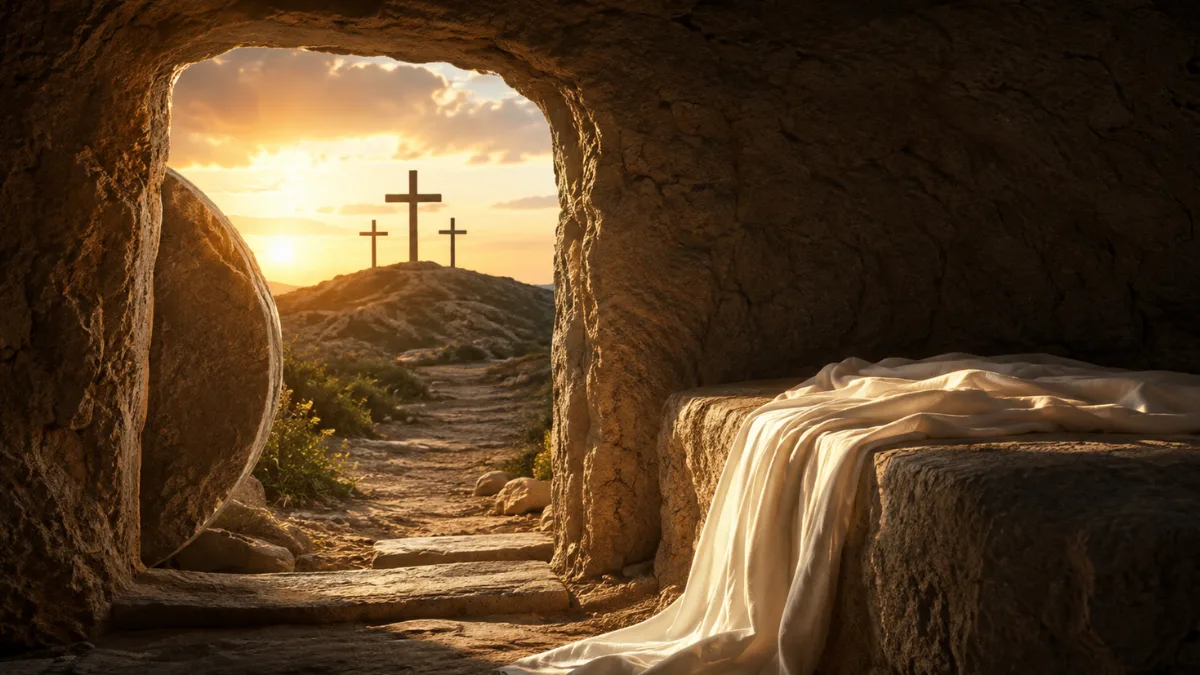

“But now is Christ risen from the dead” means that Jesus truly rose, Christian faith rests on a real victory over death and those who belong to Christ will also be raised. In 1 Corinthians 15:20, Paul calls Jesus “the firstfruits of them that slept” because His resurrection begins and guarantees the future resurrection harvest.
The verse comes after Paul considers what would be true if Christ had not risen. Christian preaching would be empty, faith would be useless, sin would remain undefeated and believers who had died would have no future hope.
Paul then overturns that hopeless argument with two decisive words: “But now.”
“But now is Christ risen from the dead and become the firstfruits of them that slept.” — 1 Corinthians 15:20 KJV
What Does 1 Corinthians 15:20 Mean?
First Corinthians 15:20 teaches that Christ’s resurrection is a completed reality and the beginning of the resurrection God promises to His people. Because Jesus rose from the dead, believers can trust that death will not have the final word over them.
Paul does not present the resurrection as a symbol, inspiring idea or spiritual metaphor. He declares that Jesus truly rose from the dead.
Earlier in the chapter, Paul summarizes the gospel by explaining that Christ died for sins, was buried and rose again on the third day. The full meaning of 1 Corinthians 15:3–4 establishes the foundation for everything Paul says later about resurrection.
Verse 20 then explains one of the greatest consequences of that event. Christ’s resurrection was not an isolated victory. Paul presents it as the beginning of the resurrection harvest that will include those who belong to Him.
Jesus is the “firstfruits.” His resurrection comes first, establishes the pattern and assures believers that God will complete the promised harvest.
Why Does Paul Begin With “But Now”?
Paul begins with “But now” because he has just described the devastating consequences that would follow if resurrection were impossible.
Some people in Corinth apparently denied that the dead would rise. Paul exposes the contradiction in that belief. If resurrection cannot happen, then Christ did not rise either. If Christ did not rise, the Christian message has no foundation.
Paul explains that without Christ’s resurrection:
- Christian preaching would be empty.
- Faith in Christ would be useless.
- The apostles would be false witnesses.
- Believers would remain in their sins.
- Those who died in Christ would have perished.
- Christians would have hope only during this earthly life.
Verse 20 interrupts that hypothetical argument. Paul does not leave believers trapped in uncertainty. He declares, “But now is Christ risen from the dead.”
The phrase marks a decisive movement from imagined hopelessness to revealed certainty. Christ has risen, so Christian preaching is not empty and faith in Him is not useless.
Those who died trusting Christ have not been abandoned to the grave. The truth of the resurrection overturns every hopeless conclusion Paul listed in the previous verses.
What Does “Christ Risen From the Dead” Tell Us?
“Christ risen from the dead” describes both a completed event and a continuing reality. Jesus rose at a real point in history, and He remains the living Christ.
He did not return temporarily to ordinary mortal life. He rose beyond death’s permanent authority.
This makes Christ’s resurrection different from earlier biblical accounts in which dead people returned to life. Lazarus, Jairus’s daughter and others were restored to their earthly lives, but they remained mortal. They eventually faced physical death again.
Jesus rose never to die again. He entered permanent resurrection life.
His resurrection therefore means more than the reopening of a grave. It reveals His victory over death and confirms the truth of His promises.
This is why the Christian announcement “He is risen” carries such power. It declares that Jesus lives, His sacrifice was not defeated and His people have a secure hope beyond death. The broader biblical meaning of “He is risen” flows from this same truth.
What Does “Firstfruits” Mean in 1 Corinthians 15:20?
“Firstfruits” refers to the first portion of a harvest that appeared before the rest of the crop was gathered.
Under the Old Testament law, Israel presented the first portion of the harvest before God. That offering came before the wider harvest and acknowledged that the entire crop belonged to God.
Paul uses this agricultural image to explain the relationship between Christ’s resurrection and the future resurrection of believers.
When the firstfruits appeared, the harvest had already begun, even though the farmer had not yet gathered the entire crop. In the same way, Christ has already risen, while the resurrection of His people still awaits its appointed time.
The image communicates several important truths.
First, Christ holds the place of priority. He stands at the beginning of the promised resurrection order.
Second, His resurrection assures believers that more will follow. The firstfruits were not the whole harvest but they showed that the harvest had begun.
Third, the future resurrection of believers depends on Christ. Their hope does not rest on human strength, personal goodness or an uncertain possibility. It rests on the risen Lord.
The firstfruits image establishes Christ’s priority and gives believers assurance about what will follow. Their resurrection hope rests on Him because His resurrection has already begun the promised harvest.
Why Is Jesus Called the Firstfruits if Others Rose Before Him?
Several people in the Bible returned from death before Jesus rose. However, they did not experience the same kind of resurrection life that Jesus received.
Lazarus returned to ordinary earthly life. So did the widow’s son, Jairus’s daughter and others whom God raised. Their restoration demonstrated God’s power, but they remained physically mortal.
Jesus rose in a different and greater way. He passed through death and conquered it permanently. He entered glorified life that death can never take from Him.
Christ is therefore the firstfruits of the final resurrection harvest. He is the first to enter the permanent resurrection life that His people will receive when God fulfills His promise.
His resurrection does not simply prove that God can bring a dead person back to life. It shows that God has begun His final victory over death.
Christ’s risen body also establishes the pattern of the believer’s future hope. Christians do not merely expect a temporary return to their present earthly condition. They look forward to a transformed life in which corruption, weakness and death no longer rule.
Who Are “Them That Slept”?
“Them that slept” refers to people who have died, particularly believers who died trusting in Christ.
The Bible sometimes uses sleep as a picture of physical death because sleep appears temporary and is followed by awakening. The image emphasizes that death will not remain permanent for those whose resurrection is secured in Christ.
Paul does not deny the seriousness of death. Death separates people, causes grief and remains an enemy. Calling death “sleep” does not mean that loss is painless or unimportant.
The phrase instead places death within the larger promise of resurrection. A sleeping person is expected to awaken. In the same way, believers who die will not remain under the power of the grave forever.
The verse does not attempt to answer every question about the condition of the soul between death and resurrection. Paul’s main point is much clearer: those who have died in Christ have not perished without hope.
Their bodies await resurrection and Christ’s own resurrection guarantees that death cannot permanently hold them.
How Do Verses 21–23 Explain Christ as the Firstfruits?
The following verses explain why Paul calls Christ the firstfruits.
Paul writes that death came through man and that the resurrection of the dead also comes through man. He then compares Adam and Christ.
Adam represents fallen humanity and the entrance of death into human experience. Christ represents resurrection life and God’s victory over death.
Paul then gives an order:
“But every man in his own order: Christ the firstfruits; afterward they that are Christ’s at his coming.” — 1 Corinthians 15:23 KJV
Christ rises first. Those who belong to Him will be raised at His coming.
This order shows that Jesus is not merely one resurrected person among many. He is the representative head and source of the resurrection life His people will receive.
His resurrection establishes the pattern of what will follow. It also provides certainty. Believers do not have to wonder whether resurrection is possible because it has already taken place in Christ.
The future resurrection of believers is not an unrelated second event. It belongs to the same resurrection harvest that began when Jesus left the grave.
The time between Christ’s resurrection and the resurrection of believers does not weaken the promise. A farmer did not doubt the harvest merely because the firstfruits appeared before the entire crop was gathered.
In the same way, Christians wait with confidence because the firstfruits have already appeared.
Does “Firstfruits” Mean That Everyone Receives the Same Eternal Outcome?
No. First Corinthians 15:20 presents Christ as the firstfruits of those who have died, while verse 23 identifies “they that are Christ’s” as those raised at His coming.
Paul’s immediate purpose is to assure believers that Christ’s resurrection guarantees their future resurrection.
The wider Bible teaches a resurrection of both the righteous and the unrighteous, but it does not teach that every person receives the same eternal outcome. Resurrection and salvation should not be treated as identical ideas.
The promise in this passage belongs especially to those who are united with Christ. They can face death with hope because their future rests on the One who has already risen.
How Does Christ’s Resurrection Change Christian Grief?
Christ’s resurrection does not make separation painless. Jesus Himself wept at the tomb of Lazarus. Love feels the weight of death because death interrupts earthly relationships and removes people from ordinary fellowship.
First Corinthians 15:20 does, however, change the horizon of Christian grief.
A Christian does not have to treat the grave as the final destination of a person who belongs to Christ. Jesus is the firstfruits, which means the promised resurrection harvest will follow.
Christians may therefore experience sorrow and hope at the same time. Tears do not prove a lack of faith, and hope does not require emotional numbness.
The resurrection allows believers to mourn honestly while trusting that God’s promise reaches beyond death.
This hope does not depend on imagining what might happen. It rests on what has already happened. Jesus rose from the dead.
Because He lives, believers can trust His promise to raise those who belong to Him.
What Hope Does 1 Corinthians 15:20 Give Believers Today?
The verse calls Christians to build their hope on the risen Christ rather than on changing emotions or present circumstances.
Grief can make death appear stronger than hope. Suffering can make God’s promises feel distant. Fear can cause believers to focus only on what they see in the present moment.
Paul directs attention back to an established truth: “But now is Christ risen from the dead.”
Christ’s resurrection confirms that His sacrifice was accepted, Christian faith has a firm foundation, and death will not permanently possess His people.
This hope also changes how Christians live. Later in the chapter, Paul urges believers to remain steadfast and continue in the work of the Lord because their labor is not in vain.
Resurrection hope does not encourage people to withdraw from life. It gives them strength to obey, serve, endure, and remain faithful.
The chapter continues toward the complete defeat of every enemy and the fulfillment of God’s kingdom. Paul connects Christ’s resurrection with the day when death will finally be destroyed and God will be all in all.
“But now is Christ risen from the dead” is Paul’s answer to everything that would be lost if resurrection were impossible. Christ has risen, Christian faith is not empty, and those who die in Him have not been abandoned to the grave.
Jesus is the firstfruits because His resurrection begins and guarantees the resurrection harvest that will follow. Believers do not merely hope that death might somehow be overcome. They trust the One who has already risen beyond death’s power.
Death remains an enemy in the present age, but it will not have the final word. Christ has risen and those who belong to Him will be raised in God’s appointed time.
