
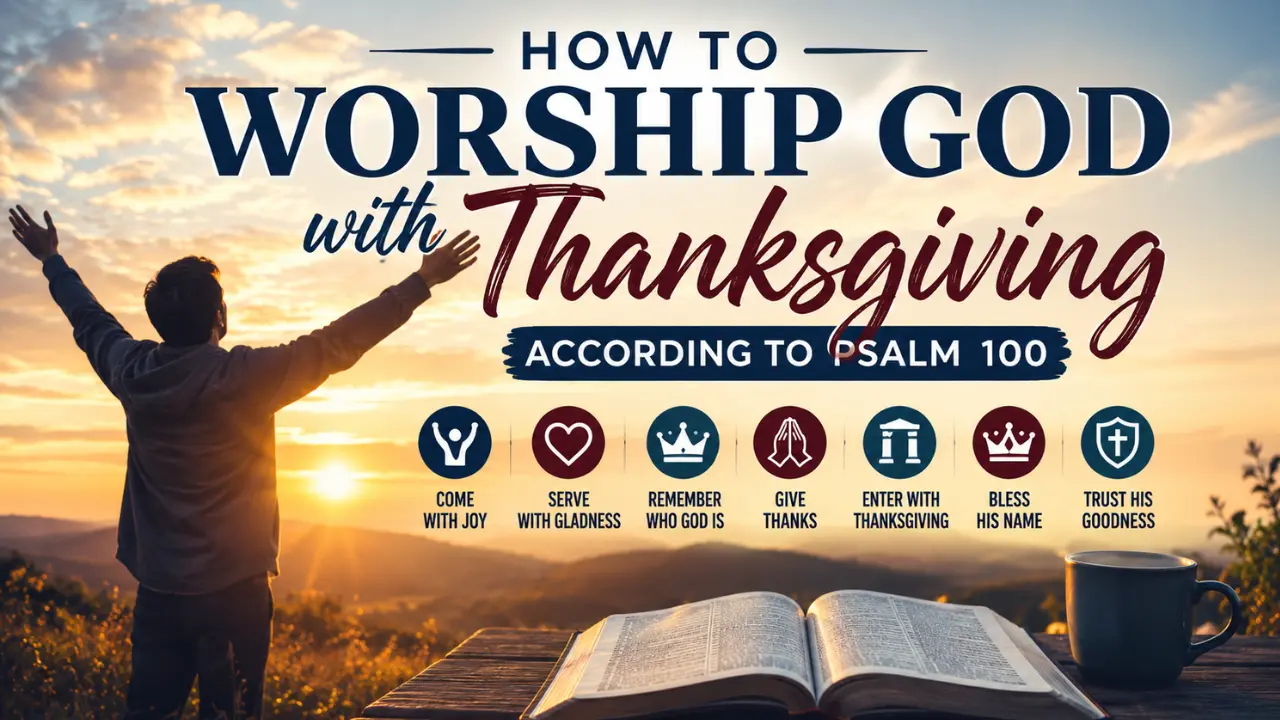

To worship God with thanksgiving according to Psalm 100, begin with joyful praise, serve the Lord with gladness, remember who God is, enter His presence with gratitude, bless His name and trust His goodness, mercy and faithfulness. Psalm 100 does not treat thanksgiving as a small worship habit. It gives believers a practical order for coming before God with a thankful heart.
Psalm 100 is often read as a thanksgiving Psalm, but it is also a worship pattern. It shows the heart how to move from joy to service, from remembrance to praise, and from gratitude to trust. The Psalm does not begin with personal needs, religious performance, or emotional pressure. It begins by turning the whole heart toward the Lord.
Many people think thanksgiving means saying “thank You” after God gives something visible. Psalm 100 teaches something deeper. It shows that thanksgiving is part of how a believer approaches God because of who He is, not only because of what He has recently done.
Start Worship with Joy Before You Focus on Your Problems
Psalm 100 begins with the call to make a joyful noise unto the Lord. That means worship should begin by turning attention toward God before the heart becomes consumed with fear, complaint, pressure, or personal need.
Joyful worship does not mean a believer must feel emotionally happy before approaching God. It means the worshiper begins by recognizing that the Lord is still worthy, still present, still sovereign, and still good. The first movement of thanksgiving is not pretending that life is easy. It is choosing to honor God before the problem becomes the center of the worship moment.
This is important because many people enter prayer already overwhelmed. Their first words are often shaped by anxiety, urgency, disappointment, or confusion. Psalm 100 teaches a different entrance. Before the request, before the explanation, and before the burden is poured out, the worshiper first gives God the honor that belongs to Him.
A practical way to apply this is to begin worship with words that declare God’s worth. Instead of starting only with “Lord, I need help,” the believer can begin with, “Lord, You are faithful, You are good, and You are worthy of praise.” This does not ignore the need. It places the need beneath the greater truth of who God is.
Joy also protects worship from becoming self-centred. When the heart begins with praise, worship becomes less about measuring God by the present situation and more about responding to His unchanging character.
Also Read: Psalm 100 Meaning Explained Through Ancient Roots
Serve the Lord with Gladness
Psalm 100 does not separate worship from service. It says to serve the Lord with gladness, which means thanksgiving should not remain only in songs, prayers, or spoken gratitude. It should shape the way a believer obeys, works, gives, helps, and responds to God.
This matters because a person can speak thankful words while serving God with a heavy, resentful, or unwilling heart. Psalm 100 brings the heart and the action together. Thanksgiving becomes complete when the believer not only praises God with the mouth but also serves Him with a glad spirit.
Serving the Lord with gladness does not mean every task will feel easy. Christian service can involve sacrifice, patience, unseen labor, and spiritual discipline. The point is not that service will always be comfortable. The point is that the worshiper remembers whom they are serving.
Glad service grows when the believer stops seeing obedience as a burden placed by a harsh master and begins seeing it as devotion to a good Lord. Thanksgiving changes the attitude of service because it reminds the heart that God is not cruel, careless, or distant. He is worthy of glad obedience.
In practical worship, this means asking a direct question: “Am I thanking God with my mouth while resisting Him with my attitude?” Psalm 100 calls the worshiper to bring both together. True thanksgiving praises God and then serves Him with a willing heart.
Come Before God with Singing Instead of Silent Distance
Psalm 100 says to come before His presence with singing. This does not mean worship is limited to music, and it does not mean every believer must have a strong voice. It means thanksgiving should come before God openly, actively, and personally.
Singing helps the worshiper move from inward heaviness into expressed praise. When a person sings to God, the truth is not only thought silently but confessed aloud. The heart hears what the mouth declares, and worship becomes more than private reflection.
This is especially helpful when the soul feels dry, distracted, or burdened. A believer may not always feel ready to sing, but singing Scripture-shaped praise can help the heart return to what is true. Psalm 100 shows that thanksgiving is not meant to remain locked inside the mind. It should be brought before God as praise.
Practical ways to apply this include:
- Choose a worship song that focuses on God’s character. Songs centered on His goodness, mercy, holiness, faithfulness, and rule help the heart worship according to Psalm 100.
- Sing before making requests. This trains the soul to honor God before explaining personal needs.
- Use simple praise when emotions feel weak. A short song, hymn, or Scripture-based chorus can still help the heart come before God sincerely.
- Let singing become agreement with truth. The goal is not performance but confession, because worship is the heart agreeing with what is true about the Lord.
The act of singing also breaks spiritual distance. Sometimes silence is reverent, but sometimes silence becomes avoidance. Psalm 100 invites the worshiper to come near with thanksgiving that is expressed, not hidden.
Remember Who God Is Before You Thank Him for What He Gives
Psalm 100 tells the worshiper to know that the Lord is God. This is one of the most important steps in thankful worship because it places knowledge before gratitude. The Psalm does not begin thanksgiving with possessions, comfort, success, or answered prayer. It begins with the truth of God’s identity.
Thanksgiving becomes shallow when it is based only on recent blessings. If the day goes well, the person feels thankful. If the day becomes difficult, gratitude disappears. Psalm 100 gives a stronger foundation by teaching the believer to worship from the knowledge that the Lord Himself is God.
This means the believer should pause during worship and remember God’s authority. He is not a helper who exists only to serve personal plans. He is the Lord. He rules, commands, sustains, provides, corrects, leads, and remains worthy even when life feels uncertain.
A practical way to worship with this step is to say, “Lord, before I thank You for what You have given, I remember who You are.” This simple shift protects thanksgiving from becoming only blessing-focused. It teaches the heart to honor God Himself, not only His gifts.
Thanksgiving according to Psalm 100 is not weak positive thinking. It is worship built on truth. The worshiper gives thanks because God is God, and that truth remains firm even when circumstances are still unfinished.
Thank God as Someone Who Belongs to Him
Psalm 100 reminds the worshiper that God made His people, and they are His people, the sheep of His pasture. This gives thanksgiving a personal and deeply comforting foundation. The believer is not approaching God as a stranger trying to get attention. The believer worships as someone who belongs to Him.
This changes the whole posture of thanksgiving. A person who belongs to God does not thank Him from a distance. They thank Him as Creator, Shepherd, owner, protector, and guide. Thanksgiving becomes more than gratitude for isolated blessings. It becomes gratitude for identity, care, and covenant-like belonging.
Many believers thank God for what they can measure: income, healing, protection, opportunities, family, or answered prayer. Those are right things to thank Him for, but Psalm 100 pushes the heart deeper. It teaches the believer to thank God for the fact that life itself is not self-made and spiritual identity is not self-produced.
To apply this in worship, thank God for making you, sustaining you, leading you, correcting you, and keeping you under His care. A believer can pray, “Lord, I thank You that I am not my own source, my own shepherd, or my own final security. I belong to You.”
This kind of thanksgiving is powerful because it does not depend only on visible success. Even in seasons of weakness or uncertainty, the believer can still thank God for belonging to Him.
Also Read: Psalm 139 Meaning Explained Clearly
Enter His Presence with Thanksgiving Before Making Requests
Psalm 100 gives a clear worship order: enter His gates with thanksgiving and His courts with praise. For practical worship, this means the believer should learn to approach God with gratitude before rushing into requests.
This does not mean needs are unimportant. God invites His people to pray, ask, seek, and bring burdens before Him. But Psalm 100 trains the worshiper not to let need become the first and only language of prayer. Thanksgiving comes first because it reminds the heart that God has already been faithful.
Many believers enter prayer carrying worry, pressure, and urgent desire. They begin by explaining what is wrong. Psalm 100 does not forbid honesty, but it teaches the heart to enter through thanksgiving. Gratitude becomes the doorway that prepares the soul to pray with trust instead of panic.
A simple Psalm 100 worship order can look like this:
- Name one thing God has already done. This helps the heart remember His faithfulness before presenting a new request.
- Thank Him for who He is. This keeps worship from becoming only about blessings and outcomes.
- Praise Him before explaining the problem. This places God above the burden instead of letting the burden dominate the worship moment.
- Bring the request after gratitude. This helps the believer ask with humility, reverence, and trust.
- End by acknowledging His faithfulness. This prevents prayer from closing in fear and keeps the heart anchored in God’s character.
This step is the practical center of the article because it shows how Psalm 100 can shape real worship. The believer does not need a complicated formula. The pattern is simple: remember, thank, praise, ask, and trust.
Bless His Name with Reverence
Psalm 100 says to be thankful unto Him and bless His name. Thanksgiving and blessing God’s name are closely connected, but they are not exactly the same in practice. Thanksgiving recognizes what God has done and who He is. Blessing His name means speaking honorably and reverently of His character.
This keeps worship from becoming casual or rushed. A believer can say “thank You, Lord” quickly and still not slow down enough to honor God’s name with reverence. Psalm 100 calls for worship that is thoughtful, holy, and intentional.
To bless His name is to speak well of Him as good, faithful, merciful, holy, patient, righteous, and worthy. It means the worshiper does not only receive from God but also gives honor back to Him. Thanksgiving becomes worship when it rises from appreciation into reverence.
A practical way to apply this is to name the attributes of God during worship. Instead of only saying, “Thank You for helping me,” the believer can say, “Lord, I bless Your name because You are faithful in Your help, patient in Your mercy, and good in Your care.” This makes thanksgiving deeper and more God-centered.
Blessing His name also corrects a hurried heart. It teaches the believer not to treat God as a problem-solver only. He is worthy of honor even before the solution comes.
Build Thanksgiving on God’s Goodness, Mercy
Psalm 100 ends with the reason thanksgiving can remain steady: the Lord is good, His mercy is everlasting, and His truth endures to all generations. This final step shows that thanksgiving is not built on a temporary mood. It is built on the permanent character of God.
This matters because many people can give thanks when life feels stable, but struggle when prayers are delayed, emotions are heavy, or circumstances remain unresolved. Psalm 100 gives the worshiper a stronger foundation. The Lord is good even when the day is hard. His mercy endures even when the believer feels weak. His truth remains even when life feels uncertain.
Thanksgiving becomes mature when it rests on these three truths. God’s goodness means He is not evil, careless, or unworthy of trust. His mercy means His compassion does not expire quickly. His faithfulness means His truth does not collapse from one generation to another.
A believer can use this final verse as a closing declaration in worship: “Lord, I thank You because You are good. I trust Your mercy because it is everlasting. I stand on Your truth because it endures.” This kind of thanksgiving does not deny pain, but it refuses to let pain define God.
Psalm 100 teaches that grateful worship should end in trust. The worshiper begins with joy, comes near with praise, remembers God’s identity, gives thanks, blesses His name, and rests in His goodness.
A Simple Psalm 100 Worship Pattern to Follow
Psalm 100 can be practiced as a simple worship pattern. This helps the believer move through thanksgiving with order instead of only saying random grateful words.
| Psalm 100 Movement | Worship Practice |
|---|---|
| Make a joyful noise | Begin with praise before focusing on problems |
| Serve with gladness | Let gratitude shape obedience and attitude |
| Come with singing | Express praise openly before God |
| Know the Lord is God | Remember God’s authority before thanking Him for gifts |
| We are His people | Worship from belonging, not distance |
| Enter with thanksgiving | Begin prayer with gratitude before requests |
| Bless His name | Honor God’s character with reverence |
| The Lord is good | End worship by trusting His mercy and faithfulness |
This pattern keeps thanksgiving from becoming shallow. It gives the worshiper a clear path: praise God joyfully, serve Him gladly, remember Him truthfully, thank Him personally, bless Him reverently, and trust Him deeply.
How to Practice Psalm 100 in Daily Worship
A believer can practice Psalm 100 in a short daily worship time without turning it into a complicated routine. The goal is not to perform a perfect devotional structure. The goal is to let the Psalm shape the heart’s approach to God.
Begin by setting the heart toward joy. This can be done through a short prayer, a worship song, or a spoken declaration of praise. Then serve the Lord with gladness by surrendering the day’s work, responsibilities, and obedience to Him.
After that, remember who God is. Say clearly that the Lord is God, He made you, and you belong to Him. This step helps the heart stop worshiping from pressure and begin worshiping from truth.
Then enter prayer with thanksgiving. Name specific ways God has shown goodness, mercy, guidance, patience, provision, or protection. After thanksgiving, bless His name by honoring His character. Finally, bring your requests to Him from a heart that has already remembered His faithfulness.
A simple prayer shaped by Psalm 100 could sound like this:
“Lord, I come before You with praise because You are worthy. I choose to serve You with gladness today, not with resentment or fear. I remember that You are God, You made me, and I belong to You. Thank You for Your mercy, Your care, Your patience, and Your faithfulness. I bless Your name because You are good, and I trust that Your truth endures even in the things I do not fully understand.”
This kind of prayer is not mechanical. It simply follows the movement of Psalm 100 and teaches the heart how to worship with thanksgiving.
Worshiping God with Thanksgiving According to Psalm 100
Psalm 100 teaches that thanksgiving is not only a phrase spoken during worship. It is a full approach to God. The believer comes with joy, serves with gladness, remembers that the Lord is God, gives thanks for belonging to Him, blesses His name, and rests in His goodness, mercy, and faithfulness.
This is how Psalm 100 turns thanksgiving into worship. It begins with praise, shapes the attitude of service, corrects the heart with truth, brings gratitude into God’s presence, and ends with trust in who God has always been.
To worship God with thanksgiving according to Psalm 100, do not begin only with what you need. Begin with who God is. Thank Him as Creator, Shepherd, Lord, and faithful God. Bless His name with reverence, and let His goodness become the foundation of your worship.
Frequently Asked Questions
What is the main worship lesson from Psalm 100?
The main worship lesson from Psalm 100 is that thanksgiving is a complete approach to God. The believer comes with joy, serves with gladness, remembers who God is, gives thanks, blesses His name, and rests in His enduring faithfulness.
Can I worship with thanksgiving even when life is difficult?
Yes, Psalm 100 teaches that thanksgiving is based on God’s goodness, mercy, and faithfulness, not only on easy circumstances. A believer can still worship with thanksgiving during difficulty because God’s character remains unchanged.
What does it mean to bless God’s name in Psalm 100?
To bless God’s name means to honor Him with reverence and speak well of His character. It is more than saying “thank You.” It means praising God as good, faithful, merciful, holy, and worthy of worship.

1 thought on “How to Worship God with Thanksgiving According to Psalm 100”