
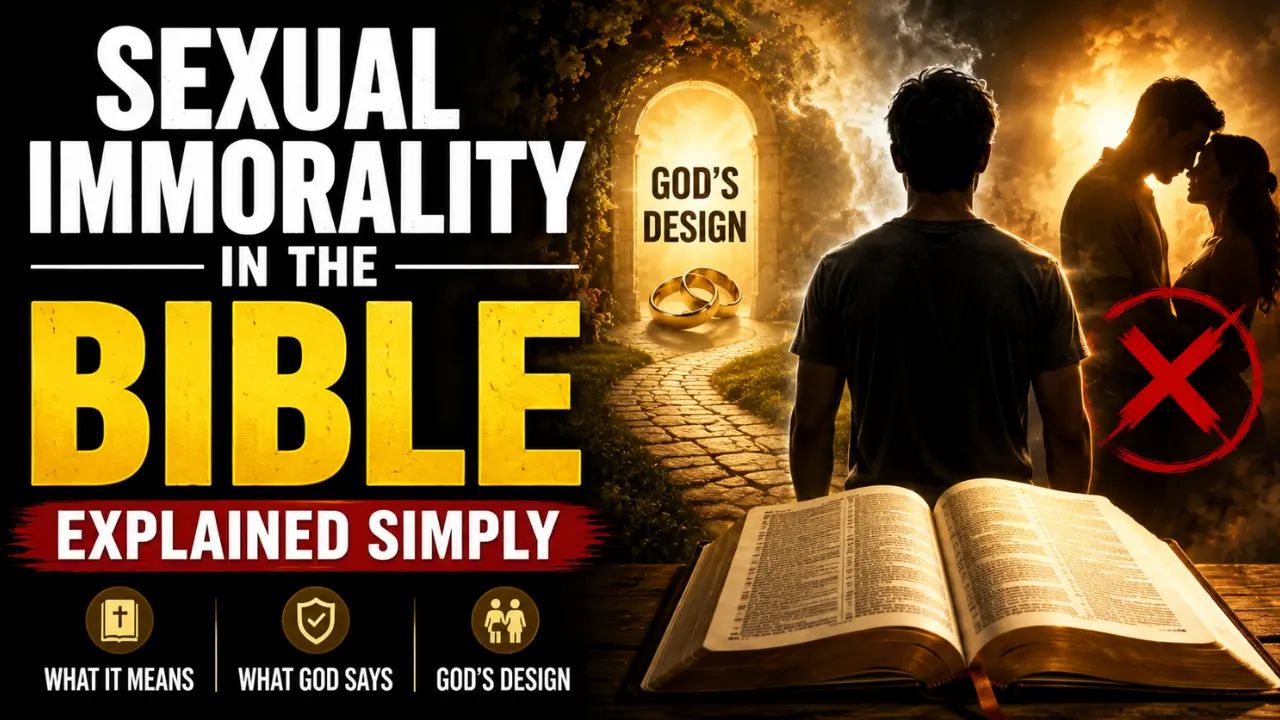

The Bible often warns against “sexual immorality,” but many readers are unsure what the phrase actually means. The confusion is understandable because modern translations usually use one broad expression instead of listing every specific behaviour each time. As a result, readers may encounter the term frequently without immediately knowing the full range of conduct it is intended to describe.
In the New Testament, “sexual immorality” often translates the Greek word porneia. This word does not usually refer to only one act. It functions as a broad category for sexual behaviour outside God’s revealed design for marriage, covenant faithfulness and holiness. Because it is a general term, its precise application is often clarified by the wider teaching of Scripture rather than by the word alone.
The Bible’s teaching is not built first on shame or suspicion toward the body. It begins with creation. God made human beings male and female, established marriage and described the one-flesh union of husband and wife. Sexuality is therefore presented as part of God’s good creation, intended to be expressed within the framework He established.
Sexual immorality is therefore best understood as sexual conduct that rejects, distorts or moves outside that covenant design. Rather than defining morality merely by personal desire, cultural acceptance or individual preference, Scripture evaluates sexual behaviour according to God’s purposes for human relationships and marriage.
Also Read: Fornication Meaning Explained Biblically
God’s Design Comes Before the Warning
To understand sexual immorality biblically, we must begin in Genesis rather than with a list of sins. Genesis 2:24 says:
“Therefore a man shall leave his father and his mother and hold fast to his wife and they shall become one flesh.”
This verse becomes foundational for the Bible’s understanding of sexuality. It appears before the giving of the Law, before the prophets and before the New Testament. Scripture presents it as part of God’s original design for humanity rather than a later religious regulation.
Jesus Himself refers back to this creation pattern when teaching about marriage. By appealing to Genesis, He directs attention to God’s original intention rather than merely discussing social customs or legal requirements. The point is that sexual intimacy is not treated as meaningless or merely physical. It belongs within a covenant union where faithfulness, permanence and one-flesh belonging are central.
Why Creation Matters
If we skip creation, the Bible’s commands can sound like isolated rules. But Scripture presents sexual boundaries as flowing from God’s purpose for human relationships. Sexual intimacy is good because God created it but it is not detached from covenant responsibility. It is connected to marriage, faithfulness and holiness before God.
Sexual intimacy is good because God created it but it is not detached from covenant responsibility. It is connected to marriage, faithfulness and holiness before God. The biblical vision is not merely about restricting certain behaviours; it is about protecting and honouring something God designed for a particular context.
What Porneia Means in the New Testament
The Greek word porneia is commonly translated as “sexual immorality.” It is broad enough to include several kinds of sexual sin but it is not vague. Ancient Jewish and Christian readers would have understood it against the moral framework already given in Scripture, especially the sexual boundaries found in the Law.
That is why New Testament writers can use the word without defining it every time. They assume readers understand that God has already established boundaries around sexual behaviour.
The term’s breadth is important because it allows biblical writers to address a range of behaviours with a single word. At the same time, its meaning is shaped by the larger biblical context rather than by personal interpretation or changing cultural standards.
A Broad but Serious Category
Porneia includes sexual conduct outside the covenant design of marriage. It can include adultery, prostitution, sexual relations outside marriage, incestuous relationships and other prohibited sexual practices. The exact emphasis may vary depending on the passage but the category consistently refers to sexual behaviour that violates God’s moral design.
Because the word functions as a broad category, individual passages sometimes highlight particular expressions of sexual sin while still placing them within the larger framework of porneia. The common thread is that the behaviour departs from the boundaries God has established for sexual intimacy.
How the Old Testament Established Sexual Boundaries
The Old Testament does not treat sexuality as morally neutral. It places sexual behaviour within the larger call for Israel to be holy before the Lord.
Leviticus 18 and 20 give several boundaries regarding prohibited sexual relationships. These chapters show that God’s people were not free to imitate the sexual customs of surrounding nations. Their conduct was to reflect holiness, covenant identity and obedience to God.
The point is not merely that certain actions were forbidden. The deeper point is that Israel’s life, including sexual life, belonged under God’s authority.
Also Read: 10 Verses on Fornication in the Bible
How Jesus Affirmed God’s Design
Jesus did not weaken the Bible’s teaching on sexuality. He returned to the creation pattern. When speaking about marriage, He quoted Genesis and affirmed the one-flesh union of husband and wife. By grounding His teaching in creation, Jesus pointed His listeners back to God’s original purpose rather than treating marriage as merely a social arrangement or cultural tradition.
Jesus also addressed the heart. In the Sermon on the Mount, He taught that lustful desire matters before God, not only outward acts. This means biblical sexual purity is not limited to external behaviour. It includes the inner life, motives, desires and faithfulness of the heart.
Why Paul Warned Against Sexual Immorality
Paul repeatedly warned believers to flee sexual immorality. In 1 Corinthians 6:18, he writes:
“Flee from sexual immorality.”
That word “flee” is important. Paul does not treat sexual sin casually. He calls for distance, seriousness and decisive obedience. Rather than encouraging believers to see how close they can come to temptation, he urges them to move away from it altogether.
The command also reflects Paul’s recognition of the powerful influence sexual temptation can have. In Scripture, fleeing is often associated with situations that require immediate action rather than prolonged negotiation. Paul presents sexual immorality as something from which believers should actively separate themselves.
Corinth was a city with many practices that conflicted with Christian holiness. The church existed in a culture where sexual standards often differed sharply from the ethical demands of the gospel. As a result, believers needed clear instruction about how their new identity in Christ should shape their conduct.
Why the Bible Treats Sexual Immorality Seriously
The Bible treats sexual immorality seriously because sexuality is deeply connected to covenant, faithfulness, worship and holiness. Sexual sin is not treated as serious because the body is bad. Scripture teaches the opposite: the body belongs to God and should honor Him.
Sexual intimacy is powerful because it involves the whole person. It can bless within God’s design but it can also harm when separated from covenant faithfulness.
This is why Scripture does not reduce sexual ethics to private preference. What people do with their bodies matters before God.
Also Read: Fornication vs. Adultery: What Is the Difference Biblically?
Misunderstandings About Sexual Immorality
Is Sexual Immorality Only Adultery?
No. Adultery is one form of sexual immorality but the biblical category is broader. It includes sexual behaviour outside God’s design for marriage and holiness. The New Testament’s use of porneia shows that the category encompasses multiple kinds of conduct rather than a single offense. While adultery specifically involves violating the marriage covenant, sexual immorality functions as a wider term that includes other forms of sexual behaviour that depart from God’s revealed standards.
Is the Bible Against Sex?
No. The Bible presents sexuality as God’s good creation. From the opening chapters of Genesis, marriage and the one-flesh union are portrayed as part of God’s design for humanity. The commands against sexual immorality protect the meaning and holiness of that gift.
Does Every Passage Mean the Exact Same Thing?
Not always. The word porneia is broad, so the specific concern can vary by context. In one passage, the focus may be on adultery. In another, it may involve prostitution, incest or other forms of prohibited sexual conduct. Careful reading is necessary to understand the immediate emphasis of a particular text.
Sexual Immorality in the Bible
Sexual immorality in the Bible means sexual behaviour that falls outside God’s design for marriage, covenant faithfulness and holiness. The New Testament often uses the word porneia as a broad category, while the Old Testament provides the moral background for understanding sexual boundaries.
The Bible’s teaching begins with God’s good design in creation, not with random rules. Sexual intimacy belongs within the covenant union of marriage. Because sexuality is valuable, Scripture treats its misuse seriously. Sexual immorality is therefore not simply a list of forbidden acts. It is any sexual conduct that rejects God’s purpose for faithfulness, purity and holy living.
