
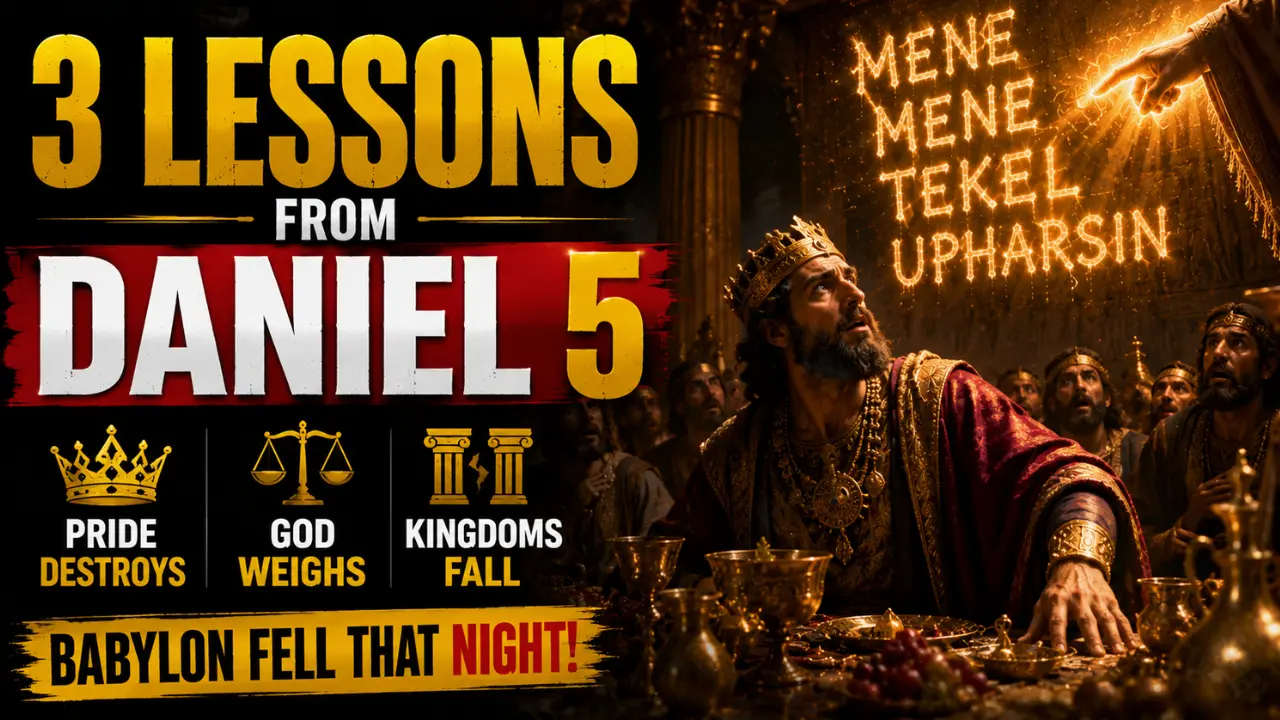

Daniel chapter 5 is often remembered for the mysterious handwriting on the wall but the chapter is not only about an ancient empire collapsing overnight. It is a serious biblical warning about pride, accountability, holiness and the danger of ignoring what God has already made clear.
The chapter centres on Belshazzar’s feast. Babylon’s king gathers his nobles for a royal banquet, drinks from the sacred vessels taken from Jerusalem’s temple, praises lifeless idols and acts as though his kingdom is secure. Then a supernatural hand writes on the palace wall and Daniel interprets the message: Babylon has been numbered, weighed and divided.
That same night, the kingdom falls.
Daniel 5 gives three major lessons that remain deeply important: pride can blind people to danger, God holds every person accountable and what belongs to God must never be treated with contempt.
Also Read: How Babylon Fell Overnight in Daniel 5
1. Pride Can Blind People to Judgment Already Near
Belshazzar’s feast reveals how pride creates false security. The king celebrates with nobles, wine, wealth and royal display while his kingdom stands near collapse. From inside the palace, Babylon appears strong. From God’s perspective, Babylon has already been weighed and found lacking.
This is one of the most sobering lessons in Daniel 5. Pride does not always feel like rebellion to the person controlled by it. Sometimes pride feels like confidence, success, control or stability. Belshazzar did not appear frightened at the beginning of the chapter. He appeared secure enough to celebrate.
That is the danger. Pride can make a person feel safe while standing in spiritual danger, closely connected to [how spiritual pride and false security can blind people to approaching judgment — The Danger of False Confidence Before God].
Pride and Spiritual Blindness
Daniel 5 shows that pride does not merely inflate the ego. It darkens judgment. Belshazzar had access to the history of Nebuchadnezzar, who had been humbled by God until he acknowledged that the Most High rules over human kingdoms. Yet Belshazzar did not learn from that warning.
Daniel directly tells him:
“Though you knew all this, you have not humbled your heart.”
That sentence is one of the strongest lessons in the chapter. Belshazzar’s problem was not lack of information. His problem was refusal to humble himself before what he already knew.
Pride Often Ignores Warnings
Pride becomes dangerous when it learns how to explain away warnings. A proud heart may hear truth, observe consequences in others and still assume it is exempt. Belshazzar knew enough to humble himself but knowledge without humility only increased his guilt.
Daniel 5 teaches that warnings are acts of mercy before judgment becomes final. Nebuchadnezzar’s story should have instructed Belshazzar. Instead, he continued in arrogance until the warning became a verdict.
Pride Creates False Confidence
Babylon had wealth, power, walls, royal authority and imperial history. None of these protected the kingdom once God declared its end. Daniel 5 shows that outward strength cannot secure a life, a leader or a nation that refuses humility before God.
The lesson is clear: pride can make danger feel distant until judgment suddenly becomes unavoidable.
Also Read: What “Mene Mene Tekel Upharsin” Means in the Bible
2. God Holds Every Person Accountable
The handwriting on the wall is not a random mystery or meaningless sign. It is a divine verdict. Daniel interprets the words as God’s judgment upon Belshazzar and Babylon, revealing that earthly kingdoms remain fully subject to God’s authority.
Mene — Numbered
God had numbered the days of Babylon’s kingdom and brought it to an end. Babylon appeared powerful and secure but its future had already been determined by God. No kingdom, ruler or nation exists beyond His control.
Tekel — Weighed
Belshazzar had been weighed in the balances and found lacking. Though he possessed wealth, authority and status, his life failed to meet God’s standard. His pride, irreverence and refusal to humble himself before God exposed the emptiness behind his outward greatness.
Peres — Divided
The kingdom would be divided and given to the Medes and Persians. The judgment was not merely symbolic or distant. God’s verdict would be carried out immediately and Babylon’s rule would pass into other hands.
These words show that God evaluates human life according to His own standard. Belshazzar was not measured by Babylon’s wealth, military power, royal success or influence. He was measured before God and found deficient. This passage reminds us that outward success cannot hide a heart that is far from God and that every person is ultimately accountable to Him.
Meaning of Being Weighed by God
The phrase “weighed and found lacking” is one of the most serious ideas in Daniel 5. It means Belshazzar’s life, rule, pride, worship and response to truth had been examined by God. The king may have appeared great before his nobles but before the Lord of heaven he lacked humility, reverence and obedience.
This lesson reaches beyond kings and empires. Daniel 5 reminds every reader that God’s judgment is not based on appearance, reputation, status or human approval. God sees the heart, weighs the life and judges with perfect knowledge, closely connected to [how Scripture teaches that God examines the heart rather than outward appearance — The Biblical Meaning of God Searching the Heart].
Accountability Increases With Knowledge
Belshazzar was especially accountable because he knew the story of Nebuchadnezzar. He had received enough light to respond with humility, yet he chose defiance.
This is an important spiritual lesson. The more truth a person receives, the more seriously that person is responsible for responding to it. Hearing truth is not the same as obeying it. Knowing what is right does not help the soul if the heart refuses humility before God.
Also Read: Handwriting on the Wall
3. God Takes Holiness Seriously
One of the most important details in Daniel 5 is Belshazzar’s use of the temple vessels. These vessels had been taken from Jerusalem’s temple and were consecrated for worship before the God of Israel. Belshazzar brought them into his feast and used them while praising idols.
This was not a small detail in the story. It was the act that revealed Babylon’s contempt for God’s holiness.
Sacred Things Treated as Common
Belshazzar treated holy vessels as trophies of conquest. He acted as though Babylon’s victory over Jerusalem gave him the right to use what belonged to God for his own pleasure and idolatry.
Daniel’s rebuke shows the seriousness of this act. Belshazzar had lifted himself up against the Lord of heaven. The king did not merely misuse objects. He dishonoured what those objects represented: the holiness, worship and authority of God.
The vessels mattered because they had been set apart for sacred service. In the temple, they were connected to worship, reverence and covenant life before the Lord. In Belshazzar’s feast, those same vessels were dragged into a setting of arrogance and idolatry. Daniel 5 presents this as a direct contradiction between what God had consecrated and what Babylon tried to claim for itself, closely connected to [the biblical meaning of consecration and why holy things were set apart for God’s service — What Consecration Means in the Bible].
Holiness Cannot Be Treated Casually
Daniel 5 teaches that what belongs to God must not be handled with contempt. The temple vessels mattered because they had been set apart for sacred worship. To use them in the praise of idols was to reject the holiness of the God they served.
This lesson still carries weight. Worship, truth, Scripture, prayer, the name of God and the things set apart for Him should not be treated as tools for pride, entertainment, manipulation or self-glory.
When holy things are used to serve human arrogance, the issue is not merely poor judgment. It is a failure of reverence. Daniel 5 warns that God’s holiness is not symbolic decoration around religious life. It is a reality that demands honour, humility and obedience.
Failure of Babylon’s Wisdom
Another important lesson appears when Babylon’s wise men cannot interpret the writing. The empire had scholars, astrologers, enchanters and religious experts but none could explain the message from God.
This shows that human wisdom has limits. Babylon could govern nations but it could not understand the divine verdict written against itself. Daniel alone could interpret the writing because true wisdom comes from God, closely connected to [how the Book of Daniel contrasts human wisdom with wisdom revealed by God — The Source of True Wisdom in Daniel].
Daniel’s Contrast With Babylon
Daniel stands in sharp contrast to Belshazzar. Belshazzar represents pride, self-exaltation, sacrilege and false security. Daniel represents humility, faithfulness, wisdom and reverence before God.
This contrast strengthens the lessons of the chapter. The person who fears God sees clearly what the proud cannot understand. Daniel did not need royal approval to speak truth. He stood before the king and declared what God had written.
Why Daniel 5 Still Matters
Daniel 5 still matters because people can still repeat Belshazzar’s errors. Pride can still make spiritual danger feel distant. Knowledge can still be ignored. Holy things can still be treated casually. Human success can still create false confidence before God.
The chapter warns that no amount of power, wealth, position or influence removes accountability before the Lord. Belshazzar had a kingdom but he did not have humility. He had a feast but he did not have reverence. He had knowledge but he did not obey it.
Frequently Asked Questions
Why is Belshazzar’s feast important in Daniel 5?
The feast reveals Babylon’s pride, false security and disrespect toward the holy things taken from God’s temple.
What did the handwriting on the wall mean?
The writing declared that Babylon had been numbered, weighed and divided under God’s judgment.
Why did God judge Belshazzar?
Belshazzar profaned sacred temple vessels, praised idols and refused humility before God despite knowing earlier warnings.
What lesson does Daniel 5 teach about pride?
The chapter teaches that pride blinds people to spiritual danger and creates false confidence before judgment.
