
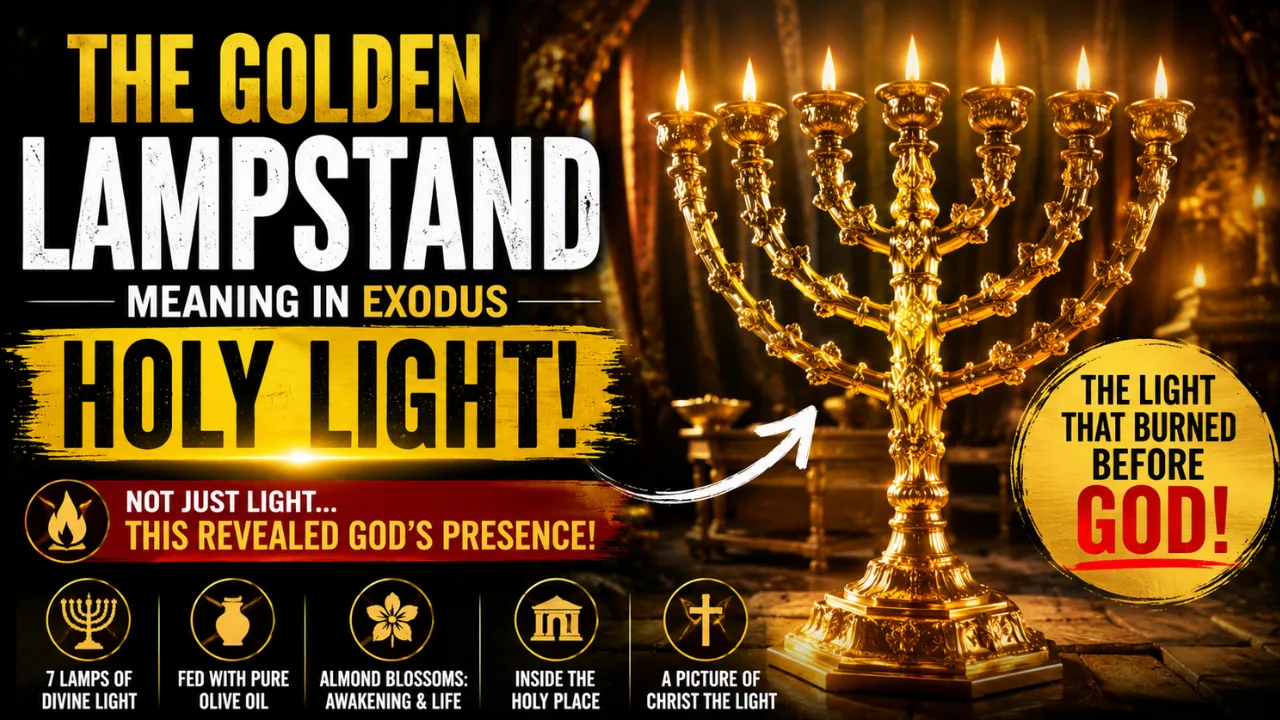

Inside the tabernacle’s Holy Place stood a radiant object unlike anything else in Israel’s worship system: the golden lampstand. While the outer court was open beneath the sky, the Holy Place itself had no windows. No sunlight entered the sanctuary. The only light inside came from the golden lampstand burning continually before the Lord.
This detail gives the lampstand enormous spiritual significance. In the tabernacle, divine light did not come from the natural world outside. Illumination came from what God Himself established inside His dwelling place. The golden lampstand therefore became a profound symbol of holy light, divine revelation, spiritual life, priestly ministry and the sustaining presence of God among His people.
The lampstand was not merely functional furniture for visibility. Every detail of its design carried symbolic meaning. Formed from pure gold, shaped with branches, cups, buds and almond blossoms and fuelled continually with pure oil, it stood as a living image of life illuminated by God Himself, much like [how the furniture of the Holy Place revealed different dimensions of worship, fellowship and divine revelation — Understanding the Spiritual Meaning of the Holy Place in the Tabernacle].
Long before Christ declared Himself the light of the world, the golden lampstand was already teaching Israel that true light comes from the presence of God rather than from human wisdom alone.
Lampstand Inside the Sanctuary
The placement of the lampstand mattered deeply. It stood inside the Holy Place opposite the table of showbread and near the altar of incense. Unlike the brazen altar in the outer court, the lampstand belonged to the inner sanctuary where priestly ministry took place continually before God.
Light in a Windowless Sanctuary
The Holy Place had no natural source of illumination. Without the lampstand, the sanctuary would remain in darkness. This created one of the central theological meanings of the lampstand: human beings cannot produce spiritual illumination apart from God.
The priests ministered in light provided through God’s appointed source. Every act of service inside the sanctuary happened beneath sacred illumination rather than natural light. The symbolism is powerful because it teaches that fellowship with God requires divine revelation. Spiritual sight comes from God’s presence, not merely from human intellect or earthly wisdom, reflecting [why biblical light imagery is repeatedly connected with revelation, truth and the presence of God — The Spiritual Meaning of Light in Scripture].
Light Before the Veil
The lampstand also stood before the veil leading into the Holy of Holies. Its light shone toward the place where the presence of God dwelled above the mercy seat. This positioning connected illumination with worship, priesthood and approach toward divine holiness.
The sanctuary journey moved from sacrifice in the outer court toward increasing intimacy with God inside the tabernacle. Along that journey, the lampstand testified that the way forward required holy light.
Why the Lampstand Was Made of Pure Gold
The golden lampstand was crafted entirely from pure gold, hammered from a single piece rather than assembled from separate parts. This distinguished it from many other tabernacle furnishings and gave it extraordinary beauty and symbolic depth.
Gold and Heavenly Glory
Throughout the tabernacle, gold symbolized holiness, glory, kingship and divine splendor. The Holy Place especially reflected heavenly beauty through golden furnishings glowing in the lampstand’s light.
The lampstand therefore represented illumination connected with divine glory. This was not ordinary firelight for practical convenience. The sanctuary glowed with sacred light reflecting the holiness of God’s dwelling place.
One Piece Hammered Together
The lampstand was fashioned from one beaten piece of gold. This detail carries artistic and theological weight. Its unity reflected harmony, completeness and divine craftsmanship. Beauty emerged through shaping, hammering and careful design.
Some interpreters have also seen deeper spiritual symbolism in this hammered construction. The light-bearing vessel itself was formed through pressure and workmanship. Throughout Scripture, God often shapes what He intends to use for holy purposes through refining processes rather than instant ease, much like [how biblical refining imagery uses fire and purification to describe spiritual formation and holiness — The Spiritual Meaning of Refining Fire in Scripture].
Almond Blossoms and Living Imagery
One of the most unusual features of the lampstand was its design. It resembled a living tree filled with branches, cups, buds and almond blossoms. This imagery transformed the lampstand from a mere object into something visually alive.
A Tree of Light
The lampstand’s appearance evoked botanical imagery, almost like a glowing tree standing within the sanctuary. This connection is deeply significant because Scripture repeatedly links life, light and divine presence together.
Many scholars and interpreters have connected the lampstand symbolically to Eden and the tree of life. In Eden, humanity lived in the presence of God before sin brought separation and darkness. Now, inside the tabernacle, a golden tree-like lampstand stood near the presence of God once again.
The symbolism suggests that divine light and life belong together. God’s presence is not merely illuminating. It is life-giving.
Why Almond Blossoms Matter
The almond tree was associated with watchfulness and awakening because it was among the earliest trees to blossom in the region. Its Hebrew connections even carry ideas related to watching or hastening.
This imagery fits the lampstand beautifully. The holy light of God is awake, living, active and watchful. The sanctuary was not spiritually asleep or abandoned. The lampstand testified continually that God’s presence remained active among His covenant people, much like [how biblical imagery connects light, life and the presence of God from Eden to the tabernacle — The Spiritual Connection Between the Tree of Life and Divine Light].
The Oil and Continual Burning
The lampstand burned through pure olive oil supplied regularly by the priests. This continual supply mattered because the light was never meant to disappear from the sanctuary.
Oil as Sustaining Presence
Oil throughout Scripture often symbolizes consecration, divine blessing and the work of the Spirit of God. The lampstand could not burn without oil. Light required continual provision.
This relationship between oil and light creates a powerful spiritual image. Illumination depends upon divine supply rather than self-generated strength. The sanctuary remained bright because the oil continued flowing.
The priests themselves could tend the lamps but they could not create holy light apart from the appointed fuel God required, much like [how the Bible connects spiritual light with the sustaining work of God rather than human strength alone — Why Divine Illumination Depends on God’s Presence].
A Flame That Continued Through the Night
The continual burning of the lampstand symbolized enduring divine presence. Even when darkness covered the wilderness outside, holy light still burned inside the sanctuary.
This image carried comfort and covenant meaning for Israel. God had not abandoned His people to darkness. His presence remained among them continually.
Seven Lamps and Spiritual Completeness
The lampstand contained seven lamps, a number repeatedly associated in Scripture with fullness, completeness and divine perfection.
Sevenfold Light
The seven lamps gave the sanctuary complete illumination. The number reinforced the idea that God’s light is full, sufficient and lacking nothing.
Throughout biblical symbolism, seven often marks completeness established by God Himself. The lampstand therefore represented not fragmented or partial illumination but holy fullness of light proceeding from divine presence.
Light Connected to Worship
The seven lamps also illuminated the other sanctuary furnishings:
- the table of showbread
- the altar of incense
- the priestly ministry inside the Holy Place
This meant worship itself unfolded beneath sacred illumination. The priests served in light provided by God rather than in darkness or self-made brightness.
The Lampstand and Priestly Ministry
The priests were responsible for tending the lamps continually. They trimmed the wicks, replenished the oil and ensured the light kept burning properly.
Tending the Holy Light
This ministry reveals an important spiritual principle. The light itself came from God’s appointed design but faithful stewardship was still required. The priests did not invent the light but they were entrusted with caring for it.
This balance appears throughout Scripture. Divine grace does not eliminate responsibility. Holy things still require faithful attention, reverence and obedience.
Ministry in the Presence of Light
The priests carried out their service within the lampstand’s glow. Every act of worship inside the sanctuary unfolded beneath sacred illumination.
This creates a powerful image of spiritual ministry itself. Service before God cannot operate rightly in darkness. True ministry requires light shaped by God’s presence and truth.
Golden Lampstand and Israel’s Calling
The lampstand also reflected Israel’s broader covenant calling. Israel was chosen to bear witness to the nations concerning the true God. In this sense, the sanctuary light symbolized a people meant to reflect divine truth into a darkened world.
Yet the tabernacle also revealed Israel’s limitations. The nation itself repeatedly struggled with idolatry, spiritual blindness and covenant failure. The lampstand therefore pointed beyond Israel toward a greater and more perfect light still to come.
Lampstand and Christ
The golden lampstand reaches its deepest fullfillment in Jesus Christ. In the Gospel of John, Christ declares Himself the light of the world. This statement carries enormous tabernacle resonance because the lampstand already symbolized divine illumination dwelling among God’s people.
Christ as the True Holy Light
- The sanctuary lampstand gave light inside the Holy Place. Christ brings spiritual light into a world darkened by sin, confusion and separation from God.
- The lampstand illuminated priestly ministry before the veil. Christ opens the way into the presence of God Himself.
- The lampstand required continual oil. Christ possesses fullness of divine life inherently rather than dependently.
- The tabernacle light was symbolic and localized. Christ becomes the living fullfillment of what the lampstand foreshadowed.
Light That Darkness Cannot Overcome
The Gospel imagery surrounding Christ repeatedly echoes themes connected to the lampstand:
- light shining in darkness
- revelation from God
- life connected to light
- divine presence among humanity
- guidance for God’s people
The golden lampstand therefore functions as both sanctuary furniture and prophetic theology. Long before Bethlehem, the tabernacle already contained a glowing witness to the coming Light.
The Lampstand in Revelation
The imagery of lampstands appears again in Revelation, where churches themselves are symbolized as lampstands. This expands the symbolism further.
Communities Meant to Bear Light
The churches are portrayed as lampstands because they are called to bear witness to Christ’s truth in the world. Yet the imagery also carries warning. A lampstand can lose its place if spiritual faithfulness disappears.
This reveals that holy light is not merely about outward activity. The churches must remain connected to Christ Himself, the true source of illumination.
Light That Had to Be Tended
The priests were commanded to tend the lamps continually. They trimmed the wicks, replenished the oil and maintained the flame so the light would not disappear from the sanctuary. This responsibility gives the lampstand a deeply human dimension because holy things required faithful care.
The priests did not create the light itself. God established the lampstand, the oil and the pattern of worship. Yet the priests were entrusted with stewardship. Neglect would affect the brightness of the sanctuary.
That balance still speaks powerfully today. Spiritual light is not self-generated but it must be tended faithfully. Prayer, worship, obedience, truth and communion with God require continual attention. The lampstand’s flame was not maintained through one dramatic moment alone. It endured through daily faithfulness in quiet service before God.
When Christ Declared Himself the Light
The symbolism of the lampstand reaches its climax when Jesus Christ declared Himself the light of the world. That statement carries enormous tabernacle resonance because Israel’s sanctuary already contained a sacred witness to divine light dwelling among God’s people.
- The lampstand illuminated a hidden sanctuary. Christ brings light into the darkness of the world itself.
- The lampstand stood before the veil. Christ opens the way beyond the veil.
- The lampstand required continual oil. Christ possesses divine life and light inherently.
- The sanctuary flames could illuminate sacred furniture, but Christ illuminates hearts, truth, sin, grace and the way to the Father.
This is why the imagery feels so powerful in the Gospel of John. The tabernacle’s glowing lampstand was never meant to be the final destination of the symbol. It pointed toward the coming Light who would step into human darkness personally.
Frequently Asked Questions
Why was the golden lampstand important?
The lampstand symbolized holy light, divine revelation, spiritual life and God’s presence among His people. It was the only source of light inside the Holy Place.
Why did the Holy Place have no windows?
The Holy Place had no windows because the light inside came from God’s appointed source rather than from natural sunlight. This symbolized divine illumination.
Why was the lampstand made of pure gold?
Gold symbolized holiness, glory, kingship and divine splendor. The lampstand’s pure gold construction reflected the sacredness of God’s dwelling place.
Why did the priests tend the lamps continually?
The priests maintained the lampstand by trimming the wicks and supplying oil so the light would continue burning. This reflected faithful stewardship of holy things.
How does the golden lampstand point to Jesus Christ?
Christ called Himself the light of the world, fullfilling the symbolism of the lampstand. The lampstand represented divine light, while Christ became the living Light sent into spiritual darkness.
