
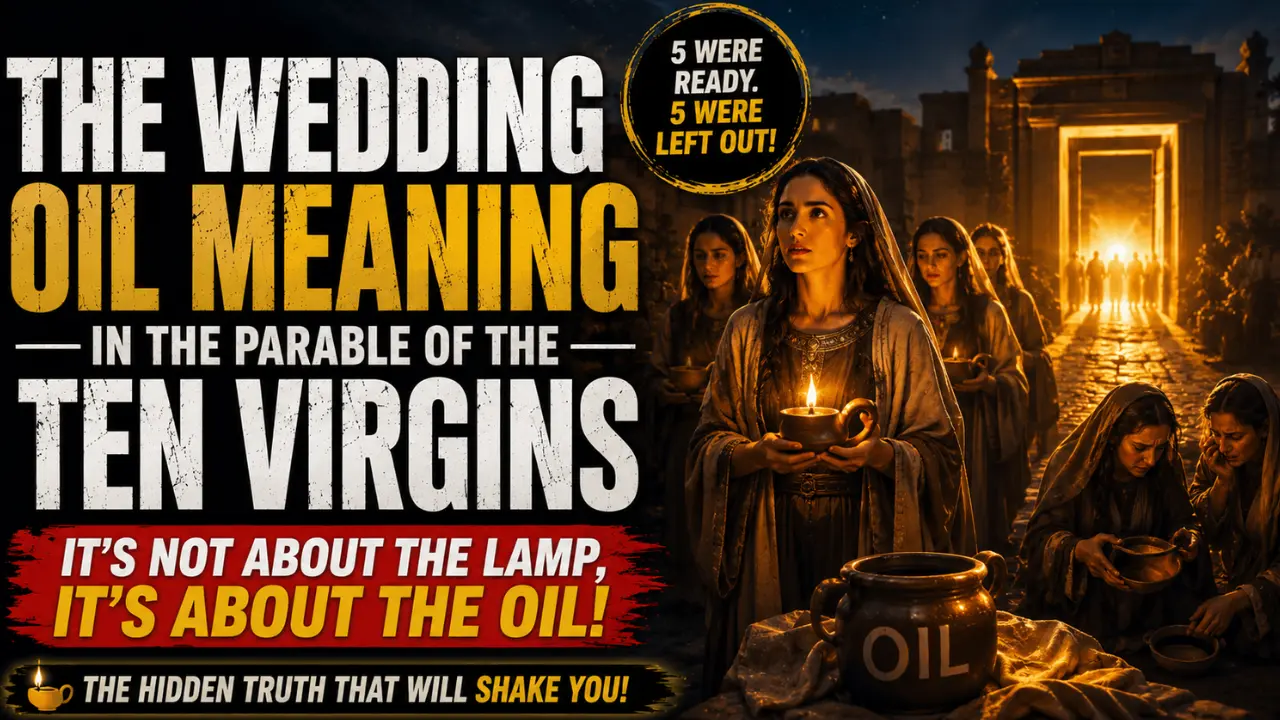

In the Parable of the Ten Virgins, the oil matters because it is the one thing that separates appearance from reality. From the outside, all ten virgins seem ready. They all carry lamps, wait for the bridegroom, belong to the wedding procession and expect to enter the feast. Nothing about the early scene makes the foolish virgins look openly rebellious or uninterested. They are not mocking the wedding. They are waiting for it. Yet when the midnight cry announces the bridegroom’s arrival, the truth comes out: five have oil, and five do not have enough.
The wedding oil in Matthew 25 represents authentic spiritual preparedness before the return of Christ. The parable itself does not pause to define the oil with a single technical explanation, which is why Christian interpreters have often connected it with the Holy Spirit, genuine faith, persevering grace, prayerful watchfulness and living communion with God. These interpretations are not competing ideas as much as connected layers of one central truth. The oil points to the hidden spiritual reality that sustains the soul when waiting becomes long, darkness deepens and the Bridegroom comes suddenly. This is why many believers connect the parable with [the difference between outward religion and genuine spiritual readiness — What Jesus Meant by Being Spiritually Prepared for His Return] rather than treating the oil as a merely symbolic object with one narrow meaning.
Wedding Setting Behind the Oil
The parable is built around the world of a wedding procession, where the arrival of the bridegroom was the great turning point of the celebration. Those who waited needed lamps because the procession could unfold at night and the lamps were not decorative accessories. They were necessary for participation, visibility, honour and movement toward the feast. A lamp without oil had the appearance of readiness but lacked the power to fullfill its purpose.
This background gives the oil strong social and spiritual weight. In the parable, the foolish virgins are not merely careless with a minor detail. They are unprepared at the very moment their role matters most. Their failure becomes public because the wedding procession has begun, the bridegroom has arrived and the time for preparation has become the time for entrance. The oil therefore carries urgency because it must be present before the decisive moment. Once the cry is heard, the hidden supply is no longer hidden.
Why the Lamps Are Not Enough
All ten virgins have lamps and that detail is one of the most sobering parts of the parable. The lamp is visible. It can be carried in the hand, noticed by others and mistaken for full readiness. For a while, the lamp allows the wise and foolish to appear almost identical. The danger is that the lamp can create confidence even when the oil supply is lacking.
Spiritually, the lamp represents outward profession and visible association with the people waiting for the Bridegroom. It can point to religious identity, public faith language, church involvement, moral appearance, biblical familiarity and expectation of Christ’s return. None of these things are meaningless but none of them can replace inward life with God. The lamp is important only when it is supplied by oil. Outward religion becomes dangerous when it convinces a person that visible nearness to holy things is the same as true readiness before Christ. This connects closely with [the spiritual danger of outward Christianity without inward transformation — Why Jesus Warned About Empty Religious Appearance] because the parable exposes how easily external faith practices can exist without genuine communion with God.
Oil as Authentic Spiritual Preparedness
The safest and richest way to understand the wedding oil is as authentic spiritual preparedness. It is the inward reality of a soul that truly belongs to God and is sustained by Him. Because oil in Scripture is often connected with anointing, consecration, priestly service, kingship, healing and light, many Christians rightly see the oil as pointing toward the presence and work of the Holy Spirit. Yet the parable’s immediate emphasis is not on solving a symbol mechanically. It is on showing that something inward must be real before the Bridegroom arrives.
This is why the oil can be described through several related biblical truths. It is Spirit-wrought life rather than self-made religion. It is genuine faith rather than inherited vocabulary. It is persevering grace rather than momentary excitement. It is communion with Christ rather than admiration from a distance. It is the kind of hidden preparation that may not impress people during ordinary hours but becomes unmistakably necessary when the midnight cry sounds.
Delay Reveals What Is Real
The bridegroom’s delay is essential to the meaning of the oil. If he had arrived immediately, the lack of oil may not have been exposed in the same way. The delay stretches the night and tests the preparation of every virgin. Time becomes the instrument that reveals depth. What was enough for a short wait is not enough for a long one.
This is one of the sharpest spiritual lessons in Matthew 25. Many forms of religious excitement can burn briefly. A person may respond emotionally to a sermon, enjoy the atmosphere of worship, speak with enthusiasm about spiritual things or feel ready during a season of inspiration. Yet the question is whether there is oil for the delay. True readiness is not proven only by beginning well. It is proven by endurance when the Bridegroom seems delayed, the night grows quiet and the first excitement has faded. This reflects [why spiritual endurance matters more than temporary emotional faith — What the Bible Says About Persevering Until the End] because the parable measures readiness not by early enthusiasm but by sustained spiritual life through the long waiting period.
Hidden Life Before God
The oil is hidden until it is needed. People can see the lamp but they cannot always see the supply. That is why the parable presses beneath religious appearance into the secret life of the soul. God sees what public life may conceal. He sees whether prayer is real, whether repentance is sincere, whether faith has roots, whether obedience is growing and whether the heart truly longs for the Bridegroom or merely expects the benefits of the feast.
This hiddenness gives the parable its searching power. The foolish virgins are not exposed by an argument, a public accusation or an external inspection. They are exposed by the arrival of the bridegroom. The moment itself reveals them. In the same way, the return of Christ will not need artificial proof to distinguish appearance from reality. His coming will disclose what has been true all along.
Why the Oil Cannot Be Borrowed
When the cry comes, the foolish virgins ask the wise to share their oil. The wise refuse, not because they are selfish but because the oil represents something that cannot be transferred at the last moment. No one can borrow another person’s spiritual life. No one can meet Christ through another person’s repentance, obedience, communion or faith. A parent’s devotion cannot replace a child’s surrender. A church’s faithfulness cannot replace an individual’s readiness. A community’s light cannot become personal oil when the Bridegroom is already at the door.
This is one of the most severe truths in the parable. Some spiritual realities are deeply personal. They can be taught, encouraged, modelled and witnessed but they cannot be handed over like a spare object in a crisis. The foolish virgins discover too late that proximity to prepared people is not the same as preparation. They stood near the wise, waited with the wise, slept beside the wise and awakened with the wise, yet they could not borrow what only a real inward life with God could supply. This closely reflects [why personal faith cannot be inherited through family, church or religious environment — What the Bible Teaches About Individual Readiness Before God] because the parable exposes the difference between surrounding oneself with spiritual things and personally belonging to Christ.
“Our Lamps Are Going Out”
The foolish virgins say their lamps are going out and that phrase is unsettling because it suggests they had some kind of visible flame. Their problem is not that they never looked ready at all. Their problem is that their readiness could not last until the arrival of the bridegroom. The lamp had form but not enough supply. The flame had appearance but not endurance.
This detail warns against temporary spirituality. A flame can exist for a moment without proving there is enough oil for the night. Emotion can flare. Conviction can stir. Interest can awaken. Religious identity can glow for a season. Yet without inward grace, Spirit-sustained faith and real communion with God, the flame weakens when tested by delay. The foolish virgins are frightening because they are not obviously faithless at the beginning. Their lack is revealed only when endurance is required.
Midnight Cry and the Exposure of the Oil
The midnight cry does not create the difference between the virgins. It reveals the difference already present. Before the cry, the lack of oil could remain unnoticed. After the cry, everything changes. The bridegroom is no longer merely expected; he is arriving. The wedding is no longer future only; it is unfolding. The lamps are no longer symbolic accessories; they are urgently necessary.
This is why the oil is inseparable from Christ’s return. Matthew 25 does not present readiness as theoretical interest in prophecy. It presents readiness as a real spiritual condition that must exist before the final announcement comes. The cry exposes whether the soul has been living in preparedness or postponement. It reveals whether the lamp was supplied by true oil or carried as a visible symbol without lasting substance.
Oil and the Holy Spirit
Because oil is often associated with anointing and divine consecration in Scripture, the connection between the wedding oil and the Holy Spirit is deeply meaningful. The Christian life cannot be sustained by human willpower alone. The lamp of outward confession needs the inward supply of God’s own life. The Spirit awakens faith, empowers obedience, deepens holiness, nourishes prayer and keeps love for Christ alive through the long night of waiting.
This does not mean the parable reduces the oil to a simple label and nothing more. Rather, the Holy Spirit connection helps explain why the oil cannot be manufactured at the last second. Spirit-filled readiness is not a costume for the final hour. It is the fruit of a life yielded to God. The wise virgins carried what the foolish could not improvise. Their oil points to a sustained inward work of grace that keeps the light burning until the Bridegroom comes.
Wedding Oil and Covenant Relationship
The wedding setting means the oil is not only about preparedness but also about relationship. The Bridegroom comes for a feast, not merely for an inspection. The wise enter into celebration because they are ready for the Bridegroom Himself. Their oil serves the larger purpose of meeting him, honouring him and joining the procession into the joy of the wedding.
This relational layer protects the parable from becoming a cold lesson about spiritual supplies. The issue is not mechanical readiness but covenantal belonging. The foolish virgins want entrance, but the devastating words they later hear are, “I know you not.” That response reveals that the deepest problem is not only empty lamps but absent relationship. The oil matters because it belongs to a life truly oriented toward the Bridegroom.
Shut Door and the End of Preparation
After the wise enter the feast, the door is shut. This image gives the parable its finality. During the delay, preparation was possible. Before the cry, oil could have been secured. While the night continued, the foolish still appeared to have time. Yet when the bridegroom arrived, the season of preparation gave way to the moment of separation.
The shut door reveals why the oil cannot be treated casually. Spiritual procrastination depends on the illusion of endless time. The foolish virgins expose that illusion. They intended to participate, expected to enter and tried to solve their lack after the announcement came. But the oil had to be present before the procession moved. The shut door teaches that there is a difference between wanting entrance and being ready for it. This connects deeply with [why delayed repentance becomes dangerous in the Christian life — What the Closed Door in Matthew 25 Warns Believers About] because the parable emphasizes that readiness for Christ cannot be postponed indefinitely without consequence.
What the Wedding Oil Means for Believers Today
The wedding oil still speaks because religious appearance can still be mistaken for spiritual readiness. A person may live close to Christian language, Christian gatherings, Christian family, Christian teaching and Christian expectation while neglecting the hidden life with God. Matthew 25 does not allow that kind of false security to remain comfortable. It asks whether the visible lamp is truly supplied.
For believers, the oil calls for serious but not frantic watchfulness. It invites prayer that is more than habit, repentance that is more than regret, obedience that is more than performance and love for Christ that is more than admiration. It calls the soul to cultivate what cannot be borrowed, displayed or invented in the final hour. The wise virgins were not loud about their oil. They simply had it when the Bridegroom came.
Lamp Still in the Hand
The wedding oil in the Parable of the Ten Virgins means that true readiness for Christ is hidden before it is revealed. It is the inward life of faith, the sustaining grace of God, the work of the Holy Spirit and the personal communion with the Bridegroom that keeps the lamp burning through delay and darkness. The oil is not a decorative symbol. It is the difference between a lamp that only looks prepared and a lamp that can actually shine when the cry is heard.
The night in the parable is still quiet before the cry and that quietness is mercy. The door has not yet shut. The Bridegroom has not yet appeared in final glory. The lamp is still in the hand and the question is still beneath the surface where only God sees clearly: whether there is oil enough for the moment when the silence breaks, the procession moves and appearance can no longer do the work of reality.
Frequently Asked Questions
What does the wedding oil symbolize in the Parable of the Ten Virgins?
The wedding oil symbolizes authentic spiritual preparedness before the return of Christ. Many Christians connect the oil with the Holy Spirit, genuine faith, inward spiritual life, perseverance and true relationship with God. The central meaning of the parable is that outward religious appearance alone is not enough. The oil represents the inner reality that sustains a believer through delay, darkness and the final arrival of the Bridegroom.
Why were the foolish virgins rejected?
The foolish virgins were rejected because they were unprepared when the bridegroom arrived. They carried lamps but did not bring enough oil. Their problem was not lack of awareness about the wedding but lack of true preparation for the delay. The parable shows that expecting Christ’s return outwardly is different from being spiritually ready inwardly.
Is the oil the Holy Spirit?
Many biblical interpreters believe the oil points to the Holy Spirit because oil throughout Scripture is often connected with anointing, consecration and divine empowerment. However, the parable itself does not explicitly define the oil with one technical meaning. Most accurately, the oil represents genuine spiritual readiness produced through a real relationship with God and sustained by His Spirit.
Why could the wise virgins not share their oil?
The wise virgins could not share their oil because the oil represents something personal and untransferable. No one can borrow another person’s faith, repentance, obedience or relationship with God at the final moment. Spiritual readiness must exist personally before Christ returns.
Why did all ten virgins have lamps?
The lamps represent outward profession and visible association with the kingdom. All ten virgins appeared prepared externally because all carried lamps and waited for the bridegroom. The parable warns that visible religion and genuine spiritual life are not always the same thing.
