
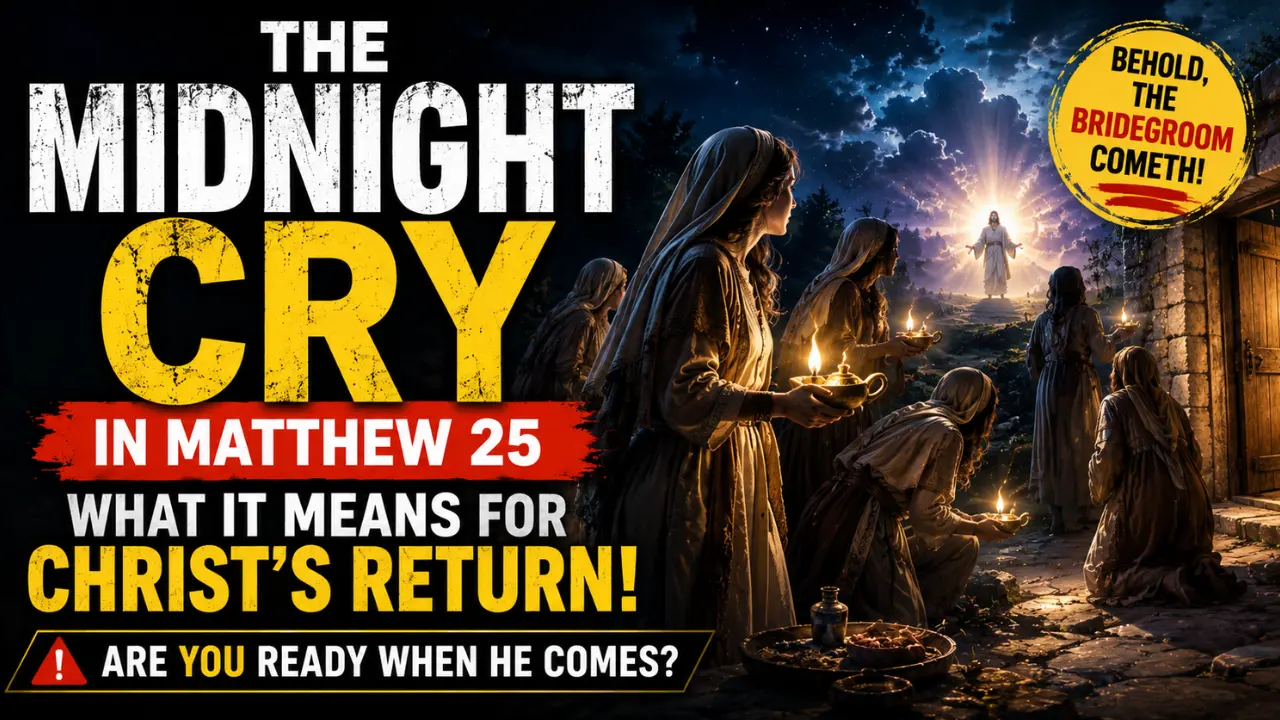

Matthew 25 places the reader in a scene of delay, darkness, expectation and sudden awakening. Ten virgins wait for the bridegroom with lamps in their hands but he does not arrive when expected. Time stretches longer than planned, the night deepens and the waiting becomes heavy enough that all ten fall asleep. Then, at midnight, when visibility is lowest and human attention is weakest, a cry cuts through the silence: “Behold, the bridegroom cometh; go ye out to meet him.”
The midnight cry is not a decorative detail in the parable. It is the moment when hidden spiritual reality becomes visible. Before the cry, all ten virgins look similar. All are waiting, all have lamps, all appear connected to the wedding and all expect the bridegroom. Yet when the cry comes, the difference between the wise and the foolish is exposed immediately. The midnight cry represents the sudden announcement of Christ’s return, the awakening of a spiritually sleeping world and the final test of whether outward religion has been sustained by inward spiritual life, much like [the deeper meaning of the wise and foolish virgins in Matthew 25 — The Parable of the Ten Virgins Explained] reveals through the imagery of readiness and delay.
Wedding Setting Behind the Parable
The Parable of the Ten Virgins is built around the imagery of a wedding procession. In the world of the parable, the bridegroom’s arrival was the central moment of celebration. Those waiting for him needed lamps because the procession could happen at night, and the arrival required readiness, attention and participation. The virgins were not random spectators. They were attendants connected to the wedding celebration, which makes their lack of preparation even more serious.
This setting is essential because Jesus is not speaking about people who know nothing of the kingdom. The ten virgins represent people close enough to the wedding to expect entrance. Their danger is not ignorance of the bridegroom’s existence. Their danger is assuming that proximity equals readiness, much like [the biblical warning against outward religion without inward spiritual life — The Difference Between Knowing About God and Truly Knowing Him] reveals throughout Scripture. A lamp in the hand can create the appearance of preparation but the hidden supply of oil reveals whether that preparation can endure the delay.
Why the Bridegroom Delays
The delay of the bridegroom is one of the most important details in Matthew 25. If he had arrived quickly, the difference between the wise and foolish virgins may not have become obvious. The delay exposes what each person truly carried. Waiting becomes the test. Time reveals whether faith is shallow or sustained, whether devotion is emotional or rooted, whether spiritual life has depth or only appearance.
This detail speaks directly to Christ’s return. Believers in every generation have had to live in the tension between promise and delay. Christ has promised to return, yet His coming appears delayed from a human perspective. Matthew 25 teaches that the delay is not an excuse for spiritual carelessness. It is the very arena where readiness is proven. The wise are not those who know the exact hour. They are those who remain prepared when the hour becomes longer than expected.
Midnight as a Symbol of Spiritual Crisis
The cry comes at midnight and the timing carries deep symbolic force. Midnight is the hour when visibility is low, strength is diminished and sleep is deepest. It represents the moment when people least expect interruption. By placing the bridegroom’s arrival at midnight, Jesus gives the parable a sense of suddenness, pressure and spiritual exposure.
The midnight setting also reflects the condition of a world unaware that eternity is near. People continue ordinary life, religious routine, ambition, distraction, pleasure and delay, while the Bridegroom approaches. The darkness does not stop His coming. Human sleep does not cancel His arrival. The cry comes whether the virgins are prepared or not. It does not ask whether people intended to prepare someday. It reveals whether they are prepared when the Bridegroom actually comes, revealing [why spiritual readiness cannot be postponed indefinitely — The Importance of Being Ready for Christ’s Return].
Lamps and the Appearance of Readiness
The lamps are powerful symbols because all ten virgins possess them. This means all ten carry something visible that suggests readiness. The lamps represent outward profession, visible identity and the appearance of belonging to the waiting community. From a distance, nobody would immediately know which virgins were wise and which were foolish. Their lamps made them look alike.
This is one of the sharpest warnings in the parable. Outward signs of faith can exist without inward preparedness. A person may know Christian language, attend church, admire biblical truth, speak about Christ’s return and still lack the inward reality necessary to meet Him, much like [the biblical warning against outward religion without genuine spiritual transformation — What Jesus Said About True and False Faith] reveals throughout the Gospels.
The foolish virgins are not portrayed as enemies of the bridegroom. They expect him, want entrance and are shocked when the door is closed. Their tragedy is that they carried lamps without enough oil.
Oil and the Hidden Life With God
The oil is the hidden difference between the wise and the foolish. While interpretations vary, the meaning within the parable is clear: the oil represents inward spiritual reality that sustains a person when the waiting becomes long and the hour becomes urgent. Many Christian readers have connected the oil with the Holy Spirit, genuine faith, grace, obedience, prayerful watchfulness or living communion with God because all of these reflect [the inward spiritual life that sustains true believers — What It Means to Walk Closely With God] beyond outward religious appearance.
The most important truth about the oil is that it cannot be borrowed at the final moment. When the foolish virgins ask the wise for oil, the wise cannot give it to them. This is not selfishness. It is spiritual reality. No person can borrow another person’s relationship with God. No one can stand before Christ on the strength of another soul’s repentance, obedience, prayer, faith or intimacy with Him. The midnight cry reveals what each person personally possesses before God.
Trimming of the Lamps
When the cry sounds, all ten virgins arise and trim their lamps. This small detail carries great meaning. Trimming a lamp meant preparing the flame to burn properly. It was the moment when the lamp’s condition became obvious. The wise could prepare their lamps because they had oil. The foolish discovered that their lamps were going out because they had neglected what was necessary beneath the surface, revealing [the danger of outward faith without enduring spiritual depth — The Difference Between Genuine and Superficial Faith].
This is the crisis point of the parable. The foolish virgins do not discover their lack while there is still time for calm preparation. They discover it when the bridegroom is already arriving. Their problem was not that they had no lamp at all, but that their lamp could not endure until the appointed moment. This shows the danger of a faith that looks alive in easier seasons but fails under the pressure of final reality. The midnight cry does not create the crisis. It reveals the crisis that had been hidden all along.
The Foolish Virgins and the Danger of Delayed Obedience
The foolish virgins represent the tragedy of delayed obedience. They knew the bridegroom was coming but they did not prepare in a way that could survive the wait. Their failure was not sudden. It had been forming quietly before midnight. They underestimated the importance of oil, overestimated the time they had and assumed they could fix their lack when the moment arrived, revealing [the spiritual danger of postponing repentance and readiness — Why Delayed Obedience Is Spiritually Dangerous].
This is one of the most sobering lessons in Matthew 25. Spiritual preparation cannot be postponed endlessly without consequence. Many people live as though repentance, surrender, holiness and deep communion with God can always be addressed later. The foolish virgins expose the danger of that assumption. There comes a moment when later is no longer available. The parable does not say this to create shallow fear, but to awaken serious readiness before the door is shut.
The Wise Virgins and Enduring Readiness
The wise virgins are not praised because they stayed awake the entire night. In fact, all ten slept. Their wisdom is seen in what they prepared before sleep overtook them. This distinction is important because Jesus is not presenting readiness as nervous panic or constant prophetic speculation. The wise are ready because they have oil. They live with a depth that can survive delay, weakness and unexpected timing.
Enduring readiness is one of the central meanings of the parable. Watchfulness does not mean trying to calculate the exact day of Christ’s return. It means living in such a way that His return would not find the soul empty. It means faith that continues when the waiting is long, obedience that does not depend on emotional excitement and spiritual life that remains real when public appearance is no longer enough.
The Door That Was Shut
The most sobering image in the parable is not the midnight darkness or the failing lamps. It is the shut door. After the wise virgins go in with the bridegroom to the marriage feast, the door is closed. The foolish virgins arrive later and plead for entrance but the answer they receive is devastating: “I know you not.”
The shut door represents finality. It shows that the return of Christ is not only an event of celebration but also an event of separation. The kingdom feast is real but so is exclusion from it. This part of the parable strongly rejects casual assumptions about eternity. The issue is not merely that the foolish were late. The deeper issue is that they were unknown to the bridegroom in the saving, covenantal sense that mattered.
“I Know You Not” and the Question of Relationship
The phrase “I know you not” reveals the deepest issue in Matthew 25. The foolish virgins had outward connection to the wedding but not the relationship required for entrance. Their lamps, expectations and last-minute urgency could not replace genuine readiness before the bridegroom. The final question was not whether they had once appeared close to the celebration but whether the bridegroom truly knew them.
This connects the parable to one of the most serious themes in the teaching of Jesus: outward religious activity can exist without saving relationship. Christ’s return will reveal not only what people claimed, but what they truly were before Him. The midnight cry therefore becomes a mercy before it becomes a judgment, because it warns hearers now to seek the reality that cannot be manufactured later, reflecting [the biblical call to genuine repentance and living faith — The Difference Between Religious Appearance and True Faith].
Bridegroom’s Return Is Both Love and Judgment
The return of Christ in Matthew 25 is severe, but it is not cold. The One who comes is the Bridegroom, not merely a distant judge. That detail matters because wedding language carries covenant love, promised union, celebration and joy. The wise virgins do not enter a courtroom first; they enter a feast. For the prepared, the midnight cry is not terror but fullfillment. It is the long-awaited announcement that the Bridegroom has come and the celebration is beginning.
At the same time, the joy of the feast sharpens the seriousness of exclusion. To be shut outside is not merely to miss an event but to miss the presence of the Bridegroom Himself. Matthew 25 holds together what modern readers often separate: Christ’s return is the hope of those who know Him and the exposure of those who only appeared to wait for Him. His coming is covenant joy for the ready and final reckoning for the unprepared.
Midnight Cry and Christ’s Return
The midnight cry points directly to the return of Christ. It is sudden, public, decisive and impossible to ignore. The Bridegroom comes at the hour least expected and His arrival reveals the true condition of all who claimed to be waiting. Matthew 25 does not encourage date-setting or prophetic speculation. It calls for readiness that can stand before Christ whenever He comes.
Christ’s return in this parable is deeply personal. The Bridegroom comes. The door opens. The prepared enter. The unprepared remain outside. The imagery is intimate and severe at the same time because the second coming of Christ is both the hope of the redeemed and the exposure of false security. For those with oil, the cry is joy. For those without oil, the same cry becomes terror.
Why the Midnight Cry Still Matters Today
The midnight cry still matters because spiritual sleep remains one of the greatest dangers for people who live near holy things. A person can be familiar with sermons, Scripture, worship, prophecy and Christian language while slowly losing the inward fire of communion with God. Religious familiarity becomes dangerous when it convinces the soul that visible association is the same as living readiness.
Matthew 25 speaks sharply to a distracted age. It confronts casual Christianity, borrowed faith, shallow profession and the belief that there will always be more time. The parable does not ask whether someone admires the idea of Christ’s return. It asks whether the soul is prepared to meet Him. The midnight cry searches beneath the lamp and asks whether there is oil.
Living Before the Cry Is Heard
To live in light of the midnight cry is to live with holy seriousness rather than fear-driven panic. The wise virgins were not frantic. They were prepared. Their readiness was quiet, practical, and hidden until the hour of testing came. This is the kind of watchfulness Jesus calls His people to practice, reflecting [the biblical meaning of spiritual watchfulness and readiness — What It Means to Stay Spiritually Awake] in everyday life.
Living before the cry is heard means cultivating what cannot be borrowed. It means personal repentance, personal faith, personal communion with Christ, personal obedience and personal dependence on the Holy Spirit. It means refusing to let delay become laziness. It means treating the return of Christ not as a distant idea for prophecy charts alone but as a living truth that shapes desire, conduct, worship and endurance.
The Lamp, the Oil and the Still-Open Door
The parable leaves the reader standing before an open door that will one day close. The Bridegroom has not yet arrived but the delay is not emptiness. It is mercy-filled time for preparation. The lamp is still in the hand. The oil must still be sought in the hidden life with God. The night may feel long and the world may seem asleep, but Matthew 25 insists that the cry will come.
When it comes, there will be no time to borrow what was never cultivated, no time to manufacture what was only imitated and no time to turn appearance into reality. The midnight cry means the Bridegroom is near, the feast is real and the soul must be ready before the sound breaks through the dark, reflecting [the urgent biblical call to spiritual readiness while the door of grace remains open — Why Spiritual Readiness Cannot Wait].

1 thought on “The Midnight Cry Meaning in Matthew 25 and Christ’s Return”