
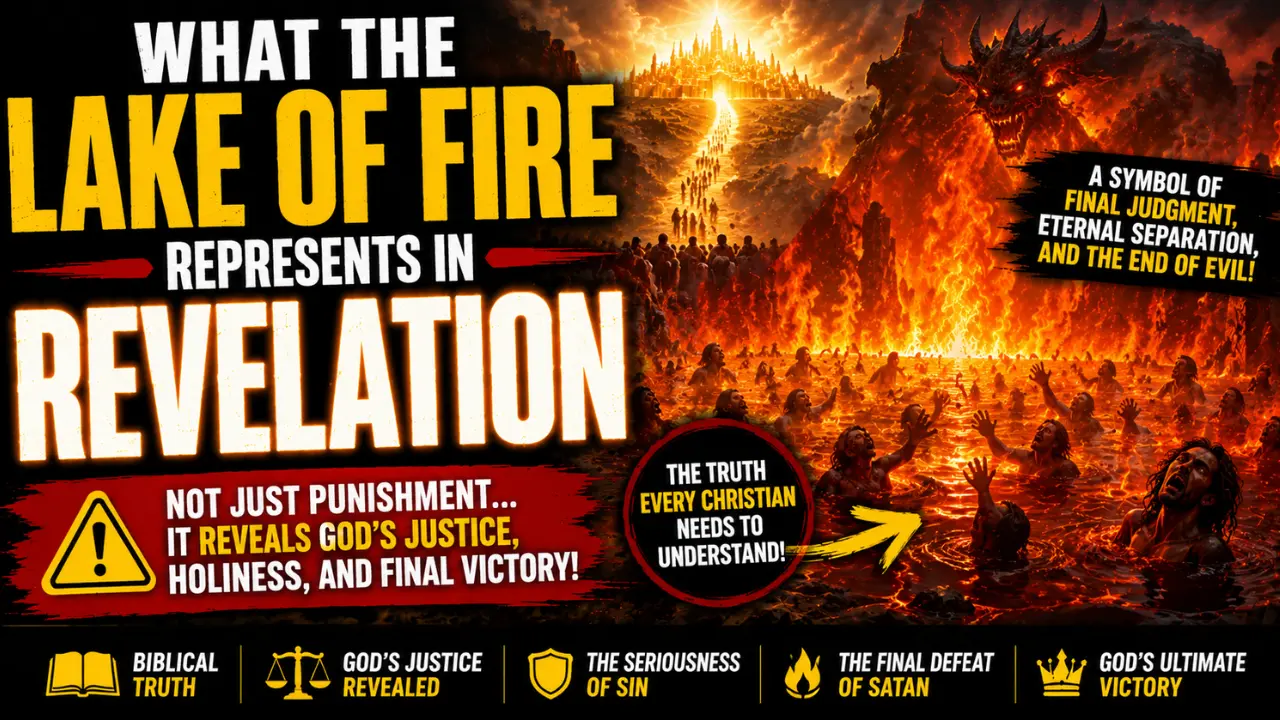

Few symbols in the Bible carry as much intensity, mystery, fear and theological weight as the lake of fire described in the book of Revelation. The imagery is dramatic, unforgettable and deeply sobering. Throughout Christian history, the lake of fire has been associated with divine judgment, eternal separation, justice, spiritual consequence and the final defeat of evil.
Yet many people approach the subject with confusion, fear, speculation or shallow interpretations disconnected from the broader themes of Scripture. Some reduce the lake of fire to symbolic imagery only, while others discuss it only through fear-driven teaching without examining its deeper biblical meaning and theological significance. This is why understanding [how Revelation uses symbolic imagery — How to Interpret Symbolism in the Book of Revelation] becomes essential when studying prophetic passages involving judgment and eternity.
The book of Revelation uses vivid symbolic language to reveal spiritual realities concerning the final victory of God over sin, rebellion, death, Satan and every force opposing His kingdom. Within that larger vision, the lake of fire becomes one of the final and most serious images presented in biblical prophecy.
Understanding the symbolism of the lake of fire requires more than isolated verses. It requires examining how Scripture consistently portrays holiness, judgment, justice, rebellion, eternal separation, purification and the ultimate triumph of God’s righteousness. This broader theme connects closely with [God’s final judgment throughout Scripture — What Does the Bible Say About Final Judgment?].
The lake of fire is not presented merely as a frightening image meant to terrorize readers emotionally. It represents the final and complete removal of evil from God’s restored creation. It reveals the seriousness of sin, the reality of divine justice and the absolute holiness of God.
At the same time, the imagery also points toward the final victory of righteousness, the end of corruption and the complete defeat of every force that destroys humanity spiritually, reinforcing [the Bible’s promise of ultimate victory over evil — The Final Defeat of Satan in Revelation].
The Lake of Fire Appears Primarily in Revelation
The phrase “lake of fire” appears specifically within the book of Revelation, particularly in its final chapters where John describes the culmination of God’s redemptive and judicial work.
Revelation is filled with symbolic imagery involving beasts, dragons, thrones, scrolls, crowns, stars, trumpets and heavenly visions. The lake of fire belongs within this highly symbolic prophetic framework.
However, symbolic language does not mean meaningless language.
Throughout Scripture, symbols communicate profound spiritual realities. The imagery of the lake of fire therefore carries enormous theological significance even while presented through apocalyptic symbolism.
Revelation Describes the Final Defeat of Evil
The lake of fire appears during scenes involving final judgment and the defeat of every power opposing God’s kingdom. Satan, death, Hades and forces associated with rebellion are ultimately cast into the lake of fire.
This imagery communicates finality.
Unlike temporary earthly judgments throughout biblical history, the lake of fire represents the ultimate and irreversible defeat of evil itself. Nothing corrupt, rebellious or opposed to God’s holiness remains afterward.
The Symbolism Points Toward Ultimate Separation
Throughout Scripture, sin creates separation from God because God’s holiness cannot coexist with evil indefinitely. The lake of fire becomes the final picture of complete separation between God’s eternal kingdom and everything that opposes it.
The imagery therefore communicates more than punishment alone. It reveals the final removal of corruption from creation.
God’s Justice Brings Final Restoration
One of the most important truths often overlooked is that Revelation ultimately moves toward restoration. The destruction of evil is connected directly to the creation of a new heaven and new earth where righteousness dwells fully.
The lake of fire therefore belongs within the larger biblical story of God restoring creation completely.
Fire Throughout Scripture Symbolized Holiness and Judgment
To understand the lake of fire properly, it is necessary to understand how fire functions symbolically throughout the entire Bible.
Fire consistently represented God’s holiness, presence, purification, glory, authority and judgment.
When God descended upon Mount Sinai, fire covered the mountain. When Elijah confronted false prophets, fire descended from heaven. When Isaiah encountered God’s holiness, burning imagery surrounded the throne room. When the Holy Spirit descended at Pentecost, tongues of fire appeared upon believers. Together, these moments reveal [how divine fire appears throughout both the Old and New Testaments — Examples of God’s Fire in the Bible].
Fire symbolized the active presence of divine holiness.
Divine Fire Consumed What Opposed Holiness
Throughout Scripture, fire often consumed corruption, impurity, rebellion or false worship. This symbolism revealed that God’s holiness could not coexist permanently with evil.
The lake of fire therefore continues an already established biblical pattern.
The imagery communicates the complete destruction and removal of everything opposed to God’s righteousness and kingdom, reinforcing [the final removal of evil in biblical prophecy — How Revelation Describes the End of Evil].
Fire Revealed the Seriousness of Sin
Modern culture often minimizes sin by treating it merely as personal weakness or moral imperfection. Scripture presents sin far more seriously because sin distorts creation, destroys relationship with God, corrupts humanity and spreads spiritual death.
The imagery of consuming fire reflects the seriousness of rebellion against divine holiness.
Holiness and Evil Cannot Remain Together Forever
One of the deepest theological themes throughout Scripture is that God’s final kingdom will be fully purified from evil, suffering, corruption, death and rebellion.
The lake of fire symbolizes this final separation between holiness and everything opposed to it.
The Lake of Fire Represents Final Judgment
One of the clearest meanings behind the lake of fire is final judgment. Revelation repeatedly presents the imagery during scenes involving accountability, justice and eternal consequence.
Judgment throughout Scripture is rooted in God’s righteousness and holiness rather than uncontrolled anger.
God’s Judgment Is Connected to Justice
The Bible consistently portrays God as perfectly just. Human courts often fail because human judgment is limited, corruptible and incomplete. God’s judgment, however, is portrayed as perfectly righteous because He sees all things fully.
The lake of fire therefore symbolizes ultimate divine justice where evil is finally addressed completely.
Final Judgment Reveals Moral Accountability
Scripture repeatedly teaches that human actions, rebellion, evil, cruelty, injustice and spiritual rejection are not meaningless. The lake of fire symbolizes the reality that moral accountability ultimately exists before God.
This imagery confronts the idea that evil can continue forever without consequence.
Divine Justice Protects Eternal Righteousness
The final removal of evil is necessary for the establishment of eternal peace, holiness and restored creation. Revelation’s vision of a renewed heaven and earth depends upon the complete defeat of everything corrupting creation.
The lake of fire therefore represents not only judgment but also the protection of eternal righteousness.
The Lake of Fire Symbolizes Eternal Separation From God
Another central theme connected to the lake of fire is separation. Throughout Scripture, life, peace, joy and fullfillment are ultimately connected to relationship with God because He is the source of life itself. This theme closely relates to the biblical connection between God and eternal life.
Separation from God therefore represents spiritual death.
Sin Produces Separation
From Genesis onward, rebellion against God creates distance, exile, brokenness and spiritual alienation. Adam and Eve were removed from Eden. Israel experienced exile because of rebellion. Humanity continually experienced separation through sin. These patterns help explain [how sin separates humanity from God — The Consequences of Sin in the Bible].
The lake of fire becomes the final and ultimate image of separation from God’s kingdom and presence.
Separation Reflects the Consequences of Rebellion
Scripture consistently portrays God calling humanity toward repentance, restoration, mercy and covenant relationship. Yet Revelation also reveals the seriousness of persistent rejection of God’s rule and holiness. This tension is central to understanding [God’s justice and mercy throughout Scripture — How God Balances Judgment and Mercy].
The lake of fire symbolizes the ultimate consequence of remaining permanently opposed to God.
God Honors Human Rebellion Seriously
One sobering aspect of biblical judgment is that God allows human choices to carry eternal significance. The lake of fire reflects the reality that rebellion against God is not treated casually within Scripture.
The Lake of Fire Represents the Defeat of Satan and Evil
One of Revelation’s strongest themes is victory. Although much of the book contains conflict, suffering, persecution and judgment, the final chapters emphasize God’s complete triumph over evil.
The lake of fire therefore represents the final defeat of Satan, death, corruption and rebellion.
Evil Does Not Win in the Biblical Story
Throughout history, evil often appears powerful. Empires oppress nations. Violence spreads. Corruption flourishes. Injustice dominates societies. Revelation was written partly to suffering believers who needed hope that evil would not reign forever.
The lake of fire becomes symbolic proof that evil’s power is temporary.
Satan’s Defeat Is Final
Revelation portrays Satan being cast into the lake of fire permanently. The imagery communicates absolute defeat rather than temporary restraint.
This reveals one of the Bible’s central prophetic hopes: evil will not continue endlessly.
God’s Kingdom Ultimately Prevails
The final chapters of Revelation move toward restoration, renewal, healing and eternal peace because evil has finally been removed.
The lake of fire therefore represents the end of everything opposing God’s perfect kingdom.
The Lake of Fire Is Connected to the “Second Death”
Revelation refers to the lake of fire as the “second death,” adding another layer of symbolism and theological meaning.
The first death refers to physical death experienced within fallen creation. The second death points toward final spiritual separation associated with eternal judgment.
Death Represents Separation Throughout Scripture
In biblical theology, death involves separation. Physical death separates spirit from body. Spiritual death separates humanity from God spiritually.
The second death therefore represents ultimate separation from the fullness of life found only in God.
Eternal Life Exists Only Through God
Throughout Scripture, eternal life is not merely endless existence. Eternal life means restored relationship with God, participation in His kingdom, and sharing in divine fellowship.
The second death symbolizes exclusion from that eternal reality.
Revelation Contrasts Two Eternal Destinies
The final chapters of Revelation contrast the lake of fire with the New Jerusalem, eternal life, healing and restored creation. The imagery creates a stark contrast between separation from God and eternal fellowship with Him.
The Symbolism Also Reveals the Seriousness of Holiness
Modern culture often emphasizes love while ignoring holiness. Yet Scripture consistently presents God as both loving and holy simultaneously.
The lake of fire reveals the seriousness of divine holiness.
God’s Holiness Cannot Be Corrupted
Throughout Scripture, holiness means being completely pure, righteous and separate from evil. God’s final kingdom cannot contain corruption without ceasing to be fully holy.
The lake of fire symbolizes the permanent exclusion of evil from God’s eternal kingdom.
Holiness Is Central to Revelation’s Vision
The heavenly scenes in Revelation constantly emphasize worship, purity, glory and holiness surrounding God’s throne.
The final removal of evil allows creation to exist fully aligned with divine holiness once again.
The Final Vision Is Ultimately Hopeful
Although the lake of fire is sobering imagery, Revelation ultimately moves toward restoration rather than despair. Tears are wiped away. Death ends. Suffering ceases. God dwells with humanity.
The final biblical vision is not chaos but restored creation fully free from evil forever.
The Deeper Spiritual Meaning of the Lake of Fire
The lake of fire in Revelation ultimately symbolizes:
- Final judgment
- The defeat of Satan and evil
- Eternal separation from God
- The seriousness of sin
- Divine justice
- The holiness of God
- The removal of corruption from creation
- Moral accountability
- The final victory of righteousness
- The establishment of eternal peace and holiness
Perhaps one of the most important truths about the lake of fire is that it cannot be separated from the larger message of Revelation itself.
Revelation is ultimately a book about the victory of God, the defeat of evil, the restoration of creation and the triumph of Christ’s kingdom. The lake of fire represents the final removal of everything that destroys, corrupts, deceives, enslaves and opposes God’s holiness.
The imagery is serious because Scripture treats holiness, justice, evil and eternity seriously. Yet the final movement of Revelation is not toward darkness but toward restoration, healing, worship, eternal life and God dwelling fully with His people forever.
