
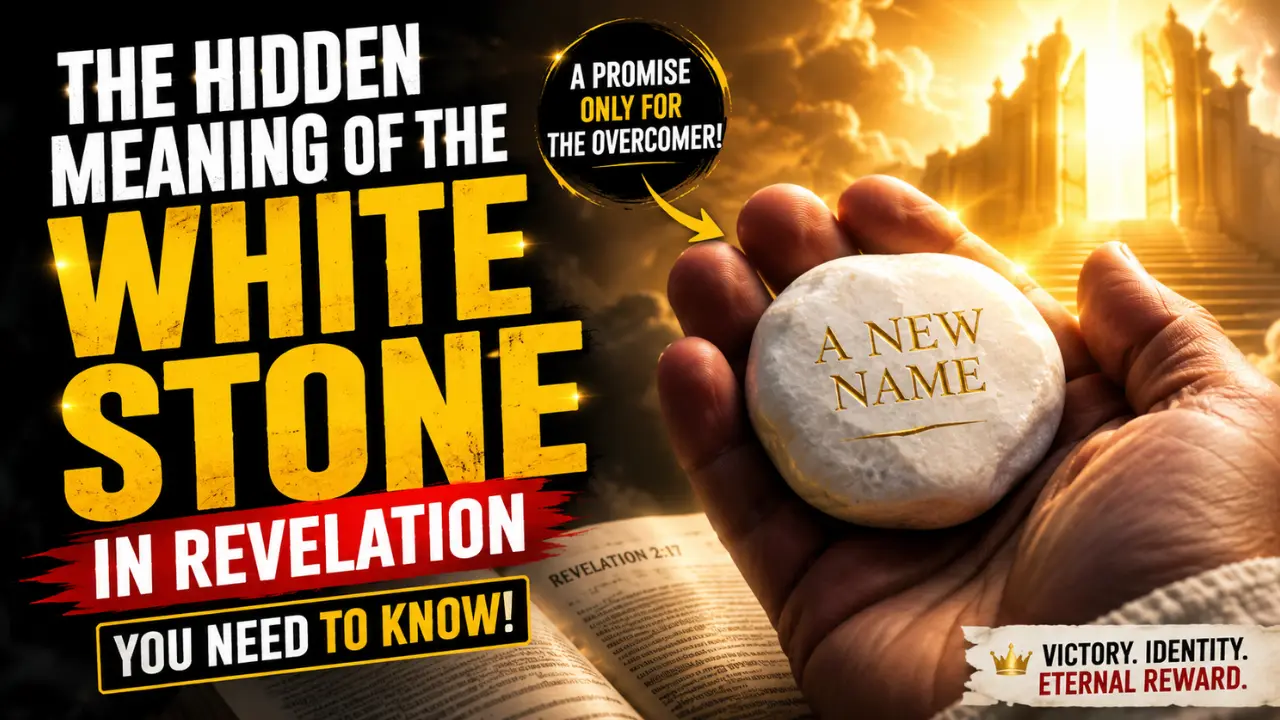

The image of a white stone in the Bible appears only briefly in Scripture, yet it carries remarkable spiritual depth. Hidden within a single verse in the book of Revelation is a symbol that has fascinated Bible readers, theologians, historians and devoted Christians for centuries. The white stone represents far more than an ancient object. It points toward acceptance, victory, identity, intimacy with God and the promise of eternal belonging.
Many believers read over this mysterious symbol without realizing how powerful its message truly is. In a world where identity is constantly challenged and approval is often sought from people, the biblical white stone reveals how God personally sees and receives His faithful followers, much like other [symbols of divine approval in Scripture — What Does Divine Approval Mean in the Bible].
White Stone in Revelation
The primary reference comes from Book of Revelation 2:17:
“To the one who is victorious, I will give some of the hidden manna. I will also give that person a white stone with a new name written on it, known only to the one who receives it.”
This statement was spoken by Jesus Christ to the church in Pergamum, one of the seven churches addressed in Revelation. At first glance, the meaning may seem unclear. Why a stone? Why white? Why a secret new name?
Understanding the cultural and spiritual background transforms this verse into one of the most intimate promises in Scripture, especially when read alongside [the seven churches in Revelation — The Seven Churches of Revelation Explained].
Biblical Meaning of White
Throughout the Bible, the colour white consistently symbolizes purity, holiness, victory, righteousness and divine approval. White garments, white hair, white clouds and white robes appear repeatedly in biblical visions and teachings, especially in passages that describe God’s presence and the future hope of believers.
In Revelation especially, white is associated with those who overcome through faith. The righteous are clothed in white garments because they have been cleansed and redeemed, which connects closely with [white garments in Revelation — What Do White Garments Symbolize in the Bible]. White also reflects spiritual victory and honour in the presence of God.
The white stone therefore immediately communicates something positive and heavenly. It is not a symbol of judgment or condemnation. It represents acceptance before God, along with the promise of belonging, approval and eternal life.
White and Spiritual Purity
The Bible frequently connects whiteness with spiritual cleansing.
Isaiah 1:18 says:
“Though your sins are like scarlet, they shall be as white as snow.”
This imagery shows transformation. Sin stains the soul but God removes guilt completely. The white stone becomes a visible reminder that believers are forgiven, spiritually renewed and made clean before Him.
White Represents Victory
In the ancient world, victorious athletes and conquering rulers often received white objects or wore white clothing during celebrations. Revelation uses this imagery repeatedly to describe spiritual triumph and endurance through suffering.
The white stone is connected directly to “the one who is victorious.” It is a reward for perseverance and faithfulness. It points to the believer’s final victory through Christ and the honor given to those who remain steadfast in their faith.
Historical Uses of the White Stone
Bible scholars have identified several historical uses of white stones during the time of the Roman Empire. Each possibility adds another layer to the symbol’s meaning and helps explain why this image would have carried such deep significance for early Christians.
White Stones in Ancient Courts
In some ancient legal systems, jurors used stones to declare judgment. A black stone represented guilt, while a white stone represented acquittal or innocence.
This background creates a stunning spiritual picture. Through Christ, believers are declared innocent before God. The white stone symbolizes divine pardon and complete forgiveness, reflecting the same hope found in [justification by faith — What Does Justification Mean in the Bible].
For Christians struggling with shame, failure or past sins, this image carries enormous emotional weight. God does not merely tolerate His people. He justifies them. The white stone becomes a reminder that their guilt has been removed and their standing before God has been restored.
White Stones as Invitations
In Roman culture, white stones were sometimes used as admission tokens to important feasts, celebrations or public events.
This connects beautifully with the promise of eternal fellowship with God. The white stone may symbolize entry into the heavenly kingdom and participation in the marriage supper of the Lamb. It points to acceptance, welcome and belonging in God’s eternal family.
The believer is not excluded from God’s presence. The white stone becomes an invitation into eternal communion and joyful fellowship with Him.
White Stones as Victory Symbols
Some historians believe winning athletes received engraved stones commemorating their victory. These stones sometimes granted special privileges or honours.
If this meaning is intended, the white stone symbolizes spiritual victory through endurance and faithfulness. Christians who remain steadfast receive honour from God Himself. It reflects the biblical theme that faithful perseverance leads to eternal reward and recognition in God’s kingdom.
Mystery of the New Name
One of the most fascinating parts of the verse is the “new name written on it, known only to the one who receives it.”
This deeply personal detail reveals the intimacy of God’s relationship with believers.
Becoming New in Christ
Throughout Scripture, God changes names when assigning divine purpose.
- Abram became Abraham
- Jacob became Israel
- Simon became Peter
A new name often represented transformation, destiny or covenant relationship.
The white stone’s hidden name may symbolize the believer’s fully redeemed identity in eternity. God sees His people not according to their failures but according to His finished work in them.
Personal Relationship With God
The private nature of the name is important. It is “known only to the one who receives it.”
This suggests closeness and personal fellowship. Christianity is not merely religious membership or external ritual. It is a relationship between God and the individual soul.
The white stone points to a future where believers experience complete intimacy with God beyond anything known on earth.
Hidden Manna and the White Stone
The verse also mentions “hidden manna” alongside the white stone. The two symbols work together and reveal both God’s care and His approval toward those who remain faithful.
Manna was the supernatural bread God provided to Israel in the wilderness. It sustained the people daily and reminded them that their survival depended completely on God’s provision.
Hidden manna symbolizes spiritual nourishment, eternal life and Christ as the true bread from heaven. It points beyond physical food to the deeper satisfaction and life that only God can give, especially when connected to [Jesus as the bread of life — What Does Bread of Life Mean in the Bible].
Together, the hidden manna and white stone reveal two promises:
- God sustains His people eternally
- God accepts His people personally
The believer receives both provision and belonging. God not only meets spiritual needs but also welcomes His people into close relationship with Him. The pairing of these images creates a picture of complete security, fellowship and eternal hope for the faithful believer.
White Stone and Modern Faith
Although the symbol comes from an ancient context, its message speaks powerfully to modern spiritual struggles.
Desire to Be Accepted
Human beings naturally long to be accepted, valued and known. Modern culture often ties identity to achievement, popularity, wealth, appearance or social approval.
The white stone offers a radically different foundation. God’s acceptance is not earned through worldly status. It is given through faithfulness to Christ.
For believers who feel rejected, unseen, or spiritually unworthy, the white stone reminds them that heaven’s verdict matters more than public opinion.
Grace Beyond Shame
Many Christians quietly battle guilt from past sins, failures and regrets. Even after receiving forgiveness, some continue carrying emotional condemnation.
The white stone symbolizes acquittal. In Christ, the believer is not eternally defined by past mistakes, because [freedom from shame through Christ — What the Bible Says About Shame and Forgiveness] is central to the gospel message.
This does not minimize sin. Instead, it magnifies grace.
Hope in the White Stone
Revelation was written during intense persecution and suffering. The promise of the white stone reminded believers that earthly hardship was not the final chapter.
Faithfulness would ultimately lead to victory, reward, intimacy with God and eternal life.
That promise still strengthens believers facing discouragement, spiritual fatigue or opposition today.
Different Views of the White Stone
Various Christian traditions interpret the white stone slightly differently, though most agree on its central themes of acceptance and victory.
Evangelical Interpretation
Many evangelical scholars emphasize salvation, victory through Christ and the believer’s new identity.
The white stone is commonly viewed as symbolic of forgiveness, eternal acceptance and personal relationship with God.
Catholic Interpretation
Catholic interpretations often connect the symbol with purity, sanctification, heavenly reward and participation in eternal communion with God.
The hidden name may also reflect the soul’s unique relationship with the Creator.
Prophetic and Symbolic Interpretations
Some prophecy teachers view the white stone as part of the future rewards believers receive in eternity. Others focus on its symbolism of heavenly citizenship and divine recognition.
Despite interpretive differences, the dominant themes remain remarkably consistent:
- purity
- victory
- acceptance
- intimacy
- eternal belonging
White Stone for the Faithful
One detail is often overlooked in Revelation 2:17. The promise is specifically given “to the one who is victorious.”
This points to endurance and faithful perseverance over time.
The Christian life involves spiritual warfare, temptation, pressure and perseverance. Believers often face seasons of doubt, suffering, opposition or discouragement. The white stone is not presented as a casual ornament. It is part of a victory promise given to those who continue trusting God through every challenge.
This does not mean believers earn salvation through works. Rather, genuine faith continues trusting God through difficulty. True faith remains anchored in Christ even when circumstances become painful or uncertain.
The white stone therefore becomes a symbol of hope for those who keep walking faithfully even when life becomes painful or uncertain. It reminds believers that God sees their endurance, honours their faithfulness and promises eternal acceptance and victory to those who overcome through Him.
Fully Known by God
Perhaps the most beautiful aspect of the white stone is the hidden name known only between God and the believer.
In a noisy world filled with labels, confusion and performance-based identity, Scripture points toward something sacred: God knows His people personally.
- Not generally.
- Not distantly.
- Personally.
The white stone symbolizes a future where every wound, misunderstanding, failure and struggle is finally redeemed in the presence of God. The believer receives not only forgiveness but also a perfected identity fully understood by the Creator Himself.
