
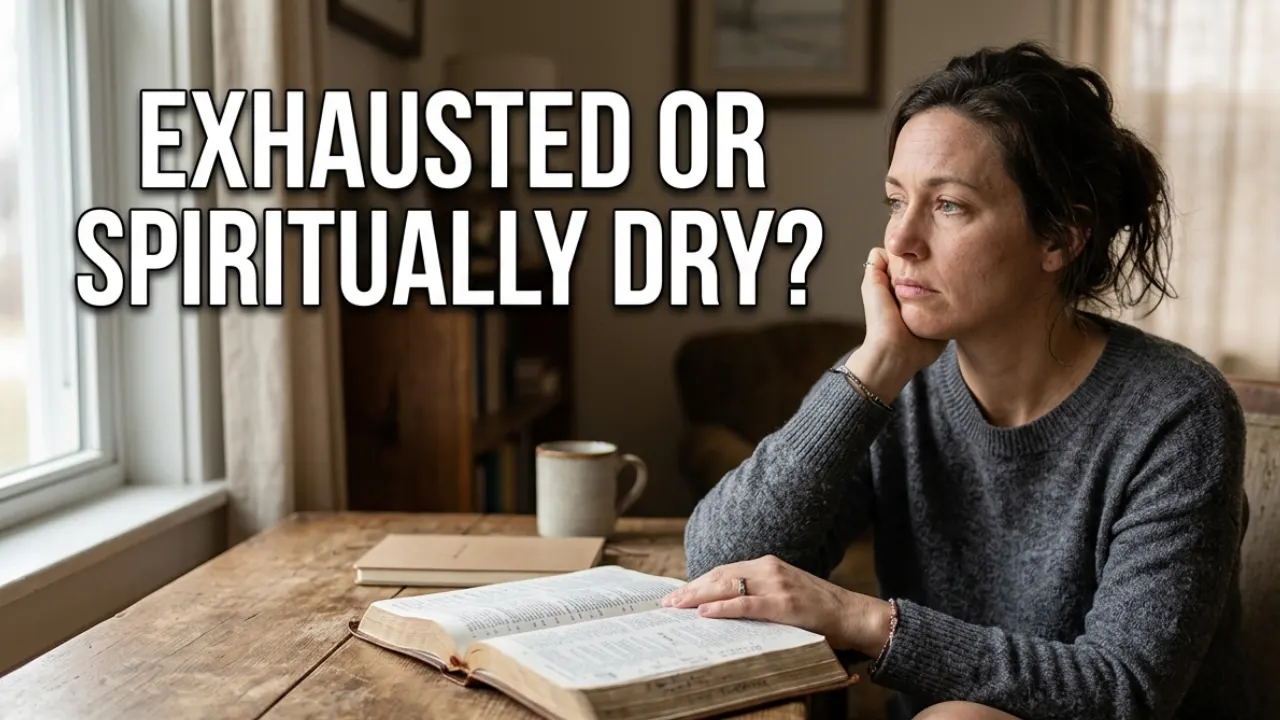

Many Christians go through seasons where they feel tired, emotionally numb, distant or spiritually unmotivated. Prayer feels harder. Worship feels empty. Even small responsibilities begin feeling unusually heavy. During moments like these, many believers quietly ask themselves one painful question:
“Am I spiritually failing?”
The difficult reality is that emotional exhaustion and spiritual dryness can appear very similar on the surface. Both can affect motivation, energy, focus, emotional stability and spiritual habits. Because of that similarity, many believers wrongly assume emotional fatigue automatically means they are far from God spiritually.
This confusion often creates unnecessary guilt and frustration. A person who truly needs emotional rest may force themselves into constant spiritual activity while becoming even more drained internally. In some cases, what they are experiencing may be connected to the quiet signs of spiritual burnout growing in the heart, especially when exhaustion begins affecting prayer, worship and spiritual desire over time.
The Bible gives wisdom for both situations. Scripture recognizes human weakness, emotional limits, grief, discouragement and seasons of spiritual struggle. Many faithful people throughout the Bible experienced emotional exhaustion without being abandoned by God. Others experienced seasons of spiritual distance that required renewed surrender and deeper dependence on Him.
Understand Emotional Exhaustion
Emotional Exhaustion and Human Limits
Emotional exhaustion happens when a person becomes mentally and emotionally drained over time. Constant pressure, stress, grief, responsibility, conflict, ministry demands or caregiving can slowly empty a person’s emotional strength.
This kind of exhaustion affects more than feelings. It can reduce focus, weaken motivation, increase irritability and even make prayer or Bible reading difficult. A believer may still love God deeply while feeling emotionally depleted, which is why understanding [why emotional exhaustion can affect your prayer life — When Prayer Feels Hard Because You Are Emotionally Tired] can bring clarity instead of shame.
The Bible never teaches that human beings are unlimited. God created people with physical, emotional, and mental boundaries. Ignoring those limits eventually affects the whole person.
Elijah After Mount Carmel
Elijah’s experience in 1 Kings 19 is one of the clearest biblical pictures of emotional exhaustion. Right after a powerful spiritual victory on Mount Carmel, Elijah collapsed emotionally. Fear overtook him after Jezebel threatened his life. He isolated himself, ran into the wilderness and even asked God to let him die.
Elijah was not experiencing a lack of faith alone. He was exhausted. His body, emotions and mind had reached a breaking point.
What is important is how God responded. The Lord did not begin with rebuke. He first provided rest, food, water and quiet care. Only after Elijah recovered physically and emotionally did God begin speaking direction and purpose into his life again.
This reveals something important about God’s character. He understands human weakness. He does not treat exhausted people with harshness.
Signs of Emotional Exhaustion
Emotional exhaustion often shows itself through several warning signs:
- Constant mental and emotional fatigue
- Difficulty focusing during prayer or Scripture reading
- Emotional numbness or irritability
- Feeling overwhelmed by ordinary tasks
- Desire to withdraw from people
- Loss of motivation in daily responsibilities
These symptoms can make a believer feel spiritually weak even when the deeper issue is emotional depletion.
What Emotional Exhaustion Needs
Emotional exhaustion requires restoration, not shame. Scripture consistently shows the value of rest, wisdom and dependence on God.
Rest is not laziness when a person has been deeply drained. Healthy boundaries and balanced rhythms matter spiritually because God designed human beings with limits. Learning [how biblical rest restores emotional strength — A Christian Guide to Rest Without Guilt] can help weary believers receive God’s care instead of pushing past every warning sign.
Exhausted believers also need honest prayer. Instead of pretending to be strong, they can come before God truthfully. The Psalms repeatedly show people bringing weakness and distress openly before the Lord.
Trusted Christian community also matters. Isolation usually deepens exhaustion. Wise believers can provide encouragement, perspective and support during difficult seasons.
Most importantly, emotional exhaustion reminds people that they are not self-sufficient. Human weakness often becomes a place where dependence on God grows deeper.
SIMPLE COMPARISON
| Emotional Exhaustion | Spiritual Dryness |
|---|---|
| Often stress-related | Often spiritually rooted |
| Mental and emotional depletion | Spiritual disconnection |
| Overstimulation and overload | Loss of spiritual sensitivity |
| Needs rest and recovery | Needs renewal and reconnection |
| Can affect anyone | Can develop gradually over time |
Understand Spiritual Dryness
When Your Connection With God Feels Weak
Spiritual dryness is different from emotional exhaustion because it directly affects a person’s sense of intimacy and connection with God. A believer may feel spiritually dull, distant or empty even while continuing normal spiritual activities.
Sometimes spiritual dryness happens during suffering or testing. Other times it develops through neglect, distraction, compromise or spiritual passivity. Not every dry season is caused by rebellion but dryness always impacts spiritual hunger and responsiveness.
A person can appear spiritually active outwardly while inwardly feeling disconnected from communion with God. This is why recognizing [the difference between spiritual dryness and spiritual neglect — Why You Feel Distant From God Even When You Still Believe] can help believers respond with wisdom.
David’s Longing for God
David often described spiritual dryness in the Psalms. In Psalm 42, he wrote, “My soul thirsts for God, for the living God.” In Psalm 63, he described his soul as thirsty in a dry and weary land.
What stands out is that David still longed for God even while struggling. Spiritual dryness did not remove his desire completely. Instead, it created deeper awareness of his need for God’s presence.
This is different from total spiritual indifference. A dry believer may still hunger for closeness with God while feeling spiritually weak or distant.
Signs of Spiritual Dryness
Spiritual dryness may include:
- Loss of passion for prayer or worship
- Mechanical spiritual habits
- Feeling distant from God during spiritual activities
- Reduced sensitivity toward conviction
- Weak spiritual hunger
- Difficulty enjoying communion with God
These struggles usually center more on the inner spiritual life than emotional overload alone.
What Spiritual Dryness Needs
Spiritual dryness requires renewed pursuit of God. Believers must continue seeking Him even when emotions feel absent.
Consistent prayer and Scripture meditation remain important during dry seasons. Spiritual growth cannot depend only on emotional feelings. Faithfulness matters even when passion feels weak.
Where sin or neglect exists, honest repentance is necessary. Dryness sometimes reveals areas where intimacy with God has slowly weakened over time.
Worship also becomes important during spiritually dry periods. Choosing to worship God despite emotional emptiness strengthens trust and dependence on Him rather than on feelings alone.
The Holy Spirit renews spiritual life. Lasting renewal does not come merely from emotional experiences but from deeper fellowship with God Himself.
Emotional Exhaustion vs Spiritual Dryness
Root Cause Is Different
Emotional exhaustion usually grows from external pressure and depleted emotional strength. Stress, grief, overwork, ministry demands and constant responsibility often contribute to it.
Spiritual dryness centres more on spiritual intimacy and responsiveness toward God. The issue reaches deeper into the inner spiritual life.
One condition primarily drains the emotions. The other directly affects spiritual communion.
Internal Experience Is Different
Emotionally exhausted people often feel overloaded, mentally tired and emotionally empty. Their entire system feels strained.
Spiritually dry believers often describe feeling distant from God even while continuing spiritual routines. The struggle feels more connected to spiritual hunger and closeness with God.
The difficulty is that both experiences can produce similar outward symptoms like withdrawal, lack of motivation or reduced spiritual energy.
Biblical Response Is Different
Emotional exhaustion often requires recovery, rest, support and healthy limits. A person may need physical restoration and emotional healing before regaining clarity and strength.
Spiritual dryness calls for renewed spiritual pursuit, deeper prayer, repentance where necessary and perseverance in communion with God.
Applying the wrong solution can create more frustration. An emotionally exhausted believer may condemn themselves unnecessarily. A spiritually dry believer may focus only on external recovery while ignoring deeper spiritual issues.
Sometimes Both Happen Together
Sometimes emotional exhaustion and spiritual dryness overlap. A deeply exhausted believer may struggle to engage spiritually because their emotional strength has collapsed.
At the same time, spiritual neglect can eventually affect emotional health as well.
This is why careful self-examination matters. Christians should avoid quick assumptions and honestly seek God’s wisdom about their condition, especially when they are unsure whether they need [spiritual renewal, emotional healing or both — How to Know What Your Soul Needs in a Difficult Season].
Discerning What You Are Feeling
Ask God Honest Questions
Discernment begins with honesty. Believers should prayerfully examine their lives before God.
Questions like these can help:
- Am I emotionally overwhelmed or constantly drained?
- Have I ignored rest and healthy boundaries?
- Do I still desire God beneath my weakness?
- Is there spiritual neglect or hidden compromise in my life?
- Have I become emotionally exhausted, spiritually passive, or both?
Honest reflection helps reveal deeper causes instead of only surface symptoms.
Do Not Assume God Left You
Many believers quickly assume God has left them during difficult seasons. Scripture repeatedly shows that this is not true.
Human emotions are real but they are not always accurate indicators of God’s presence. Exhausted and struggling believers are not abandoned believers.
God understands weakness. He shows compassion toward weary people throughout Scripture. His patience remains steady even during confusing seasons.
Seek Wise Spiritual Guidance
Difficult seasons are not meant to be faced alone. Mature believers, pastors and trusted spiritual mentors can provide needed wisdom and perspective.
Outside counsel often helps people recognize blind spots or misunderstandings they cannot see clearly themselves.
Seeking guidance is not weakness. It is wisdom.
Jesus Cares for the Weary
Christ Welcomes the Weary
In Matthew 11:28-30, Jesus invites weary and burdened people to come to Him for rest. This invitation reaches both emotionally exhausted and spiritually struggling believers.
Christ does not push away weak people. He welcomes them.
His rest is deeper than temporary relief. Jesus restores hearts, renews strength and gently leads those who feel overwhelmed.
God Remains Faithful in Hard Seasons
Feelings change, but God’s faithfulness does not. Some seasons feel spiritually rich, while others feel painfully difficult. Yet God remains present in both.
The believer’s hope is not based on emotional intensity alone. It is rooted in the unchanging character of God.
Even during exhaustion or dryness, God continues working patiently within His people.
Responding to the Real Problem
Emotional exhaustion and spiritual dryness may look similar but they are not the same struggle. One mainly drains emotional strength. The other affects spiritual intimacy and responsiveness toward God.
Both conditions are real. Both deserve honest attention. And both require biblical wisdom instead of guilt-driven assumptions.
Some believers need rest, recovery and support. Others need renewed spiritual pursuit and deeper communion with God. Many may need both at the same time.
The important thing is to approach God honestly. He is not distant from weary people. He gives grace, wisdom, rest, healing and renewal to those who seek Him faithfully.
Frequently Asked Questions
Is emotional exhaustion the same as spiritual dryness?
No. They can overlap, but they often have different causes and solutions.
Why do both conditions feel similar?
Because both can affect prayer, motivation, focus and emotional energy.
Can stress affect spiritual life?
Yes. Prolonged stress can make spiritual practices feel emotionally difficult.
Does spiritual dryness always mean sin?
Not always. Sometimes it develops gradually through discouragement or disconnection.
What helps emotional exhaustion biblically?
Rest, honesty, prayer, support, quietness and emotional recovery often help.
