
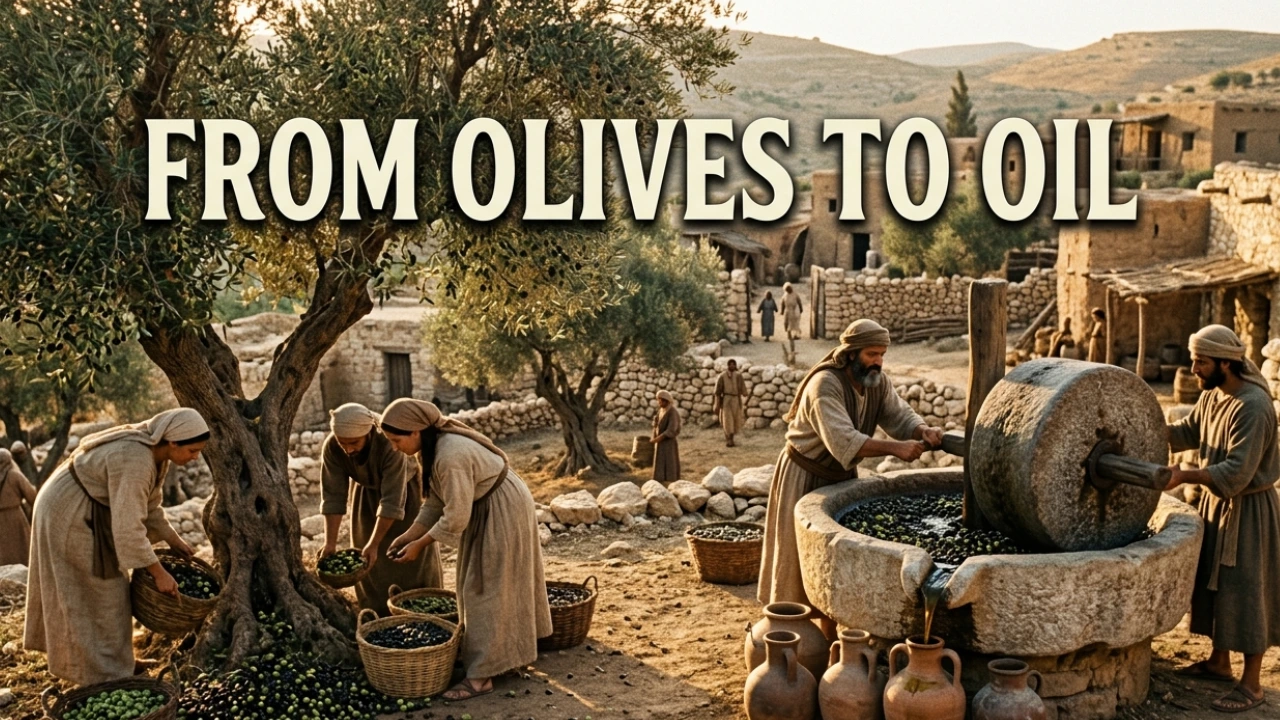

When modern readers think of oil, they may picture something already bottled and ready to use. But in biblical times, oil came through labour. It began in olive groves and passed through hands, stones, presses and storage jars before it reached the home or sanctuary.
Olive oil was one of the most valuable everyday resources in the biblical world. It was used for light, cooking, medicine, beauty, trade and worship. Because of that, making oil was both practical and deeply meaningful.
Learning the step-by-step process helps us see why oil appears so often in the Bible. It was not just a substance. It was a sign of provision, preparation and blessing.
1. Olives Ripened on the Trees
Everything began with olive trees. These trees were common across biblical lands and were known for producing fruit year after year. But good oil did not begin with pressing. It began with waiting.
The olives had to ripen on the tree before harvest. If they were picked too early the amount and quality of oil would be lower. If they were left too long, the fruit could lose quality. So people had to watch the season carefully and harvest at the right time.
This first step reminds us that making oil was never rushed from the start. Even before any hand touched the fruit, time and timing already mattered.
2. Gathering the Olives
Once the olives were ready, they had to be gathered. Some were picked by hand. Others were brought down by gently shaking the branches or striking them so the fruit would fall.
Cloths or coverings could be spread on the ground to catch the olives. After that, they were gathered into baskets or containers and carried away for the next stage. This was physical work and during harvest it likely involved whole families or groups working together.
There was nothing effortless about it. Before oil ever reached a jar, it had already passed through human hands many times.
3. Cleaning and Sorting the Harvest
After harvest, the olives had to be cleaned and sorted. Leaves, twigs, dust and dirt needed to be removed before pressing could begin.
This part may sound small, but it mattered. Not every olive was in the same condition. Some were bruised, damaged or overripe. If poor fruit was mixed in with the good, the final oil would suffer for it.
That is why sorting was worth the time. Better olives meant better oil. It was one more reminder that quality did not appear at the end by accident. It was protected all the way through the process.
4. Crushing the Olives
Once the olives were cleaned, they were crushed. This broke open the fruit so the oil inside could eventually be released.
In simpler settings, people could crush olives with stones or hand tools. In larger production, heavy stone wheels might be used to press and grind the olives into a thick mash. This mash included the flesh, skin and pits.
At this stage, the olives no longer looked like fruit ready for harvest. They had become pulp, which was exactly what was needed. Crushing was the turning point from harvest to extraction.
5. Preparing the Pulp for Pressing
After crushing, the olive pulp was gathered and packed into woven mats, baskets or pressing bags. This helped hold the mash together and made it easier to place under pressure.
This was more than a simple transfer step. Packing the pulp well made the next stage cleaner and more effective. The woven material allowed liquid to pass through while keeping most of the solid matter contained. Without this step, pressing would be messier and less controlled.
It also shows how practical the whole process was. People had learned how to work with the fruit in a way that made extraction possible without wasting the harvest.
6. Pressing Out the Oil
Now came the main act of extraction. The packed pulp was placed under pressure using a press. Depending on the setting, this might involve a wooden beam, heavy weights or a stone press designed to squeeze the pulp.
As the pressure increased, liquid began to run out. This was the moment people had worked toward, but what came out was not pure oil yet. It was a mixture of oil, water and bits of olive matter.
Even so, this was the stage where the hidden value of the fruit finally became visible. What had been locked inside the olive was now being brought out through force and careful handling.
7. Letting the Liquid Settle
Once the liquid was collected, it had to be left alone for a while. This step required patience more than strength.
The fresh liquid was still mixed. It was not ready to use as it was. So it was poured into jars, basins or vats and allowed to settle naturally. Over time, the heavier particles and water moved downward, while the oil rose to the top.
This part of the process was quiet, but it was important. After the labour of harvesting, crushing and pressing, there was still a need to wait. Good oil was not only produced by effort. It also depended on letting separation happen properly.
You May Also Like
If you want to explore more about oil in the Bible, these articles will help you go deeper:
- How Oil Was Used in Biblical Worship and What It Meant
A clear look at how oil was used in worship and what it revealed about holiness, consecration and God’s presence. - Biblical Oils and Modern Essential Oils: Key Differences
A simple comparison showing how oils in the Bible differ from modern essential oils in purpose, meaning and use. - You Anoint My Head With Oil Meaning in Psalm 23
8. Collecting the Pure Oil
After the liquid had settled, the clearer oil on top could be removed. This had to be done with care so the oil would not be mixed again with the water or residue below.
The best oil was usually the clearest portion taken first. That made it especially valuable. It could be used for food, for lamps and at times for more honoured purposes. Lower-quality oil could still be useful, but the purest oil was naturally prized more highly.
This step helps explain why oil was valuable in biblical life. People were not just producing any liquid. They were working toward something clean, useful and worth preserving.
9. Storing and Using the Oil
Once the oil was collected, it was stored in clay jars or other containers. Storage mattered because oil was too useful to waste. People needed to keep it ready for daily use.
Oil served many purposes:
- cooking meals
- lighting lamps
- caring for skin
- helping with healing
- use in worship and anointing
That wide range of uses is one reason oil appears so often in Scripture. It belonged to both ordinary life and sacred life. It was practical, valuable and deeply familiar.
10. A Process That Required Patience
When the whole process is viewed together, one thing becomes clear: oil took work. It did not come quickly and it did not come cheaply.
People had to wait for the fruit to ripen, gather it carefully, sort it, crush it, press it let it settle and collect it with care. Each stage depended on the one before it. A rushed step could affect the final result.
That helps explain why oil mattered so much in biblical times. It was not simply a product people happened to have. It was something shaped by labour, attention and time.
Oil Came Through a Real Process
Oil in the Bible was more than a symbol. It was something people made through a long and careful process. From ripe olives on the tree to clear oil stored in jars, every step required effort, patience and skill.
Seeing that process more clearly helps bring Scripture closer to everyday life. When the Bible mentions oil, it is talking about something real, useful and hard-won. It came from the land, through human labour, into the rhythm of daily living.
FAQ Section
Did people make oil by hand in biblical times?
Yes, oil production involved human labour. People harvested olives, sorted them, crushed them, pressed the paste and collected the oil. Larger communities may have used more advanced presses, but the process still depended on careful manual work.
What was the first step in making oil?
The first step was harvesting ripe olives from the trees. Workers gathered them by hand or by beating branches gently so the olives would fall onto cloths or the ground.
What happened after the olives were harvested?
After harvesting, olives were sorted and cleaned. This helped remove leaves, dirt and damaged fruit before crushing. Cleaner olives produced better oil and made the final product more useful.
Was biblical oil used only for worship?
No, oil was used in many everyday ways. It lit lamps, enriched food, softened skin, helped with wounds and also served sacred purposes in anointing and offerings.
What can Christians learn from how oil was made?
The process shows that valuable things often come through patience, pressure and preparation. This gives deeper meaning to biblical images of oil, especially when connected with anointing, endurance and God’s provision.

2 thoughts on “How Was Oil Made in Biblical Times Step by Step”