
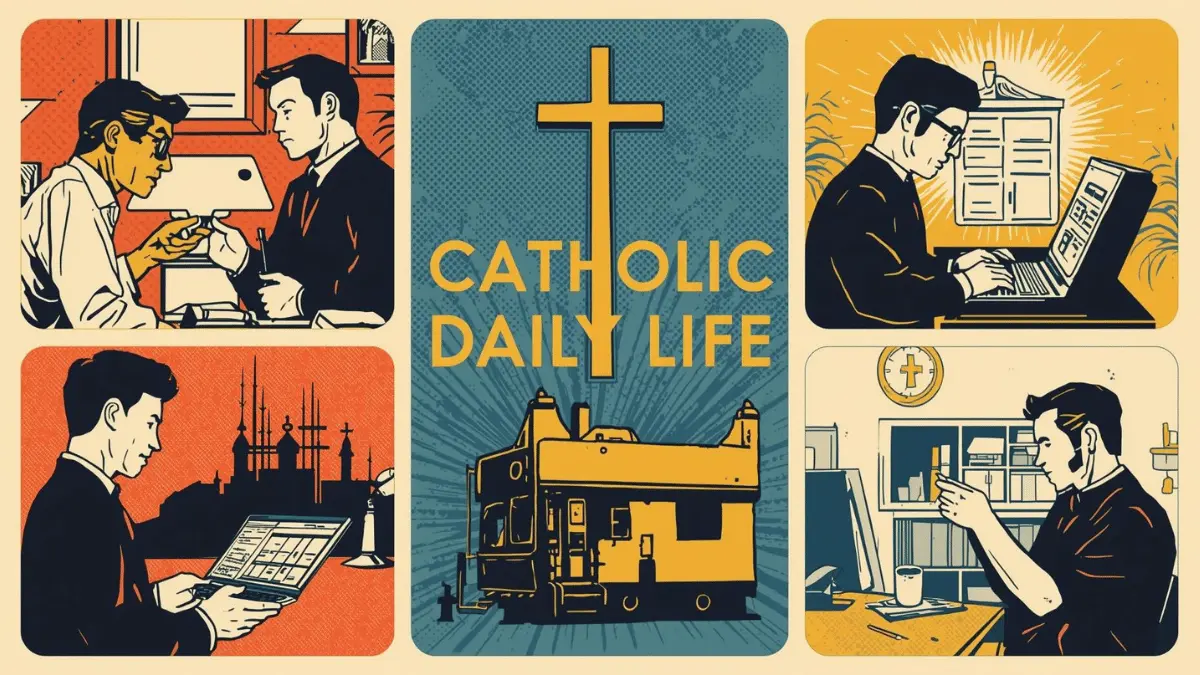

Many people think Catholic life begins and ends with attending Mass on Sunday. From the outside, it can appear structured, ritual-focused, or centred mainly on church attendance. That assumption feels reasonable, but it misses how deeply faith shapes ordinary Catholic daily life.
For practicing Catholics, faith is not limited to a building or a single hour each week. It quietly influences daily routines, decisions, relationships, and even how time is understood. Catholic daily life is less about constant religious activity and more about learning to live with spiritual awareness in ordinary moments.
Faith as a Daily Rhythm, Not a Weekly Event
Catholic life emphasizes continuity. Faith is meant to flow through the entire week rather than peak on Sundays and fade afterward. Many Catholics view daily life as a rhythm of work, prayer, responsibility, and reflection.
This approach reflects the belief that God is present in everyday experiences. Ordinary tasks are not separate from faith but become places where faith is practiced quietly and consistently.
Daily Prayer in Catholic Life
Prayer is central to Catholic daily life, but it is often simpler than outsiders expect. While some Catholics pray structured prayers such as the Our Father or the Rosary, others practice short moments of reflection or spontaneous prayer throughout the day.
The emphasis is not on length or perfection. It is on regular connection. Brief prayers in the morning, before meals, or at night help keep faith woven into daily routine.
Also Read: What Are Emotional Needs According to the Bible? A Faith-Centred Understanding
How Sacraments Shape Everyday Living
Sacraments play an important role in Catholic life, but their influence extends beyond the moment they are received. Confession encourages regular self-examination. The Eucharist reinforces gratitude and humility. Marriage and family life are seen as spiritual callings, not only personal choices.
Rather than being isolated religious events, sacraments shape how Catholics approach forgiveness, responsibility, commitment, and service in daily life.
Work, Responsibility, and Faith
Catholic teaching emphasizes the dignity of work. Daily labour is not viewed as separate from spiritual life but as a way of participating in God’s creative purpose. Whether professional or domestic, work is often approached as a responsibility carried out with integrity and care.
This belief influences how Catholics view effort, honesty, and perseverance. Work becomes more than productivity. It becomes an expression of stewardship and service.
Family Life and Domestic Faith
For many Catholics, family life is the primary place where faith is lived daily. Simple practices such as shared meals, blessings, and teaching children values become expressions of belief rather than formal religious instruction.
The home is often described as a domestic church. Faith is passed on through example, patience, and consistency rather than constant instruction or pressure.
Why Catholic Life Can Appear Rule-Focused
From the outside, Catholic life can seem governed by rules, traditions, and obligations. This perception often leads to the assumption that Catholic faith is rigid or joyless.
For practicing Catholics, these structures are usually understood as guides rather than burdens. They provide boundaries that shape discipline, reflection, and balance in daily life rather than limiting freedom.
Tradition and Daily Decision-Making
Catholic tradition influences how many believers make everyday decisions. Teachings on ethics, compassion, and responsibility often guide choices related to relationships, finances, and community involvement.
Rather than offering answers for every situation, Catholic teaching encourages conscience formation. Daily life becomes an ongoing process of discernment rather than strict rule enforcement.
Also Read: What the Bible Says About Orphans: God’s Heart for the Fatherless
Service and Quiet Acts of Charity
Catholic daily life places strong emphasis on service, though it is often quiet and unnoticed. Small acts of kindness, volunteering, and concern for the vulnerable are seen as expressions of faith rather than optional extras.
This focus reflects the belief that faith is lived through action. Serving others becomes a natural extension of prayer rather than a separate religious task.
Handling Failure and Forgiveness
Catholic life openly acknowledges human weakness. Mistakes, failures, and struggles are not denied or hidden. Practices like confession emphasize accountability paired with mercy.
This approach encourages humility rather than perfectionism. Daily life becomes a space for growth, repentance, and renewal rather than constant spiritual pressure.
Why Catholic Daily Life Is Often Misunderstood
Many misunderstandings come from observing Catholic practices without understanding their purpose. Rituals can look repetitive, and traditions can appear outdated when removed from context.
When viewed from within, these practices often provide stability, meaning, and continuity in a fast-changing world. Catholic daily life is less about outward display and more about inner formation.
Living Faith in Ordinary Moments
Catholic daily life is shaped by the belief that holiness is not reserved for dramatic acts. It is cultivated in patience, responsibility, forgiveness, and consistency.
This perspective invites believers to see everyday life as spiritually meaningful. Faith becomes something lived quietly rather than constantly explained.
Also Read: Can Christians Believe in Twin Flames? What the Bible Says About Soul Connections
Final Reflection
Catholic daily life is not defined by constant religious activity or strict perfection. It is shaped by rhythm, discipline, prayer, and presence. Faith is carried into work, family, service, and ordinary routines.
When understood clearly, Catholic daily life reveals a way of living that seeks God not only in sacred moments, but in the ordinary spaces where life actually happens.
People Also Ask
What is Catholic daily life like?
Catholic daily life includes prayer, work, family responsibilities, and moral decision-making guided by faith. It is lived through routine rather than constant religious activity.
Do Catholics pray every day?
Many Catholics pray daily, often through short prayers, reflections, or traditional prayers. The focus is consistency rather than length or perfection.
Is Catholic life centred only on Sunday Mass?
Mass is central, but Catholic life extends beyond Sunday. Faith influences daily routines, family life, work, and personal choices throughout the week.
How do sacraments affect daily Catholic life?
Sacraments shape attitudes toward forgiveness, gratitude, commitment, and responsibility. Their influence continues beyond the moment they are received.
Why does Catholic life appear rule-focused to outsiders?
Catholic practices can look structured, but many Catholics view them as guides that support discipline and reflection rather than restrictions.
