
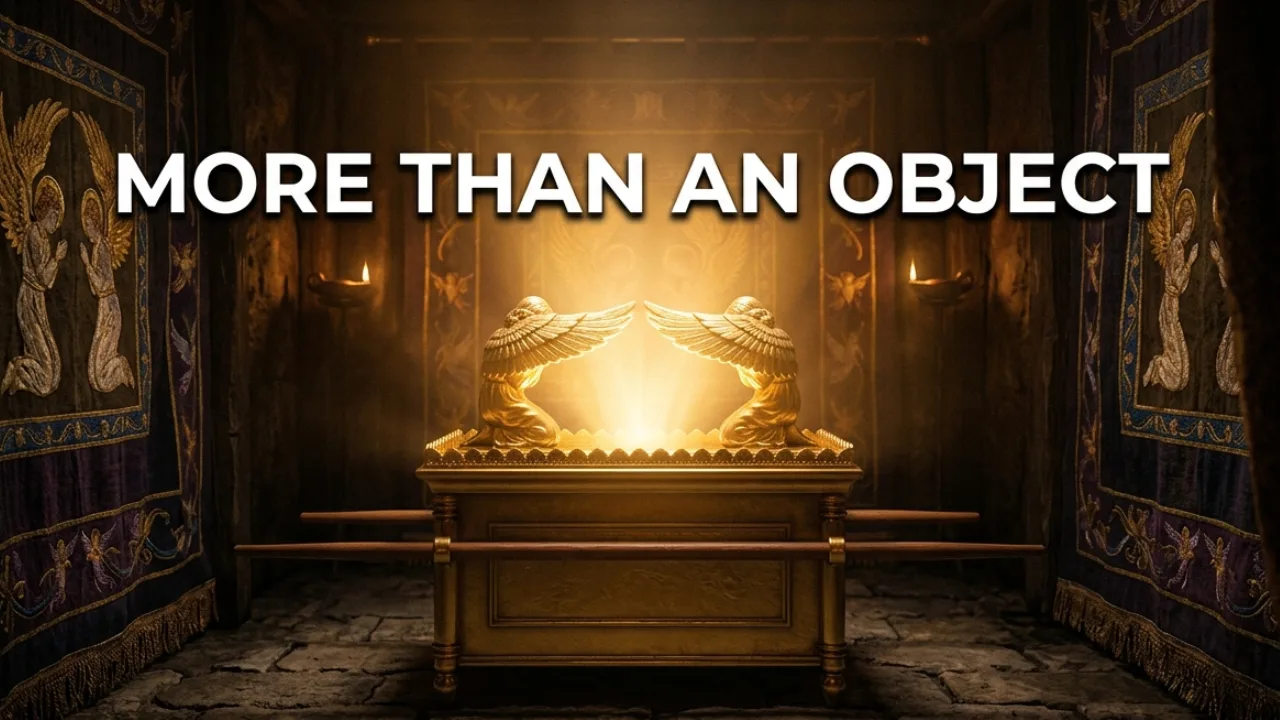

The Ark of the Covenant in the Bible was a sacred, gold-covered chest that God commanded Israel to build. It held the covenant testimony and served as a sacred sign of God’s holiness, authority, mercy and covenant relationship with Israel.
The Ark was not an idol or a magical object. Its importance came from God, who designed it, assigned its purpose and chose to meet with Moses above its golden cover.
Its story stretches from Mount Sinai through Israel’s wilderness journey, the conquest of Canaan, the reigns of David and Solomon and the later reforms of King Josiah.
What Was the Ark of the Covenant?
The Ark was a sacred chest built according to the instructions God gave Moses in Exodus 25. In this context, “ark” means a chest or container, not a large boat like Noah’s ark.
Scripture also calls it the Ark of God, the Ark of the Lord, the Ark of the Testimony and the Ark of the Covenant of the Lord. These names show that it belonged to God, preserved the covenant testimony, and represented His relationship with Israel.
The Ark stood in the Most Holy Place of the tabernacle and later in Solomon’s Temple. A veil separated this room from the rest of the sanctuary. Only the high priest entered it and he did so once each year on the Day of Atonement.
Who Built the Ark and What Did It Look Like?
God gave Moses the design while Israel camped near Mount Sinai. Bezalel, a craftsman whom God equipped for the work, built it according to those instructions.
The Ark was made from acacia wood and covered with pure gold inside and outside. It measured two and a half cubits long, one and a half cubits wide and one and a half cubits high.
Four gold rings held poles made from gold-covered acacia wood. The poles allowed those appointed by God to carry the Ark without touching it directly.
A solid gold cover, commonly called the mercy seat or atonement cover, rested on top. Two golden cherubim faced one another above it with their wings extended.
God told Moses that He would meet with him and speak from above the mercy seat, between the cherubim. The Ark therefore represented both God’s nearness and the reverence His holiness required.
What Was Inside the Ark of the Covenant?
The two stone tablets containing the covenant commandments formed the Ark’s central contents. They connected it directly with the covenant established between God and Israel at Mount Sinai.
Scripture also connects a jar of manna and Aaron’s staff with the Ark. Exodus describes these objects as being kept before the Lord or before the testimony, while Hebrews 9:4 closely associates them with the Ark.
By the time Solomon dedicated the Temple, 1 Kings 8:9 says that only the two stone tablets remained inside it. Scripture does not explain every detail behind these descriptions or state when the other objects were removed.
What Was the Purpose of the Ark of the Covenant?
The Ark served several connected purposes in Israel’s worship.
It preserved the covenant testimony
The tablets reminded Israel that its relationship with God included obedience and covenant responsibility.
It represented God’s presence
God promised to meet with Moses above the Ark’s cover and speak from between the cherubim.
This did not mean that God lived inside the chest. The Ark marked the place where He chose to reveal His presence within Israel’s worship.
It stood at the center of atonement
On the Day of Atonement, the high priest sprinkled sacrificial blood on and before the mercy seat. This showed that sinful people needed cleansing, sacrifice, and mercy to approach a holy God.
The meaning of the mercy seat above the Ark explains how judgment, forgiveness and God’s presence met at this sacred place.
It taught reverence and obedience
God gave detailed instructions for constructing, carrying and approaching the Ark. Israel could not handle it according to convenience or personal preference.
What Is the Story of the Ark of the Covenant?
Built at Sinai and carried through the wilderness
After delivering Israel from Egypt, God established His covenant with the nation at Mount Sinai. Bezalel constructed the Ark and Moses placed the covenant testimony inside it.
During Israel’s journeys, the Kohathite Levites carried the sacred furnishings after the priests covered them. The Ark travelled with the covenant community as a sign that God led His people.
The Jordan River and Jericho
When Israel entered the Promised Land, priests carried the Ark into the Jordan River. The water stopped, allowing the people to cross on dry ground.
The Ark also appeared in Israel’s procession around Jericho. These miracles came from God, not from any power within the object.
Captured and returned by the Philistines
During the time of Eli, Israel carried the Ark into battle as though its presence would guarantee victory. The Philistines defeated Israel and captured it.
God later humbled the Philistines and caused them to return the Ark. The account of how Israel lost the Ark of the Covenant shows why a sacred symbol could never replace repentance and obedience.
David brought the Ark to Jerusalem
David later attempted to bring the Ark to Jerusalem. During the first attempt, the Israelites placed it on a cart instead of following the prescribed order.
When Uzzah touched the Ark, God struck him down. David later acknowledged that Israel had failed to follow God’s instructions.
After the priests and Levites consecrated themselves, the Levites carried the Ark with poles as Moses had commanded. David then brought it into Jerusalem with sacrifice, music and joyful worship.
Solomon, Josiah, and the Ark’s disappearance
Solomon placed the Ark in the Most Holy Place of the Jerusalem Temple. At that time, it contained the two covenant tablets, and the glory of the Lord filled the Temple.
Many years later, King Josiah instructed the Levites to put the holy Ark in the Temple Solomon had built. After this reference in 2 Chronicles 35:3, Scripture gives no confirmed account of its location or fate.
What Does the Ark of the Covenant Represent?
The Ark represented several connected biblical truths.
- It represented God’s holiness because the restrictions surrounding it taught Israel not to approach Him carelessly.
- It represented God’s covenant faithfulness because the tablets testified to the relationship He established with Israel.
- It represented God’s presence and kingship because the cherubim and mercy seat formed a throne-like image of the Lord as Israel’s true King.
- It represented mercy and atonement because sacrificial blood was placed on the mercy seat.
- It also represented God’s leadership when it went before Israel at key moments.
The Ark possessed no independent magical force. Its significance and power came entirely from God. This distinction explains why the Ark of the Covenant was considered powerful.
How Does the Ark Point to Jesus Christ?
Christians see the themes surrounding the Ark—God’s presence, covenant, holiness, sacrifice and mercy—as helping readers understand the work of Jesus.
The Ark held the covenant testimony, while Jesus perfectly obeyed the Father. The mercy seat became the place of atonement, while Jesus gave His life as the complete sacrifice for sin.
The Ark represented God dwelling among Israel. In Jesus, the eternal Son came and dwelt among humanity.
These connections do not erase the Ark’s original role. They show how major biblical themes reach their fullness in Christ. Under the new covenant, believers approach God through Jesus, whose sacrifice provides forgiveness and reconciliation.
Where Is the Ark of the Covenant Today?
The present location of the Ark is unknown.
The Bible does not describe its destruction, removal, or hiding during Babylon’s conquest of Jerusalem. It also does not identify the Ark among the Temple objects later returned.
Several theories claim that it was hidden near Jerusalem, taken to Babylon, carried elsewhere, or preserved in Ethiopia. No theory has been confirmed by reliable archaeological evidence.
Scripture does not instruct Christians to search for the Ark. Its biblical importance does not depend on solving the mystery of its disappearance.
Why Does the Ark Still Matter to Christians?
The Ark teaches that God desires to dwell among His people while remaining perfectly holy. His nearness requires humility, obedience, and reverence.
It also warns against treating religious objects, traditions, or activities as substitutes for genuine faith. Israel once possessed the Ark while living in disobedience, but the symbol did not guarantee God’s approval.
Most importantly, the Ark brings together covenant, holiness, judgment, sacrifice, mercy, and divine presence. These themes help Christians understand the need for atonement and the significance of Christ’s work.
Frequently Asked Questions
Who built the Ark of the Covenant?
Bezalel built it under Moses’ leadership according to the instructions God gave in Exodus.
What was inside the Ark?
The two covenant tablets were inside it. Scripture also closely associates it with a jar of manna and Aaron’s staff, although 1 Kings 8:9 says only the tablets remained inside at the Temple dedication.
What does the Ark of God mean?
“The Ark of God” is another biblical name for the Ark of the Covenant. It emphasizes that the Ark belonged to the Lord and represented His covenant presence among Israel.

7 thoughts on “Ark of the Covenant Meaning, Purpose and Bible Story”