
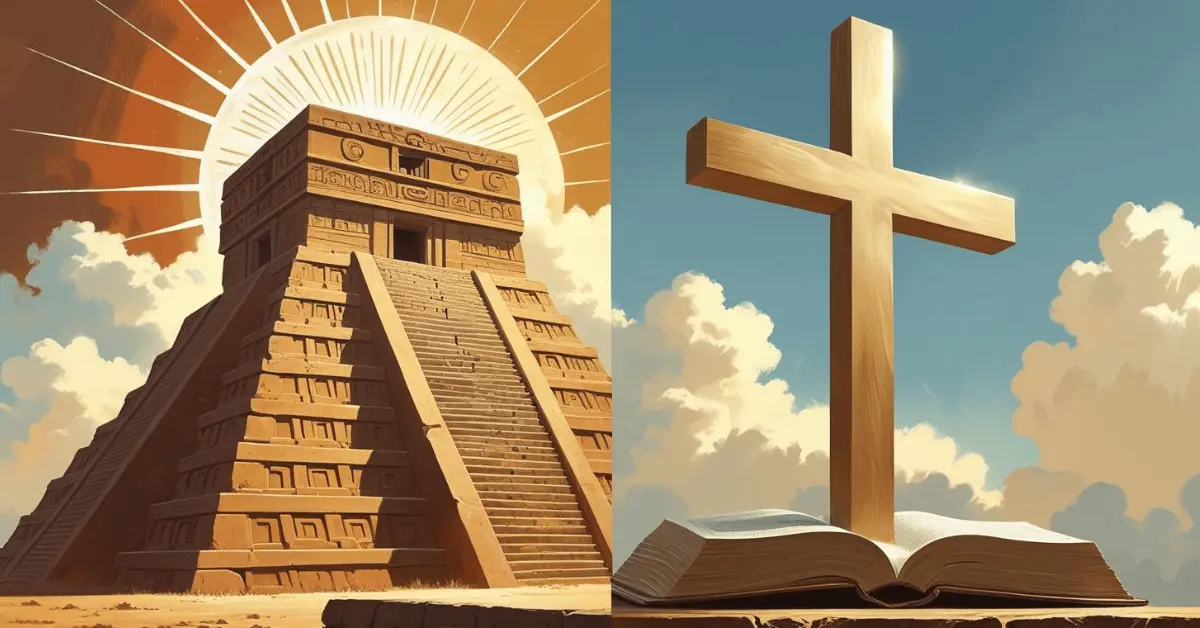

Many Christians feel curious about Toltec wisdom but unsure how it fits with their faith. Ideas about inner freedom and personal awareness can sound meaningful, yet Christianity is grounded in truth, grace, and surrender to God. This contrast often creates quiet confusion rather than clarity, leading many believers to ask whether the two can be harmonized or whether they represent fundamentally different worldviews.
What Is Toltec Wisdom?
Toltec wisdom comes from an ancient civilization in central Mexico but today it is understood more as a philosophy than a religion. It focuses on personal awareness, breaking harmful thought patterns, and taking responsibility for words, beliefs and actions.
Modern Toltec teachings, popularized by The Four Agreements, emphasize inner freedom rather than worship or devotion. They encourage individuals to transform their lives by changing how they think, speak and respond to the world around them. This inward focus is what attracts many people while also raising questions for those whose faith centres on God rather than self-guided transformation.
What Is Christianity?
Christianity is centred on the person of Jesus Christ, not on human philosophy or self-derived wisdom. Christians believe that Jesus is the Son of God who entered the world, gave His life on the cross for humanity’s sins and rose again, offering salvation through faith.
The Bible serves as the foundation of Christian belief and guides how believers understand truth, purpose, and transformation. Rather than focusing on self-improvement alone, Christianity teaches that lasting change comes through God’s grace, the work of the Holy Spirit and a restored relationship with Him. Spiritual growth is understood not as self-discovery but as growing in Christlikeness through faith and obedience.
Also Read: 7 Ways Biblical Sin Differs from False Belief
Similarities Between Toltec Wisdom and Christianity
Words Matter: Both teach that words shape how people live and relate to others. Toltec wisdom stresses speaking with integrity, avoiding careless speech, and using words responsibly, while Christianity calls believers to speak truth with love and avoid words that harm, deceive, or corrupt.
Inner Renewal: Each recognizes that change begins in the mind. Toltec wisdom focuses on releasing harmful beliefs and false assumptions, while Christianity emphasizes renewal through God’s truth, Scripture, and the transforming work of the Holy Spirit.
Peaceful Living: Both value peace. Toltec wisdom seeks harmony and balance, especially by reducing conflict within the self and with others. Christianity encourages believers to become peacemakers, forgive others, and pursue peace rooted in God’s grace.
Personal Responsibility: Accountability is central to both. Toltec wisdom highlights ownership of choices, reactions, and habits, while Christianity teaches that actions should reflect faith in God and obedience to His commands. Believers are called to live intentionally, not carelessly.
Also Read: 6 Reasons Toltec Wisdom Appeals to Modern Readers
Key Differences Between Toltec Wisdom and Christianity
View of God: Toltec wisdom does not centre on a personal God but on awareness and inner harmony. Christianity is built on belief in one eternal God revealed as Father, Son, and Holy Spirit. This means Christianity is relational at its core, calling people not merely to awareness but to worship, trust and obedience.
Path to Transformation: Toltec wisdom looks inward, teaching that change comes through personal awareness and effort. Christianity looks upward, teaching that true transformation comes through God’s Spirit at work within the believer. Personal growth matters but it is understood as a response to grace rather than self-powered change.
Source of Authority: Toltec wisdom draws from oral traditions and modern teachers. Christianity relies on the Bible as the inspired and authoritative Word of God. For Christians, truth is not finally measured by personal insight but by God’s revealed Word.
Hope Beyond This Life: Toltec wisdom focuses mainly on freedom and balance in the present life. Christianity offers hope that extends beyond this world through eternal life in the presence of God. Its hope is grounded in Christ’s death, resurrection and promised return.
Can Toltec Wisdom and Christianity Coexist?
Many believers wonder whether Toltec wisdom and Christianity can exist together. The answer depends on depth. Christianity is not only moral guidance. It is surrender to God and trust in Christ. When Toltec ideas move from tools into truth, faith confusion begins.
A Christian may find value in simple observations about careful speech, self-awareness, or personal responsibility, but these must remain secondary and be tested by Scripture. They should never replace prayer, biblical truth, repentance, grace or dependence on the Holy Spirit.
The key question is not whether an idea sounds helpful, but whether it leads the believer closer to Christ. If a teaching shifts trust away from God and toward self as the final source of wisdom, it no longer fits comfortably within Christian faith.
Also Read: 7 Things Christians Should Know About Toltec Wisdom
Is Toltec Wisdom Compatible With Christian Faith?
At a surface level, some Toltec ideas sound helpful. They may encourage careful speech, self-reflection, emotional awareness, and personal responsibility.
At a deeper level, Christianity teaches that truth is revealed by God, not discovered through self-awareness alone. Christian transformation comes through grace, Scripture, repentance, and the work of the Holy Spirit, not simply through inner realization or personal effort.
Because of this, full compatibility is not possible without changing core Christian beliefs. A Christian may learn from certain practical observations, but Toltec wisdom cannot become a spiritual foundation without creating conflict with biblical faith. Christianity must remain centred on Christ, God’s Word, and dependence on God rather than self-guided wisdom.
Christian Perspective on Toltec Teachings
Christianity understands that people wrestle with fear, confusion, unhealthy thoughts, and inner struggle. In that sense, some Toltec teachings may sound relatable.
The difference is in the answer. Toltec wisdom often points people inward to find freedom. Christianity points people to God’s grace, truth, and healing.
A Christian can appreciate practical reminders about speaking carefully, taking responsibility, or becoming more aware of harmful patterns. But those ideas should never become the foundation of faith.
For believers, Scripture remains the final guide. True freedom is not found by looking deeper into the self alone, but by coming closer to Christ and allowing God to renew the heart.
Spiritual Discernment in Modern Spiritual Culture
Today’s spiritual culture often blends ancient philosophies, self-help ideas, and religious language in ways that can make very different worldviews seem compatible. Toltec wisdom fits easily into this trend because it emphasizes personal growth, inner peace, and self-awareness—qualities that many people naturally value.
For Christians, however, discernment means looking beyond whether something feels inspiring or helpful. It means asking whether a teaching is consistent with God’s Word and whether it points people toward Christ or toward self as the ultimate source of truth.
Not every helpful idea is a biblical one. Wisdom that encourages personal growth can still fall short if it leaves God out of the picture. Scripture calls believers to test every teaching carefully, holding fast to what is true and rejecting what contradicts the gospel.
In a culture filled with spiritual voices, the Christian’s confidence rests not in popular wisdom but in God’s revealed truth.
Self-Help Spirituality vs Biblical Faith
Self-help spirituality emphasizes independence and inner power. It often tells people to look within themselves for truth, healing, strength, and direction.
Biblical faith emphasizes dependence on God and transformation through grace. It teaches that people need more than self-awareness; they need forgiveness, renewal, and a restored relationship with God through Christ.
This difference explains why similar language does not always lead to the same spiritual direction. Words like peace, freedom, healing, and transformation may sound alike, but Christianity defines them through God’s truth, not personal power alone.
Why This Comparison Matters Today
Believers are exposed to a constant stream of spiritual ideas through books, podcasts, social media, and personal development content. Many of these teachings borrow Christian language while promoting a very different view of truth, purpose, and human nature.
Understanding the difference between Toltec wisdom and Christianity helps prevent quiet faith drift. Small shifts in what we trust or where we look for guidance can gradually shape the way we think, pray, and live.
This comparison is not about rejecting every idea outside Christianity. It is about recognizing that our deepest beliefs matter. What shapes our understanding of truth ultimately shapes our lives, our hope, and our view of eternity. For Christians, that foundation is found in Jesus Christ and the truth of Scripture.
Common Questions
Is Toltec wisdom a religion?
Not exactly. It is more of a philosophy or lifestyle guide than an organized religion.
Do Christians ever use Toltec teachings?
Some may use them for reflection, but their ultimate authority remains the Bible.
Can Toltec wisdom save a person?
From a Christian perspective, no. Salvation comes through faith in Jesus Christ alone.

3 thoughts on “Toltec Wisdom vs Christianity: A Surprising Comparison Most Believers Never Explore”