
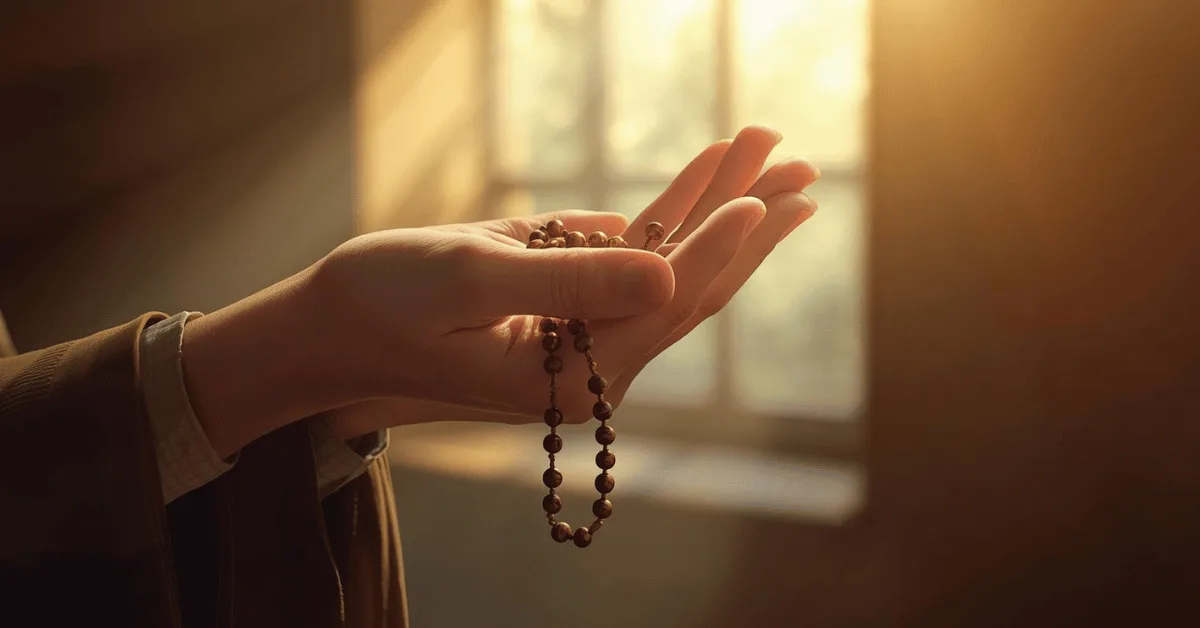

A strong Catholic spiritual life is not built only on Sundays or special seasons. It is shaped quietly through daily habits that keep the heart oriented toward God amid ordinary responsibilities. The Church has always understood that holiness grows through rhythm, discipline, and faithful repetition rather than sudden intensity.
Daily Catholic habits are not about adding pressure or performing religious tasks. They are about learning to live each day consciously in God’s presence, allowing grace to shape thoughts, choices, and relationships over time.
Read Also: I Shall Not Want — Psalm 23:1 Explained
1. Beginning the Day With the Sign of Cross
The simplest Catholic habit is often the most powerful. Beginning the day with the Sign of the Cross places the entire day under the name of the Father, Son, and Holy Spirit. It is a quiet declaration that life is not lived alone.
The Morning Offering extends this intention by consciously giving one’s prayers, works, joys, and sufferings to God. This habit transforms ordinary tasks into acts of worship and helps Catholics see daily life as spiritually meaningful rather than divided into sacred and secular moments.
2. Daily Prayer Anchored in Relationship
Catholic prayer includes traditional forms, but daily prayer is meant to be relational rather than mechanical. Speaking honestly to God about fears, gratitude, struggles, and hopes nurtures trust and spiritual maturity.
This habit may include the Our Father, spontaneous prayer, or quiet conversation with God. What matters most is consistency and sincerity. Daily prayer shapes awareness of God’s presence throughout the day rather than limiting faith to scheduled moments.
3. Reading Scripture Through a Catholic Lens
The Catholic tradition encourages daily Scripture reading, not as isolated interpretation, but within the living faith of the Church. Reading Scripture with the mind of the Church prevents faith from becoming purely individual or disconnected from tradition.
Even a short Gospel passage read attentively can shape conscience and perspective. Scripture read daily forms the heart gradually, teaching Catholics how to think, respond, and love according to Christ.
4. Living in Awareness of the Eucharist
For Catholics, the Eucharist is the centre of spiritual life, even on days when Mass is not attended. Cultivating awareness of Christ’s real presence deepens reverence and humility.
This habit includes spiritual communion, reflecting on the last Mass attended, or offering the day in union with the sacrifice of the altar. Daily Eucharistic awareness reminds Catholics that faith is sacramental and incarnational, not abstract.
5. Practicing Daily Examination of Conscience
The Examination of Conscience is not reserved for Confession alone. When practiced daily, it becomes a tool for spiritual honesty and growth.
This habit involves briefly reviewing the day with God, acknowledging moments of grace, recognizing failures, and asking for mercy and guidance. Daily examination softens the heart and prevents spiritual blindness from developing unnoticed.
Also Read: Do Everything in Love — 1 Corinthians 16:14 Meaning Explained
6. Honouring Mary as a Daily Companion in Faith
Marian devotion is central to Catholic spirituality because Mary leads believers closer to Christ. Daily habits such as praying a decade of the Rosary, a Marian prayer, or simply entrusting concerns to her intercession foster humility and trust.
This habit is not about replacing Christ but learning obedience, surrender, and faith through Mary’s example. Marian devotion grounds Catholic spirituality in receptivity rather than control.
7. Practicing Charity as a Daily Spiritual Discipline
Catholic spirituality insists that faith must become visible through love. Daily charity does not always appear dramatic. It is often expressed through patience, restraint, generosity, and attentiveness to others.
Practicing charity intentionally each day prevents spirituality from becoming inward-focused. It keeps faith connected to real human needs and reminds Catholics that love of God and love of neighbour cannot be separated.
Why Daily Habits Matter More Than Occasional Devotion
Spiritual growth does not happen through rare moments of intensity alone. It happens through steady habits that shape the heart quietly over time. Catholic tradition understands this through monastic rhythm, sacramental life, and devotional practice.
Daily habits create spiritual stability, especially during seasons of dryness, doubt, or busyness. When feelings fluctuate, habits remain, carrying faith forward patiently.
Balancing Discipline With Grace
Catholic daily habits are not meant to produce perfection. They exist to open the soul to grace. Missing a day does not equal failure. Returning with humility matters more than flawless consistency.
Grace works through effort, but it is never replaced by it. Habits cooperate with grace rather than compete with it.
A Closing Reflection
A stronger Catholic spiritual life is not built through complexity. It is built through faithful attention to God in small, repeated ways. Daily habits teach the soul to listen, trust, repent, and love more deeply.
Over time, these practices shape not only prayer life, but character, relationships, and interior peace. Spiritual strength grows quietly where faith is lived daily rather than occasionally.
Also Read: He Restores My Soul — Psalm 23:3 Meaning and Spiritual Renewal
Frequently Asked Questions
What are the daily practices of a Catholic?
Prayer, Scripture reading, Marian devotion, charity, and reflection.
Do Catholics pray every day?
Yes, daily prayer is encouraged in many forms.
Why is the Morning Offering important?
It dedicates the whole day to God’s service.
Do Catholics have to pray the Rosary daily?
Not required, but strongly recommended for spiritual growth
What is an Examination of Conscience?
A nightly reflection to review the day and seek God’s forgiveness.
