
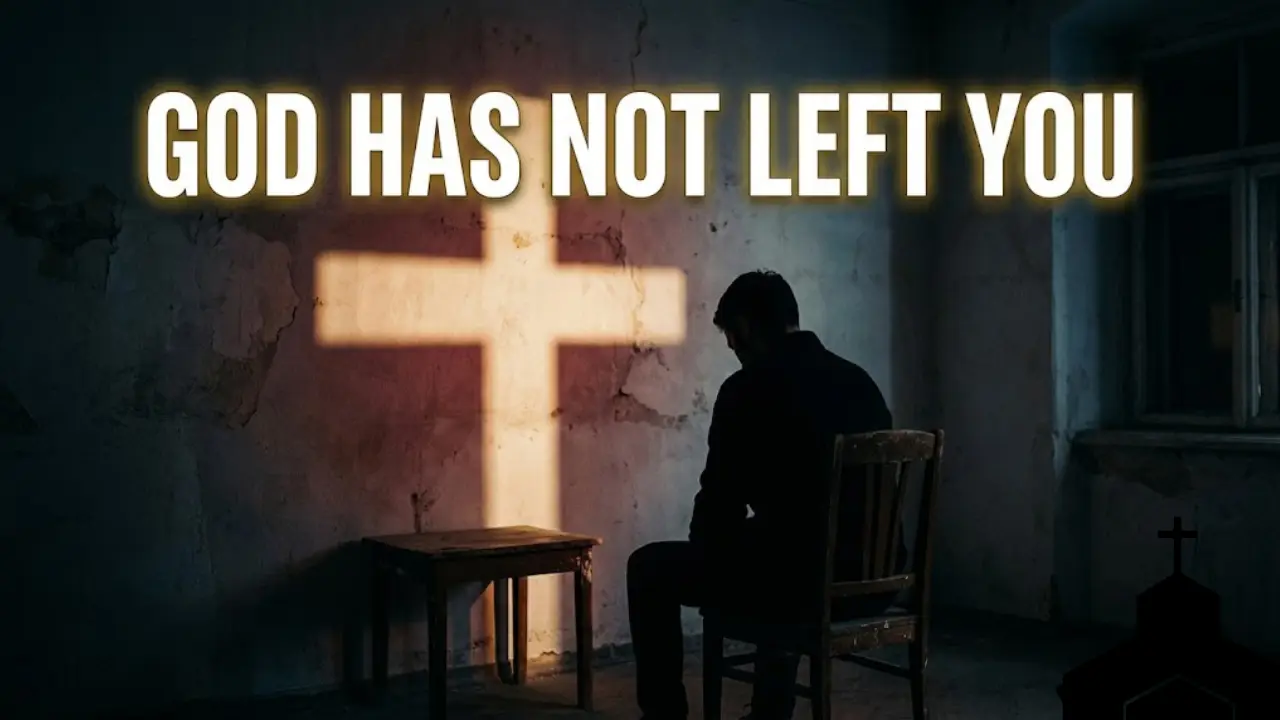

Romans 8:38–39 is one of the strongest declarations of security, hope and assurance in all of Scripture. These verses stand at the end of a chapter filled with deep truth about suffering, the Holy Spirit, adoption and the purpose of God. Then Paul brings everything together with a triumphant statement: nothing in all creation can separate God’s people from His love in Christ Jesus.
These words matter because fear is common in the Christian life. Many believers fear failure. Some fear suffering. Others fear death, spiritual attack, rejection or the possibility that hardship means God has abandoned them. Romans 8:38–39 speaks directly into those fears. It does not offer shallow comfort. It gives a solid, unshakable foundation. The love of God is not fragile. It is not temporary. It is not dependent on changing circumstances. It is fixed on His people through Jesus Christ.
Paul does not say that life will be easy. He has already made clear in Romans 8 that believers groan in a broken world and wait for final redemption. But the pain of this present age cannot cancel the love of God. The Christian hope is not built on the absence of trouble. It is built on the presence of God and the finished work of Christ.
Paul’s Confidence
Romans 8:38 begins with the words, “For I am persuaded.” That language is important. Paul is not speaking like a man making a guess. He is not offering a hopeful opinion. He is fully convinced. His confidence rests on the character of God and the saving work of Christ.
This confidence comes after everything Paul has already declared in Romans 8. God has justified His people. The Spirit dwells in them. They are children of God. They are heirs with Christ. God works all things together for their good. Those He justified, He will also glorify. Christ died, rose again and now intercedes for them. This is why Paul can speak so boldly. Romans 8:38–39 is not isolated encouragement. It is the final shout of assurance built on the whole chapter.
Assurance Is Rooted in God
Many people struggle with assurance because they look inward. They measure God’s love by their own emotions, recent failures, or spiritual performance. But Paul does not point inward. He points upward. The certainty of God’s love does not rise and fall with human feelings. It rests in God’s purpose, Christ’s sacrifice and the Spirit’s presence.
That is why these verses are so powerful. They do not say believers are strong enough to hold on to God. They say nothing is strong enough to tear believers away from God’s love. The focus is on His grip not theirs.
God’s Love in Christ
At the end of verse 39, Paul says that nothing can separate believers “from the love of God, which is in Christ Jesus our Lord.” This is the centre of the entire passage.
God’s love is not described here in vague, sentimental language. It is not merely a general kindness spread across the world. Paul is speaking of the saving, covenant love of God revealed and secured in Christ Jesus. This love is seen most clearly at the cross, where Christ gave Himself for sinners. It is confirmed in the resurrection, where death was defeated. It is continually displayed through Christ’s intercession for His people.
This Love Is Personal
Paul does not speak about a distant religious idea. He speaks about a love that holds real people in real suffering. This means the believer is not loved in the abstract. The believer is loved in Christ. That includes the weak believer, the wounded believer, the suffering believer and the believer who struggles to see clearly through tears.
The phrase “in Christ Jesus our Lord” matters because every spiritual blessing is found in union with Him. Outside Christ, there is judgment. In Christ, there is no condemnation. Outside Christ, there is separation from God. In Christ, there is a love that can never be broken.
This Love Is Not Earned
Romans 8:38–39 also destroys the idea that God’s love is earned by human effort. If God’s love in Christ can be lost every time a believer stumbles, then Paul’s words would have no force. But Paul says nothing in all creation can separate the believer from this love. That means it is not maintained by human perfection. It is secured by divine grace.
This does not make sin small. Sin is serious. But even the reality of remaining sin in the believer does not overthrow the saving love of God. Christ has fully paid for sin. God’s love is not blind to the believer’s weakness. It has already made provision for it through the work of Jesus.
“Neither Death Nor Life”
Paul begins his list with two sweeping realities: death and life. “For I am persuaded, that neither death, nor life…” This covers the full range of human existence.
Death is one of the greatest fears people face. It appears final, cold, and powerful. It separates loved ones, ends earthly plans and reminds every person of human weakness. But Paul says death cannot separate the believer from God’s love. In fact, because of Christ, death becomes the doorway into the presence of the Lord. The thing that seems most threatening has been robbed of its ultimate power.
Life can also feel overwhelming. The troubles, burdens, temptations, disappointments and confusion of daily living can sometimes weaken the heart more than the thought of death itself. Yet Paul says life cannot separate believers from God’s love either. Not the long years. Not the pressure. Not the unexpected pain. Not the complex struggles of living in a fallen world.
Love in Every Season
Some believers feel close to God in moments of peace but question His love in seasons of loss. Romans 8:38–39 speaks against that fear. Whether the believer is walking through the valley of death or the ordinary strain of daily life, the love of God remains.
This means no hospital room, graveside, sleepless night or season of grief can cancel what God has established in Christ. His love does not expire at the edge of suffering. It remains steady there.
Spiritual Powers
Paul then names spiritual forces. This part of the passage reminds readers that the Christian life is lived in the presence of unseen realities. Scripture is clear that there is spiritual warfare. There are hostile powers. Evil is real. Demonic opposition is real. But these forces are not ultimate.
Paul does not deny their existence. He declares their limitation. They cannot separate God’s people from His love.
Defeated Opposition
This is important because some believers live with a deep fear of spiritual attack. They know the enemy accuses, tempts and seeks to discourage. They know evil can wound, deceive, and oppress. But Romans 8:38–39 announces a boundary evil cannot cross. Satan and every dark power may oppose the believer, but they cannot sever the believer from Christ.
This truth is anchored in Christ’s victory. Jesus has already triumphed through His death and resurrection. The enemy may rage, but he cannot overturn the verdict God has spoken over those who belong to His Son.
Fear Must Not Rule
Many Christians live as if dark spiritual forces are nearly equal to God. Romans 8 corrects that thinking. The powers of darkness are created beings under divine authority. They are not free to undo redemption. They are not able to rewrite God’s purpose. They are not strong enough to separate the believer from divine love.
That does not lead to carelessness. Believers are called to watchfulness, prayer and faithfulness. But they do not need to live in terror. The Christian stands under the greater power and the stronger love of God.
Present and Future
This phrase reaches into another deep area of fear: the unknown.
Things present include current burdens, visible troubles, personal pain and all the immediate pressures pressing against the soul. Paul says none of these can separate believers from God’s love. Present suffering may cloud vision, but it does not cancel reality.
Things to come include future fears, uncertainties and events not yet seen. This is where many hearts become anxious. People can endure today and still tremble over tomorrow. What will happen next year? What hardship might come? What loss might appear? What personal failure might be exposed?
Paul answers all of that with one sweeping truth: the future has no power to break the bond between Christ and His people.
The Unknown Future Is Still Under God’s Rule
This is one of the sweetest comforts in the passage. The future is unknown to human beings, but it is not unknown to God. Every tomorrow that frightens the believer is already before Him. Nothing will arrive in the life of His people as an accident outside His control.
This does not mean every future event will be easy. But it does mean none of those events will carry the power to remove the believer from God’s love. The Christian does not move toward an uncertain doom. The Christian moves toward the completion of God’s redemptive purpose.
“Nor Height, Nor Depth”
Paul now uses language that stretches beyond ordinary categories. “Nor height, nor depth” points to every extreme. It is a way of saying there is no place, no condition, no dimension of existence where God’s love in Christ cannot hold His people.
Some interpret this language broadly, and that broad sense fits the force of the passage. No high place of success, privilege, influence or prosperity can separate the believer from God’s love. No deep place of sorrow, humiliation, confusion or despair can do so either.
God’s Love Holds in High Moments
Prosperity can be spiritually dangerous. Times of blessing can tempt the heart toward pride, self-reliance and forgetfulness of God. Yet even then, the preserving love of God remains active toward His people. He does not stop loving them when they are tempted by success.
God’s Love Holds in Low Moments
This may be the more immediate comfort for many believers. Depth speaks to dark seasons. It speaks to depression, grief, isolation, failure and the heavy places of the soul. In such seasons, people often feel abandoned. Romans 8:38–39 says feeling abandoned is not the same as being abandoned.
The believer may walk through deep waters, but the love of God is deeper still.
“Nor Any Other Creature”
Paul ends with language that closes every possible loophole: “nor any other creature.” This means if something has been created, it cannot separate the believer from God’s love. The statement is total. Nothing in the universe stands outside this boundary.
This includes visible enemies, invisible powers, inward weakness, outward hardship and every created circumstance. It is difficult to imagine a stronger way to say what Paul wants believers to know.
Weakness Cannot Undo Grace
This is where many Christians need careful help. Some read Romans 8:38–39 and immediately think, “But what about the believer’s own struggles, doubts, and failures?” Paul’s language includes all created things. Human weakness is not stronger than Christ’s saving work.
That truth must be handled carefully. It does not give permission for careless living. Romans 6 has already made clear that grace is never an excuse for sin. But Romans 8 does give real assurance to believers who mourn over their sin and long to belong fully to Christ. Their failures do not surprise God. Their weakness does not overpower His grace.
What It Does Not Mean
Strong promises are often misunderstood. Romans 8:38–39 must be read with care.
They Do Not Mean Suffering Is Small
Paul does not minimize pain. In fact, the whole chapter takes suffering seriously. Believers groan. Creation groans. The path to glory includes hardship. Romans 8:38–39 does not deny sorrow. It declares that sorrow does not have the final word.
They Do Not Mean Feelings Will Always Match Truth
A believer may not always feel secure. There are seasons when the heart is clouded and assurance feels distant. But God’s love in Christ is not measured by emotional clarity. It remains true even when the believer struggles to sense it.
They Do Not Mean Everyone Is Automatically Safe Apart From Christ
Paul is not teaching universal salvation. The promise is specifically about the love of God “in Christ Jesus our Lord.” Outside Christ there is still condemnation. The comfort of this passage belongs to those who are united to Him by faith.
Speaks to Everyday Christian Life
- These verses are not only for theological reflection. They are meant to shape daily life.
- When guilt rises, the believer remembers that Christ’s work is stronger than accusation.
- When suffering continues, the believer remembers that hardship cannot sever divine love.
- When death approaches, the believer remembers that Christ has transformed the grave.
- When fear about the future grows, the believer remembers that things to come are still under the Lordship of Jesus.
- When spiritual battles intensify, the believer remembers that hostile powers are limited and defeated.
The Passage Teaches Rest
Many Christians live with a hidden exhaustion because they are always trying to secure what God has already promised in Christ. Romans 8:38–39 calls the believer to rest in the certainty of divine love. Not laziness. Not indifference. But restful confidence in God’s finished saving work.
The Passage Produces Courage
If nothing can separate believers from God’s love, then they can endure suffering with hope, obey in hard places and stand firm in trials. Courage grows where assurance is strong. The soul that knows it is held by God becomes steadier in the storms of life.
Bigger Bible Story
Romans 8:38–39 does not stand alone. It echoes a theme found throughout the Bible: God keeps His people.
The Lord preserved Noah through judgment. He stayed near to Joseph in suffering. He did not cast away David after grievous failure. He restored Peter after denial. Above all, He gave His Son so that all who believe would have everlasting life.
This pattern matters. The God of Scripture is not a God who begins saving work and then abandons it halfway through. He is faithful to His covenant. He is steadfast in mercy. He is powerful in redemption. Romans 8:38–39 shines with the beauty of that unchanging faithfulness.
Christ Is the Reason the Promise Stands
The promise does not stand because believers are naturally strong, but because Christ is enough. He died. He rose. He reigns. He intercedes. Every part of salvation rests on Him. That is why nothing can separate His people from God’s love. The promise is as secure as Christ Himself.
Related Posts You May Want to Read Next
- I Shall Not Want Meaning: Psalm 23:1 Explained Simply
- What It Means to Be Still and Know That He Is God: Psalm 46:10 Explained
Frequently Asked Questions
What does “nothing can separate us from the love of God” mean?
It means no power, event, trial or created thing can break the relationship God has established with His people through Jesus Christ. God’s love is not fragile or temporary. It remains firm in every season.
Does Romans 8:38–39 mean believers are eternally secure?
Yes, this passage is one of the clearest biblical statements of assurance. It shows that God’s love in Christ holds believers firmly and that no outside force can remove them from His saving care.
Can death separate a believer from God’s love?
No. Romans 8:38 says that neither death nor life can separate believers from God’s love. Death is not the end for those in Christ. It cannot destroy the bond God has created.
Can suffering mean God has stopped loving someone?
No. Romans 8 teaches the opposite. Suffering is real, painful and serious, but it is not proof that God has withdrawn His love. Hardship cannot cancel what God has secured in Christ.
What are the “things present” and “things to come” in Romans 8:38?
“Things present” refers to current troubles, pressures and fears. “Things to come” refers to the unknown future. Paul’s point is that neither today’s struggles nor tomorrow’s uncertainties can separate believers from God’s love.
