
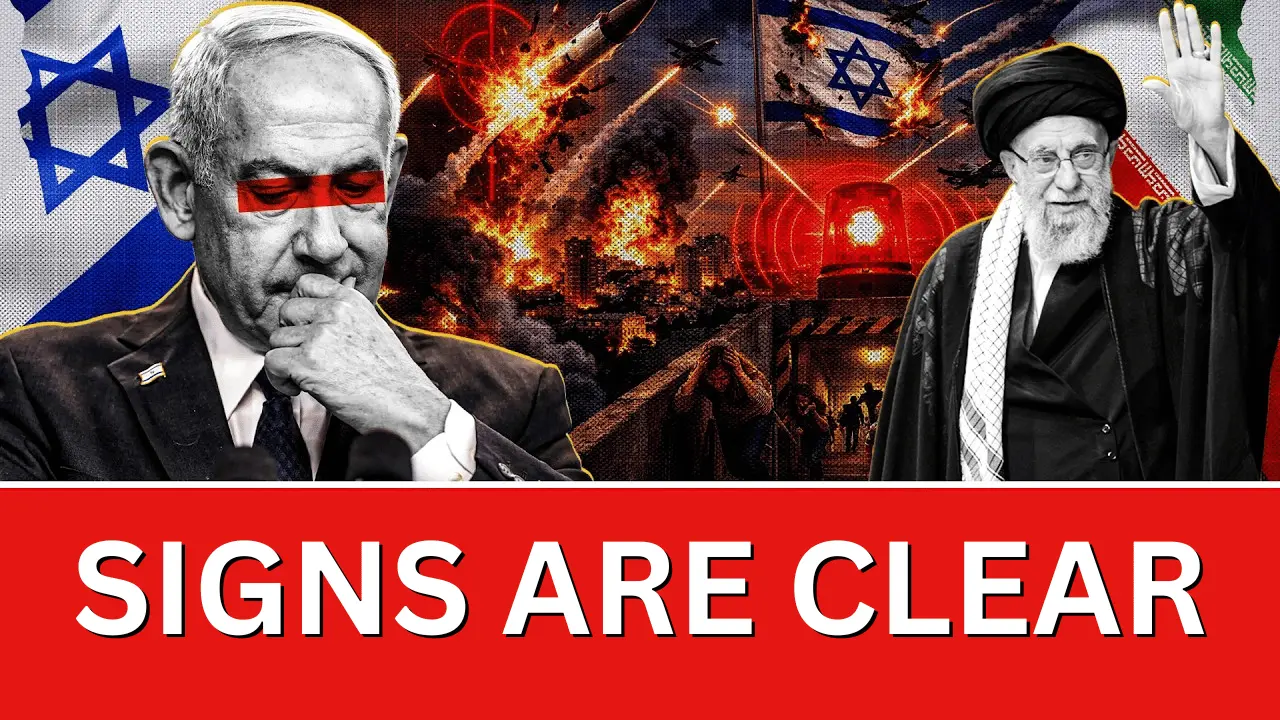

The Israel Iran war has stirred deep concern among Christians who study biblical prophecy closely.
Many believers across the United States are asking whether this conflict carries prophetic significance for the last days.
When headlines mention missile strikes, military alliances, and threats of escalation, it is natural for Bible readers to search Scripture for clarity and hope.
This article explores the Israel Iran war through a biblical lens that is thoughtful, balanced, and rooted in Scripture.
Rather than sensational predictions, this discussion will examine key prophetic passages, historical context, and practical spiritual responses.
Why Christians Connect the Israel Iran War to Prophecy
The modern state of Israel holds a central role in biblical prophecy and redemptive history.
From the covenant with Abraham in Genesis to the prophetic visions of Revelation, Israel remains significant in God’s unfolding plan.
Because of this theological foundation, any major conflict involving Israel often captures the attention of prophecy-minded believers.
Iran also appears in Scripture under an ancient name that many students recognize.
In the book of Ezekiel, the nation called Persia is listed among those who will come against Israel in the latter days.
Since Persia corresponds geographically with modern Iran, many Christians view the Israel Iran war as potentially connected to Ezekiel’s prophecy.
Ezekiel 38 and 39
One of the most discussed passages related to the Israel Iran war is found in Ezekiel chapters thirty eight and thirty nine.
These chapters describe a future invasion of Israel led by a figure called Gog from the land of Magog.
Among the allied nations listed in this prophecy is Persia, which corresponds to modern Iran.
The text describes a coalition that comes against Israel when the people are dwelling securely in their land.
God intervenes supernaturally to defeat this invading force, demonstrating His power before the nations.
Many prophecy teachers see striking parallels between this description and present geopolitical alignments in the Middle East.
Iran’s open hostility toward Israel and its alliances with other regional powers have caused many believers to revisit this passage.
Some interpret current tensions as setting the stage for the eventual fullfillment of Ezekiel’s vision.
Others caution that the specific details described in Ezekiel have not yet fully aligned with present circumstances.
The Broader Biblical Pattern of Conflict Around Israel
The Bible repeatedly describes Israel as a focal point of spiritual and geopolitical tension.
Throughout the Old Testament, surrounding nations often opposed Israel’s covenant identity and calling.
This recurring theme suggests that hostility toward Israel is not merely political but also spiritual in nature.
Psalm two speaks of nations raging and plotting against the Lord and His Anointed One.
Zechariah describes a time when Jerusalem becomes a burdensome stone for the nations.
These passages reveal a consistent pattern in which Israel stands at the centre of global attention and conflict.
The Israel Iran war fits within this broader biblical pattern of regional hostility.
While the specific actors change across centuries, the underlying tension remains remarkably consistent.
For many believers, this continuity strengthens the sense that God’s prophetic framework is steadily unfolding.
The Role of Iran in Modern Middle Eastern Alliances
Iran has positioned itself as a significant regional power with influence across the Middle East.
Through alliances and proxy groups, it has extended its reach beyond its borders.
This strategic posture has heightened tensions with Israel and increased the risk of broader confrontation.
From a biblical perspective, the rise of nations that oppose Israel should not surprise Christians.
Scripture consistently portrays Israel as surrounded by adversaries in the last days.
However, the Bible also emphasizes that God ultimately preserves His covenant purposes.
It is important to remember that modern nation states are complex political entities.
Biblical prophecy does not reduce entire populations to single prophetic roles.
Christians must avoid demonizing entire peoples while still acknowledging prophetic patterns described in Scripture.
Are We Living in the End Times?
The Israel Iran war has reignited debates about whether humanity is entering the final phase of history.
Jesus spoke of wars and rumors of wars as signs that would characterize the age before His return.
However, He also cautioned His followers not to be alarmed prematurely by every conflict.
Throughout history, many generations believed they were witnessing the final moments before Christ’s return.
While believers should remain watchful, they should also remain grounded and discerning.
The presence of conflict alone does not automatically confirm a specific prophetic timetable.
At the same time, the convergence of Israel’s restored statehood and regional hostility is historically significant.
For nearly two thousand years, Israel did not exist as a sovereign nation.
Its reestablishment in nineteen forty eight reshaped the prophetic landscape in ways that previous generations could not observe.
This historical reality adds weight to current events without demanding speculative conclusions.
Christians can acknowledge the uniqueness of this era while avoiding sensationalism.
Balanced discernment honours both Scripture and historical context.
How Should Christians Respond Spiritually?
When news about the Israel Iran war intensifies, emotional reactions often follow.
Fear, anxiety, and uncertainty can easily overwhelm those who focus only on headlines.
Scripture calls believers to a different posture rooted in faith and trust.
First, Christians are instructed to pray for the peace of Jerusalem.
This command reflects both love for Israel and submission to God’s sovereign plan.
Prayer aligns the believer’s heart with God’s purposes rather than with panic.
Second, believers should deepen their study of Scripture.
Understanding biblical prophecy within its full context prevents misinterpretation and fear based speculation.
Serious study builds confidence in God’s control over history.
Third, Christians must remember the Great Commission.
Even in times of war and instability, the mission of sharing the gospel remains central.
Global turmoil often opens hearts to spiritual truth and eternal questions.
Avoiding Extremes in Prophetic Interpretation
Within Christian circles, discussions about the Israel Iran war sometimes drift into extremes.
Some voices claim precise timelines that Scripture does not clearly establish.
Other voices dismiss any prophetic relevance altogether without serious engagement.
A healthy biblical approach avoids both extremes.
It recognizes that prophecy is real and meaningful while also respecting interpretive boundaries.
Humility should characterize all conversations about future events.
Responsible interpretation considers genre, symbolism, and the original audience of prophetic books.
Ezekiel, Daniel, and Revelation contain vivid imagery that requires careful analysis.
Applying these texts to modern conflicts demands patience and theological maturity.
When believers approach prophecy with humility, unity within the body of Christ becomes possible.
The focus remains on Christ’s return rather than on winning speculative debates.
This posture fosters peace within the church even when global tensions escalate.
God’s Sovereignty Over Nations and Wars
One unshakable biblical truth stands above every geopolitical crisis.
God remains sovereign over kings, nations, and military powers.
No missile launch or political alliance escapes His ultimate authority.
The book of Daniel declares that God changes times and seasons and removes kings and sets up kings.
This assurance provides profound comfort during seasons of international instability.
Even when events seem chaotic, they unfold within God’s sovereign framework.
The Israel Iran war, regardless of its immediate outcomes, does not threaten God’s redemptive plan.
Christ remains seated at the right hand of the Father, reigning over all creation.
History is not spiralling out of control but moving toward a divinely appointed climax.
For Christians, this perspective transforms fear into faith.
It anchors the heart in eternal truth rather than shifting political narratives.
Confidence in God’s sovereignty fuels courage in uncertain times.
Looking Ahead With Hope Rather Than Fear
It is easy to consume news about the Israel Iran war with a sense of dread.
However, biblical prophecy ultimately points toward restoration, justice, and Christ’s victorious return.
The final chapters of Scripture describe a renewed creation where conflict and war cease forever.
This hope shapes how believers interpret present turmoil.
Rather than despairing, Christians can view current events as reminders that history has a purposeful direction.
God’s promises extend beyond any single conflict or generation.
Hope does not mean ignoring real suffering or geopolitical complexity.
It means trusting that God will fullfill every promise He has spoken.
In the midst of uncertainty, that assurance sustains faithful living.
As discussions about the Israel Iran war continue, Christians can remain informed without becoming consumed.
They can pray earnestly, study diligently, and live obediently.
Above all, they can rest in the unchanging character of God.
You may also want to explore:
