
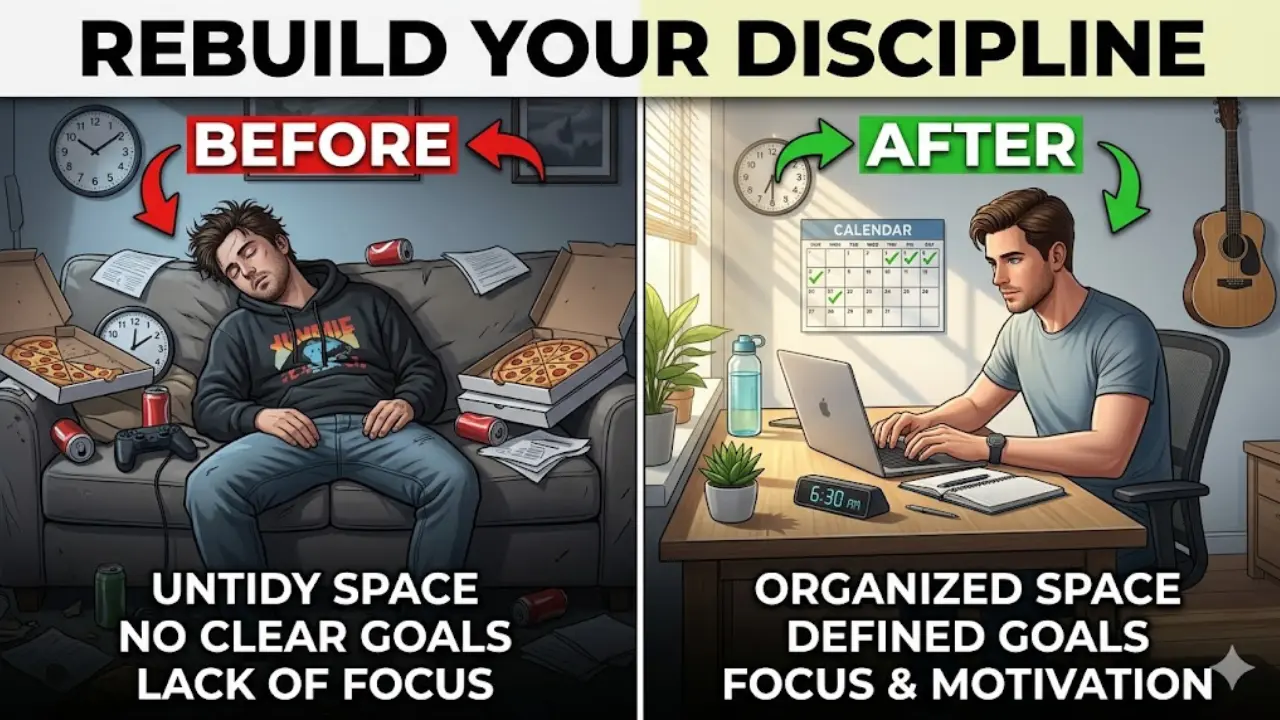

There comes a point where you begin to notice that something has shifted, not in a loud or dramatic way, but in a quiet awareness that your consistency is not what it used to be.
The things that once felt natural now feel irregular and the structure that once guided your day has become less defined.
You are not completely disconnected.
But you are no longer as intentional.
And that space in between can feel frustrating, because you know something needs to change, yet the path forward does not feel as clear or as simple as it once did.
Attempts to Restart Discipline Do Not Last
When people realize they have lost discipline, their instinct is often to overcorrect.
They try to do everything at once.
They aim to return immediately to a higher level of consistency.
What This Usually Looks Like
- setting unrealistic expectations
- trying to rebuild multiple habits at the same time
- relying on a strong burst of motivation to carry everything forward
Why This Approach Fails
Because it is built on intensity instead of stability.
And intensity fades quickly when it is not supported by structure.
The Real Problem
When the initial motivation fades, the system collapses and the cycle repeats.
A More Effective Perspective
Rebuilding discipline is not about doing more.
It is about doing less, but doing it consistently.
Step 1: Start Smaller
One of the biggest mistakes people make is choosing actions that feel meaningful instead of actions that are repeatable.
Why Smaller Is Stronger
Small actions remove resistance.
They make it easier to begin and easier to continue.
What This Looks Like in Practice
Instead of trying to rebuild everything:
- choose one simple habit
- make it easy enough that you cannot avoid it
- focus on showing up, not performing perfectly
Why This Works
Because discipline is built through repetition.
And repetition requires simplicity.
Step 2: Create Structure
Every time you rely on decision-making, you increase the chance of inconsistency.
Structure removes that uncertainty.
What Structure Actually Means
It is not about strict rules.
It is about predictability.
- doing the same action at the same time
- creating a routine that requires less thinking
- reducing the number of choices you need to make
Why This Matters
Because fewer decisions lead to more consistency.
A Deeper Insight
Discipline becomes easier when you do not have to think about whether you will do something.
It simply becomes part of your day.
Step 3: Identify and Remove
Many people try to add more discipline without addressing what is disrupting it.
What Disruptions Often Look Like
- constant distractions
- environments that pull your attention away
- habits that compete for your focus
What You Need to Do Instead
Before adding new effort, remove what is interfering.
Why This Is Important
Because discipline is not only about what you add.
It is also about what you remove.
Step 4: Intensity to Rhythm
It is easy to feel productive when you act with intensity.
But intensity does not last.
Rhythm does.
The Difference Between the Two
- intensity creates short bursts of progress
- rhythm creates long-term stability
What Rhythm Looks Like
- steady, repeatable actions
- consistent timing
- manageable effort
Why This Matters
Because what you repeat consistently shapes your habits more than what you do occasionally.
Step 5: Measure Progress by Patterns
Many people become discouraged because they focus on isolated failures instead of overall direction.
What This Looks Like
- missing one day and feeling like you have failed
- focusing on mistakes instead of progress
- expecting perfect consistency
A Better Way to Think
Look at your patterns over time.
- are you showing up more often
- is your consistency improving
- are your habits becoming more stable
Why This Helps
Because progress is not defined by perfection.
It is defined by direction.
Step 6: Rebuild Awareness
Discipline without awareness becomes mechanical.
But discipline with awareness becomes intentional.
What Awareness Looks Like Daily
- noticing how you think and respond
- reflecting on your actions
- staying present instead of moving automatically
Why This Matters
Because awareness keeps your discipline meaningful, not empty.
A Key Insight
Awareness is what keeps discipline connected to purpose.
Step 7: Expect Resistance
Rebuilding discipline is not always comfortable.
There will be resistance.
What This Feels Like
- lack of motivation
- temptation to delay
- desire to return to easier patterns
Why This Is Normal
Because your mind is adjusting to a new pattern.
And new patterns require effort before they become natural.
What You Need to Remember
Resistance is not a sign that something is wrong.
It is a sign that something is changing.
Daily Flow You Can Follow
Instead of overcomplicating the process, think of discipline as a simple cycle.
Daily Rebuilding Flow
| Step | Focus |
|---|---|
| Start small | Make it easy to repeat |
| Build structure | Reduce decision-making |
| Remove friction | Eliminate distractions |
| Stay consistent | Focus on rhythm |
| Track patterns | Look long-term |
| Stay aware | Keep it intentional |
Why This Approach Works Over Time
This method does not depend on temporary motivation or emotional highs.
It builds something stable.
What You Will Begin to Notice
- your actions feel more natural over time
- consistency requires less effort
- discipline becomes part of your routine instead of something you force
Why This Matters
Because what starts as effort becomes habit.
And what becomes habit eventually becomes part of your identity.
Discipline Is Rebuilt Quietly
Spiritual discipline is not lost suddenly.
It fades through small, repeated patterns.
And it is rebuilt the same way.
The Core Truth
Small, consistent actions shape your direction more than occasional effort.
Why This Matters
Because you do not need a dramatic restart.
You need a steady return.
And over time, that steady return becomes a lasting change.
You may also want to explore:
- 5 Signs You Are Losing Spiritual Discipline
- 5 Signs Discipline Is Leading to Peace
- 5 Life Changing Lessons Hidden in Hebrews 12:11
- 7 Signs Your Faith Is Quietly Getting Weaker
Frequently Asked Questions
How do you rebuild spiritual discipline when you feel completely off track?
You begin with small, repeatable actions instead of trying to fix everything at once, because consistency rebuilds discipline more effectively than intensity.
Why does rebuilding discipline feel harder than starting it the first time?
Because you are now aware of what you lost, which creates pressure and that pressure often makes it harder to act consistently.
How long does it take to rebuild spiritual discipline?
It depends on consistency, but real rebuilding happens gradually through repeated daily actions rather than a fixed timeline.
Can discipline come back naturally over time without effort?
No, because discipline is built through intentional patterns and without action, old habits tend to return.
What role does awareness play in rebuilding discipline?
Awareness helps you recognize patterns and adjust them, which prevents you from repeating the same cycle.
