
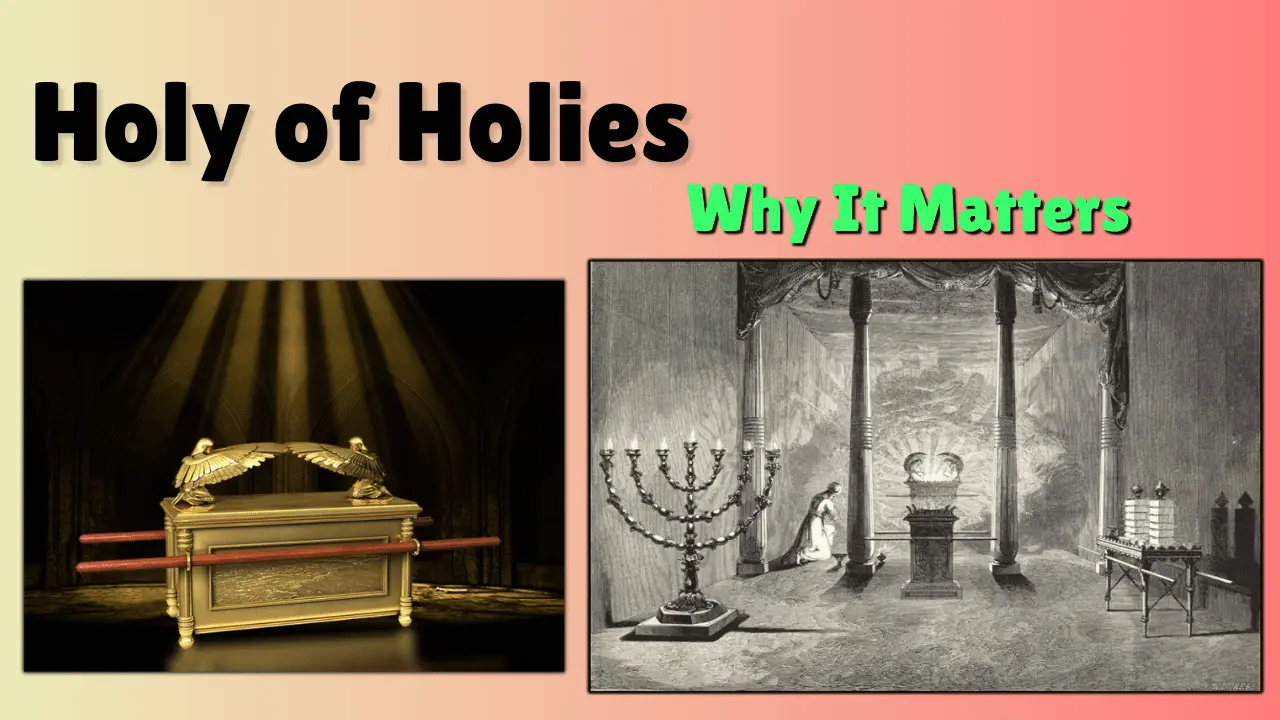

The Holy of Holies is one of the most meaningful spaces described in the Old Testament. Its structure, purpose, and limitations were never random. God designed every detail with intention, using the Holy of Holies to reveal aspects of His character and His desire for relationship with His people. By taking time to understand this sacred space, believers can see more clearly how God relates to humanity and how He makes a way for genuine fellowship with Him.
The Historical Setting of the Holy of Holies
The Holy of Holies was the innermost chamber of the Tabernacle, and later the Temple in Jerusalem. God gave precise instructions for its construction in Exodus 25–26. Materials such as acacia wood, fine linen, gold coverings, and intricate embroidery were chosen with purpose. They communicated the extraordinary holiness of the place.
At the center of the Holy of Holies stood the Ark of the Covenant. Inside the Ark were three significant items: the stone tablets of the Ten Commandments, a jar of manna, and Aaron’s rod that had blossomed. Each item reflected a different aspect of God’s relationship with His people. The tablets represented His covenant, the manna His faithful provision, and the budding rod His chosen leadership.
The lid of the Ark, called the mercy seat, was made of pure gold and adorned with two cherubim. It was understood that God’s presence rested above this mercy seat. For that reason, the Holy of Holies became the most concentrated expression of God’s nearness within Israel’s worship.
The Purpose of the Veil
A thick veil separated the Holy of Holies from the Holy Place. This veil marked the boundary between God’s perfect holiness and humanity’s imperfection. The separation was not meant to create emotional distance. Rather, it served as protection for the people and as a visual reminder of the seriousness of approaching a holy God.
Only the high priest could enter the Holy of Holies, and only once a year on the Day of Atonement. Before entering, he performed specific rituals, purified himself with washing, and offered sacrifices. These steps emphasized the weight of coming before God and the reality of sin. They also showed that God Himself provided the means for forgiveness and restored fellowship.
What the Holy of Holies Reveals About the Character of God
1. God Desires to Dwell Among His People
Even though God is holy, He chose to dwell among the people of Israel. He did not distance Himself or remain unreachable. By placing His presence within the Tabernacle, God revealed His desire for relationship, guidance, and continual involvement in the lives of His people.
2. God Provides a Path for Fellowship
The existence of the Holy of Holies and the annual Day of Atonement shows that God made a way for sinners to approach Him. He did not leave humanity without hope. Instead, He established a clear path for atonement, forgiveness, and renewed access to His presence.
3. God Balances Holiness and Mercy
The mercy seat held great meaning because it was the place where atonement was applied. It displayed God’s willingness to extend mercy within the context of His holiness. The law remained inside the Ark, yet mercy rested above it. This arrangement demonstrated that forgiveness was possible through God’s appointed means and revealed His heart of compassion.
The High Priest and the Meaning of His Role
The high priest served as the mediator between God and the people. His entry into the Holy of Holies was never an act of personal privilege. It was a solemn responsibility carried out for the entire nation. His actions, including the sprinkling of blood on the mercy seat, symbolized the people’s need for cleansing and reconciliation.
This yearly ceremony pointed toward something greater. Its temporary nature revealed that a complete and final form of atonement was still anticipated.
The New Testament Fulfillment Through Jesus Christ
The Book of Hebrews explains how Jesus Christ fulfills the symbolism found in the Holy of Holies. Hebrews 9 describes the earthly Holy of Holies as a reflection of a greater heavenly reality. Jesus entered the true heavenly sanctuary, not with the blood of animals, but with His own sacrifice.
When Jesus died, the veil in the Temple was torn from top to bottom. This dramatic moment signaled that the separation between God and humanity had been addressed through Christ’s sacrifice. Access to God was no longer limited to one priest on a single day. It became available to all who come through Jesus.
Jesus is the eternal High Priest, offering continual access to God. His sacrifice is complete and does not require repetition. Because of Him, believers can approach God with both reverence and confidence.
What the Holy of Holies Teaches Believers Today
1. God Welcomes Those Who Seek Him
The torn veil declares that God welcomes all who come to Him through Christ. This welcome is not reluctant. It is rooted in His finished work and His desire for close fellowship with His people.
2. God Provides Stability and Assurance
Believers do not approach God through uncertain or incomplete means. Christ’s work provides a steady foundation for prayer, worship, and daily relationship with God. There is no reason to fear rejection when approaching Him through the way He has provided.
3. God Invites His People Into a Life of Nearness
What was once a restricted room accessible to only one person is now a picture of open access. Through Christ, believers are invited to live in continual fellowship with God. This nearness is grounded not in emotion, but in the certainty of God’s promise and the completeness of Christ’s sacrifice.
Living in Light of This Truth
Understanding the meaning of the Holy of Holies encourages believers to approach God with humility and confidence. It calls them to rest in His mercy and to appreciate both the seriousness and the beauty of His holiness. It also provides a clearer picture of God’s deep desire to dwell with His people.
Believers can live with assurance, peace, and gratitude, knowing that God has made a complete and sufficient way to enjoy fellowship with Him.
Reflection Questions
- What aspect of the Holy of Holies helps you understand God’s character more deeply?
- How does the work of Christ affect the way you approach God in prayer?
- In what ways can you grow in your awareness of God’s nearness throughout your daily life?
Closing Prayer
Lord, thank You for revealing Your character through the Holy of Holies.
Thank You for Your holiness, Your mercy, and Your desire to dwell with Your people.
Help me to approach You with reverence, trust, and confidence in the work of Christ.
Teach me to live in awareness of Your presence each day. Amen.
