
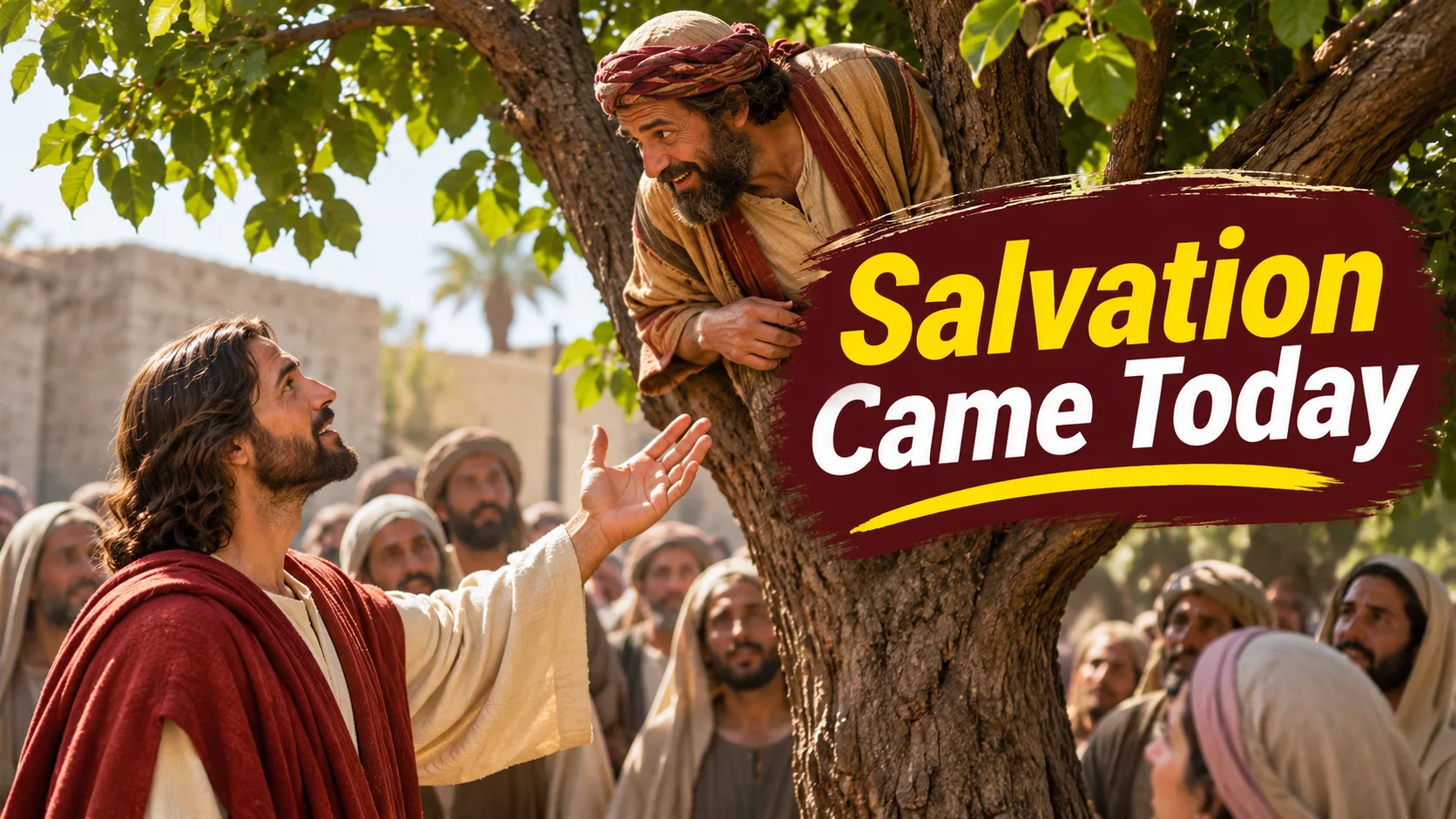

The Catholic Gospel for November 17, 2026, is Luke 19:1–10, which recounts how Jesus encountered Zacchaeus, a wealthy chief tax collector in Jericho. Zacchaeus wanted to see Jesus but he received something far greater than a passing glimpse. Christ called him by name, entered his home and declared that salvation had come to his house.
Why did Jesus make such a powerful declaration? The answer lies in Christ’s mission to seek the lost and the remarkable response Zacchaeus made when he welcomed Him. His generosity and willingness to correct financial wrongdoing revealed the significance of an encounter that began with a simple act of curiosity.
As Catholics reflect on today’s Gospel, one word deserves particular attention: today. Jesus used it when announcing His visit and again when declaring salvation. The encounter reminds us that God’s invitation is not merely a promise for the distant future but something requiring a response in the present.
Today’s Gospel — Luke 19:1–10
Jesus was travelling through Jericho when Zacchaeus, a wealthy chief tax collector, tried to see Him. Because Zacchaeus was short and the crowd blocked his view, he ran ahead and climbed a sycamore tree.
When Jesus reached the tree, He stopped and called Zacchaeus by name. He told him to come down quickly because He intended to stay at his house that day.
Zacchaeus welcomed Jesus joyfully but the people watching complained that Jesus had chosen to become the guest of a sinner. Tax collectors were widely resented because their work was associated with Roman taxation and opportunities for financial exploitation.
The encounter took an unexpected turn when Zacchaeus spoke about giving half his possessions to the poor and repaying four times the amount if he had extorted money from anyone.
Jesus then declared that salvation had come to Zacchaeus’ house because he, too, was a descendant of Abraham. He concluded by explaining that the Son of Man had come to seek and save the lost.
Why Did Jesus Choose Zacchaeus?
Zacchaeus was not expecting Jesus to visit his home. Luke tells us only that he wanted to see who Jesus was, without explaining what first inspired his interest.
His determination brought him into Jesus’ path but the decisive moment came when Christ stopped beneath the tree. Instead of passing by, Jesus addressed him personally and announced His intention to stay with him.
This decision surprised the crowd because Zacchaeus belonged to a profession associated with dishonesty and collaboration with Roman authority. His wealth and position made him an influential figure but they did not guarantee the respect of his neighbours.
Jesus approached him despite that reputation. He did not ask the crowd whether Zacchaeus deserved His attention or require him to defend his past before extending the invitation.
The Meaning of the Invitation
Jesus’ decision to enter Zacchaeus’ house made the encounter deeply personal. He was not simply offering a brief conversation along the road but accepting hospitality from someone others considered unworthy of such attention.
The invitation revealed something important about Christ’s saving mission. Jesus was willing to reach a person whose public reputation had made him an object of criticism, without treating his existing circumstances as the final judgment on his life.
Zacchaeus responded immediately and received Jesus with joy. The Gospel does not describe a long conversation before this welcome, making his readiness to receive Christ particularly striking.
The man who had climbed a tree hoping to observe Jesus from a distance now had the opportunity to welcome Him into his own home.
Why Did Jesus Say “Today”?
The word today gives the encounter a particular sense of urgency. Jesus did not announce that He might visit Zacchaeus at some later time, when the crowd approved or his circumstances had become more respectable.
He intended to stay with him that very day. His invitation required Zacchaeus to respond rather than postpone the encounter.
Later, Jesus used the same word when declaring that salvation had come to the house. These two moments connect Christ’s presence with the saving significance of what was taking place.
Salvation Was Happening Now
For Zacchaeus, the encounter was not simply a lesson about what God might do someday. Jesus was present before him and the invitation to receive Him had become immediate.
This does not mean that Zacchaeus’ entire spiritual journey was completed in a single afternoon. Luke does not describe everything that happened afterward or how his life developed in the following years.
What the Gospel does reveal is that Jesus recognized this encounter as a moment of salvation. Zacchaeus had welcomed Christ and his response concerning wealth and justice made the occasion especially meaningful.
For Catholics hearing this Gospel on November 17, the repeated word today invites a personal question. Are we willing to respond to Christ in our present circumstances or do we keep postponing the changes we know we should make?
What Did Zacchaeus’ Response Reveal?
Zacchaeus’ declaration about his possessions is central to understanding why Jesus announced salvation. He spoke about giving generously to the poor and restoring money if he had obtained it unjustly.
These commitments concerned two distinct responsibilities:
- Generosity: Giving half his possessions to the poor expressed a serious concern for people who lacked the resources he possessed.
- Restitution: Offering fourfold repayment addressed the possibility of financial wrongdoing and demonstrated a willingness to repair harm.
Luke does not identify particular victims or establish that every part of Zacchaeus’ wealth came from dishonest conduct. His words should therefore be understood without inventing details about offences the passage does not describe.
What makes the declaration significant is its connection to the encounter with Jesus. Zacchaeus’ response involved matters that affected his daily life, his possessions, and his obligations toward others.
For more on this particular commitment, the existing PsalmWisdom article Zacchaeus’ Fourfold Repayment in Luke 19 examines its biblical background and meaning.
A Response Beyond Hospitality
Welcoming Jesus into his home was important but Zacchaeus’ words showed that the encounter was not limited to offering hospitality. His concern extended to people who were absent from the gathering, including the poor and anyone he might have wronged.
This detail gives his response particular weight. His relationship with Jesus could not be separated from the way he treated other people.
For a wealthy chief tax collector, generosity and restitution were not insignificant matters. They involved the resources and financial responsibilities associated with his position.
Zacchaeus’ declaration illustrates how an encounter with Christ can become visible through concrete decisions, rather than remaining only a private feeling of religious joy.
Why Had Salvation Come to His House?
Jesus’ declaration in Luke 19:9 is the central message of today’s Gospel. Salvation had come to Zacchaeus’ house because the saving presence of Christ had reached him and he had responded to that encounter.
Jesus did not present Zacchaeus’ financial commitments as a payment for salvation. His concluding explanation directs attention to His own mission of seeking and saving those who were lost.
In Catholic understanding, salvation begins with God’s grace rather than human achievement. Zacchaeus’ generosity and willingness to make restitution can be understood as expressions of his response to that grace, not as a means of purchasing God’s mercy.
His encounter therefore brings together two important realities: Christ’s initiative in seeking the lost and the human responsibility to respond sincerely when His mercy is received.
Why Jesus Mentioned Abraham
Jesus identified Zacchaeus as a descendant of Abraham, affirming his place among the people of Israel. Although Zacchaeus’ profession had damaged his public standing, it had not erased his Jewish identity.
The statement challenged the crowd’s assumption that Zacchaeus’ reputation made him an unsuitable person for Jesus to visit. Christ recognized someone whom others regarded primarily through the negative associations of his occupation.
Jesus was not claiming that wrongdoing had become unimportant. Instead, He affirmed that Zacchaeus was not beyond the reach of God’s saving mercy.
The declaration also helps explain why Jesus spoke of salvation coming to his house. Zacchaeus was not merely receiving an honoured visitor; he was encountering the Messiah whose mission included restoring those who were lost.
Luke does not tell us how every other person in the household responded. The focus is on Zacchaeus’ encounter with Christ and Jesus’ announcement of salvation within his home.
A Catholic Reflection for November 17
When this Gospel is proclaimed at Mass, the congregation hears about a man who had every reaso
