
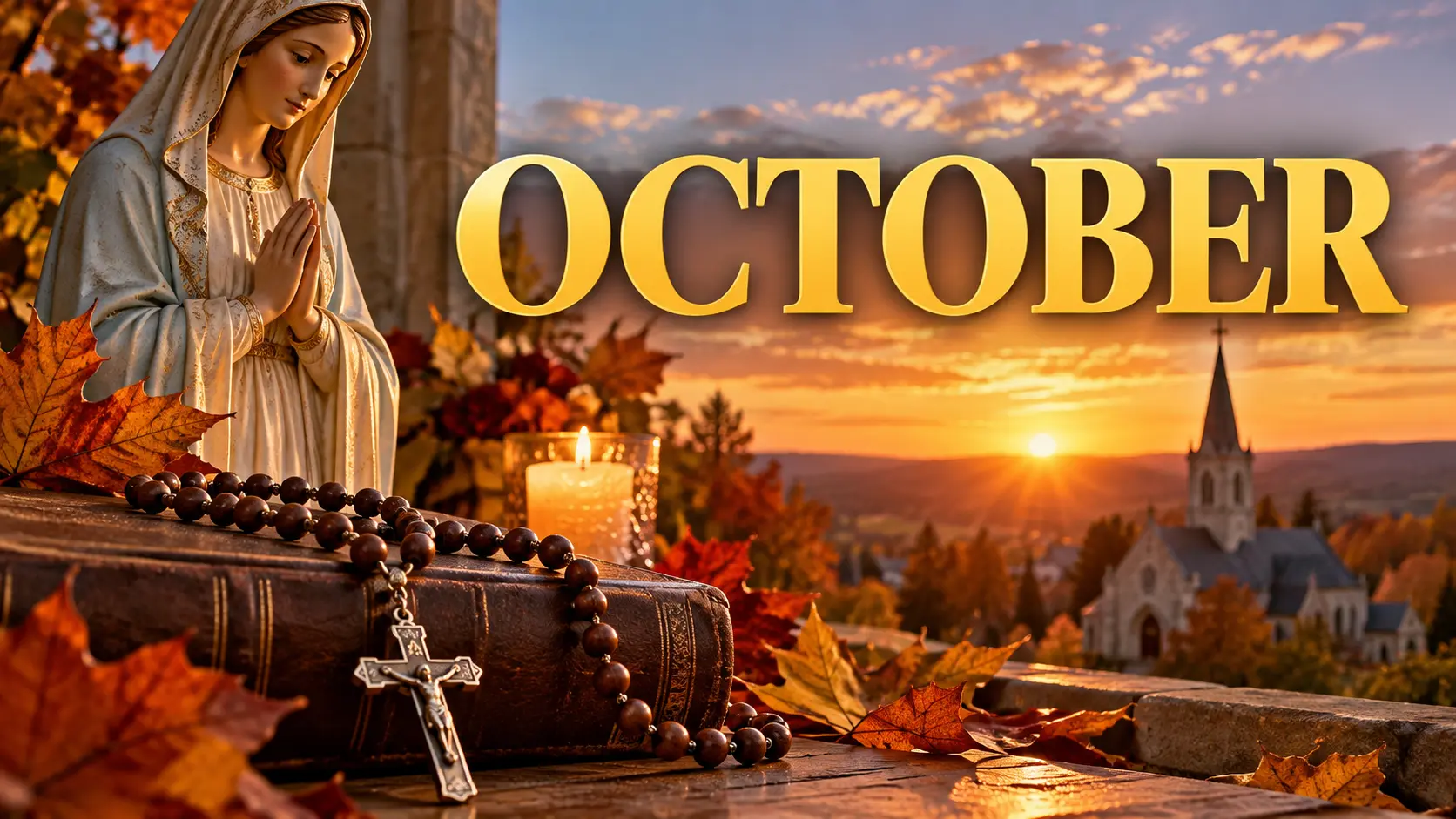

October is considered the Month of the Rosary because Pope Leo XIII gave the Rosary special prominence throughout October beginning in 1883, building on an older Catholic tradition connected with the Battle of Lepanto and the feast that developed in its aftermath. Over time, repeated papal encouragement helped establish October as a season in which Catholics give particular attention to the Rosary.
The tradition is therefore both historical and devotional. Its roots stretch from sixteenth-century events surrounding Lepanto to nineteenth-century papal teaching, while its spiritual meaning centres on prayer, contemplation and a renewed focus on Christ through the mysteries of the Rosary.
The Papal Decrees
The strongest formal connection between October and the Rosary developed under Pope Leo XIII. In his 1883 encyclical Supremi Apostolatus Officio, he called Catholics to increased Rosary prayer and directed that October receive special attention as a month of devotion to Our Lady of the Rosary.
This was not simply a one-year observance. Leo XIII continued returning to the Rosary in later encyclicals and repeatedly encouraged Catholics to pray it during October, which helped establish the month as a recurring devotional season throughout the Church.
Pope Leo XIII and the Rosary Encyclicals
Pope Leo XIII became one of the strongest papal promoters of the Rosary in modern Catholic history. During his pontificate, he issued a series of Rosary encyclicals that explored the prayer’s spiritual value, its relationship to Christian life and its place in both family and public devotion.
His repeated teaching was important because it transformed October from a month associated mainly with a particular Marian feast into a broader season of Rosary devotion. By returning to the subject year after year, Leo XIII gave the October observance a continuity that helped it become deeply embedded in Catholic practice.
1571: The Battle of Lepanto
The story, however, begins much earlier than Leo XIII. On October 7, 1571, the Holy League won the Battle of Lepanto, a major naval battle against the Ottoman fleet, after Pope St. Pius V had encouraged Christians to pray for the forces engaged in the conflict.
Catholic tradition soon connected the victory with the intercession of the Blessed Virgin and with Rosary prayer. That historical association helped give early October a lasting Marian significance, although the full story of why October 7 became associated with the Rosary deserves its own treatment rather than being repeated here.
1573: The Feast of Our Lady of the Rosary
The feast connected with the Rosary also developed gradually. Pope St. Pius V first established a feast of thanksgiving following Lepanto, while Pope Gregory XIII later strengthened the Rosary connection and extended the observance more explicitly under the title associated with Our Lady of the Rosary.
This sequence is important because the modern October devotion did not appear all at once. The feast created an early October focus and later papal teaching expanded that focus into a wider month-long devotion.
1883: October Becomes Closely Associated With the Rosary
The year 1883 marks the clearest turning point in the modern tradition. Leo XIII asked Catholics to devote October in a special way to the Rosary and encouraged both public and private prayer during the month.
His later writings reinforced the same idea, so October gradually became known across Catholic communities as the Month of the Holy Rosary. The historical path can therefore be seen as a progression from Lepanto, to the Rosary feast, to Leo XIII’s sustained month-long emphasis.
Spiritual Significance of an October Devotion
The historical development explains how October became associated with the Rosary, but Catholics also understand the month as a spiritual opportunity. The Rosary is not merely a repetition of prayers; its mysteries are intended to lead the believer through central events in the life of Jesus Christ.
This is why October devotion is usually understood as more than a Marian custom. Through Mary, the prayer directs attention toward Christ, his life, his suffering, his resurrection and the meaning of the Gospel.
For readers who want the prayer itself explained separately, the practical steps belong more naturally in a guide on how to pray the Holy Rosary correctly rather than inside this historical overview.
Autumn, Reflection and the Season of October
In many parts of the Northern Hemisphere, October also arrives during a visible seasonal transition. Changing leaves, shorter days, harvest imagery and the approach of winter can naturally encourage themes of gratitude, reflection, mortality and spiritual preparation.
These autumn associations can enrich the experience of October devotion but they should not be confused with the historical reason the month became dedicated to the Rosary. The Church did not choose October simply because it was autumn; the deeper roots lie in Catholic history, the Rosary feast and repeated papal encouragement.
For many believers, however, the atmosphere of the season can provide a fitting setting for contemplative prayer. The quietness and transition associated with autumn may naturally support the reflective character of the Rosary without becoming the basis of the devotion itself.
Community and Personal Practice
October Rosary devotion has traditionally existed in both public and private forms. Parishes may organize communal Rosaries, Marian devotions, school activities or special prayer intentions, while families and individuals may simply give the Rosary greater attention during the month.
This distinction is important because October does not make the Rosary exclusive to one season. Catholics may pray it throughout the year but October gives communities and individuals a recurring opportunity to focus on it more intentionally.
For someone interested in the personal side of that practice, a separate article on what happens when you pray the Rosary every day can explore the devotional experience without mixing that subject into the history of October.
Key Papal and Saints’ Perspectives
Pope Leo XIII remains central to the October tradition because he repeatedly described the Rosary as a powerful form of Christian prayer and encouraged Catholics to return to it during times of difficulty. His teaching helped define October not merely as a historical remembrance but as a living season of prayer.
Pope John Paul II later renewed this emphasis in Rosarium Virginis Mariae. He described the Rosary as deeply Christ-centred because the mysteries lead the believer to contemplate the life and mission of Jesus through the eyes of Mary.
John Paul II’s teaching is especially important because it explains why October devotion is not simply about honouring Mary in isolation. The Rosary uses Marian prayer as a path toward meditation on Christ, which gives the devotion a broader biblical and spiritual meaning.
St. Padre Pio also became closely associated with the Rosary through his personal devotion to it. He frequently encouraged prayer of the Rosary and treated it as an important spiritual practice, which helped reinforce its place in twentieth-century Catholic devotional life.
The spirituality of October therefore draws from both papal teaching and the example of saints. The month has become a time when Catholics are encouraged to rediscover a prayer that generations of Church leaders and believers have regarded as a means of contemplation, perseverance and trust in God.
October and May: Two Different Marian Traditions
Catholics often hear both May and October described as months associated with Mary, but the two traditions are not identical. May has developed as a broader month of Marian devotion, often involving Marian hymns, flowers, processions and May crownings.
October has a more specific identity centred on the Holy Rosary. The month is closely tied to the feast of Our Lady of the Rosary, the historical memory surrounding Lepanto, and the sustained papal promotion of Rosary prayer.
The two months therefore complement rather than compete with one another. May emphasizes Marian devotion broadly, while October directs particular attention toward the Rosary and its meditation on the mysteries of Christ.
Summary and Key Takeaways
October is considered the Month of the Rosary because several layers of Catholic history gradually came together around this time of year. The Battle of Lepanto in 1571 created an early association between October, Marian intercession and the Rosary, while the later development of the feast of Our Lady of the Rosary preserved that connection within Catholic tradition.
The decisive month-long emphasis came under Pope Leo XIII, especially beginning in 1883, when he repeatedly encouraged Catholics to devote October to Rosary prayer. Later popes continued to recognize and promote the tradition, helping it remain part of Catholic devotional life.
The spiritual meaning of the month is also important. October offers Catholics a recurring opportunity to slow down, contemplate the mysteries of Christ and renew a prayer that has been practiced across generations.
For that reason, October is not simply a calendar habit or a historical commemoration. It is a devotional season shaped by victory, papal teaching, Marian tradition and a desire to return more intentionally to contemplative prayer.

1 thought on “Why Is October Considered the Month of the Rosary?”