
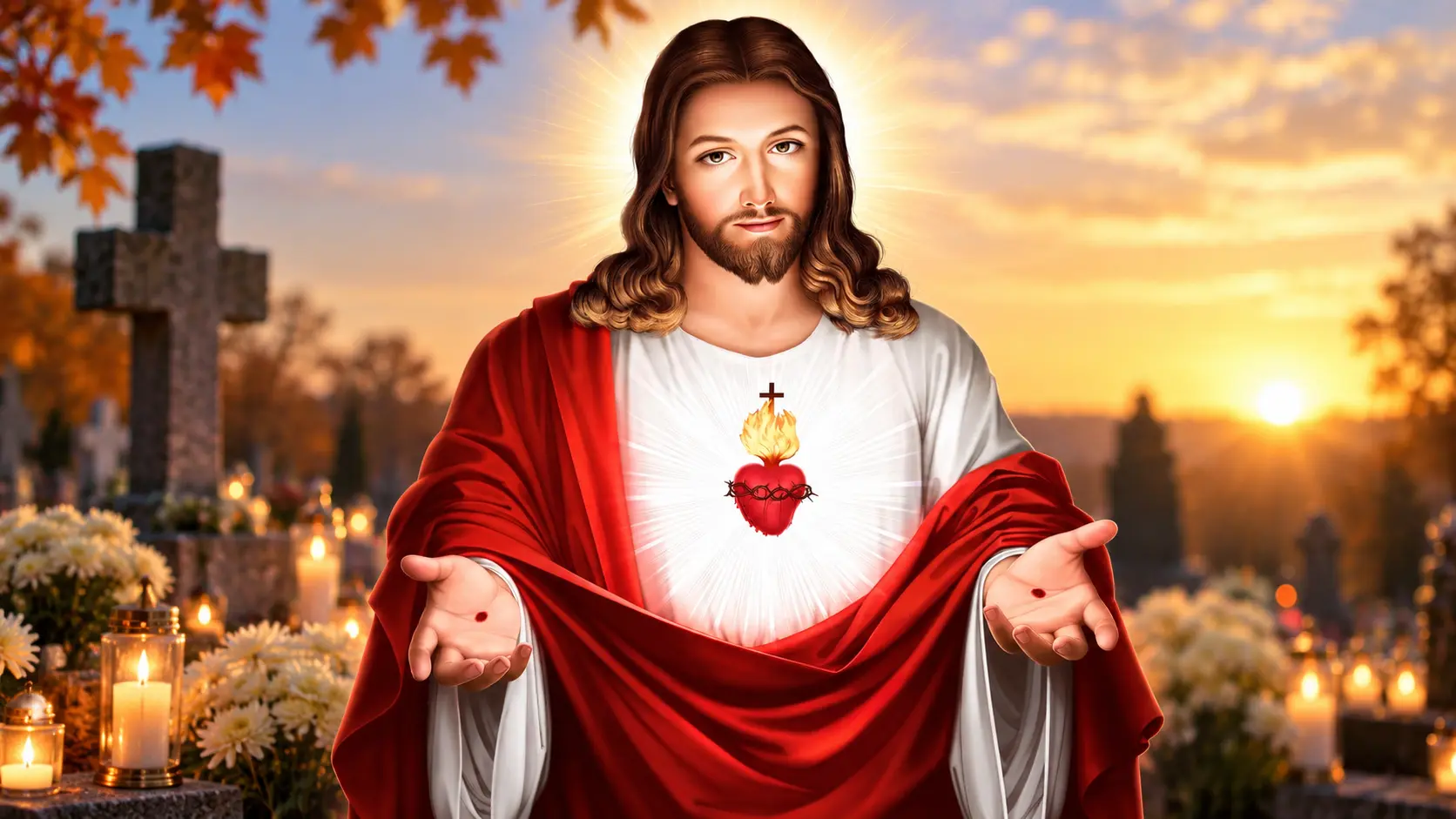

All Souls’ Day 2026 falls on Monday, November 2, 2026. In Christian traditions that observe it, the day is dedicated to honouring the faithful departed, including relatives, friends and generations of believers who have died.
November arrives as much of the Northern Hemisphere moves deeper into autumn. Leaves fall, daylight shortens and the changing season naturally invites reflection on time, mortality and those who are no longer with us.
Christian care for the dead, however, is far older than the November 2 calendar date. Early believers buried members of their communities together, gathered near their tombs and expressed hope in resurrection centuries before All Souls’ Day took its later form.
What Is All Souls’ Day? Meaning and Significance
At its heart, All Souls’ Day is connected with love, grief, memory and belonging. Loss is often experienced privately: someone may miss a parent while sitting at home, think about a spouse during an ordinary routine or feel the absence of a friend years after the funeral.
A shared day of commemoration gives those emotions a communal setting. Names can be spoken, stories recalled and sorrow acknowledged among people who understand that grief does not simply disappear with time.
The tone is traditionally solemn and reflective but not hopeless. Death and separation are taken seriously, while the wider Christian message continues to point toward resurrection and eternal life. This creates a mood that can hold both sadness and hope at the same time.
Those commonly honoured include:
- Family members and ancestors whose lives, values and faith influenced later generations.
- Deceased parishioners and friends who once belonged to the local worshipping community.
- People who are largely forgotten, including those who no longer have surviving relatives to keep their names alive.
The day therefore extends far beyond famous religious figures. Its focus is often the ordinary men and women whose lives mattered deeply within families, churches, and communities.
History and Development of All Souls’ Day
The November 2 commemoration did not emerge all at once. It developed gradually through centuries of Christian burial customs, monastic practice and church tradition.
- Early Church — 1st to 4th Centuries Christians lived in cultures where honouring the dead was already important but they increasingly interpreted death through belief in resurrection. Archaeological evidence from the Roman catacombs, especially from the late second and third centuries, shows communal burials and funeral meals known as refrigeria. Images of bread, cups and vessels in catacomb art have been associated with meals held in connection with the deceased. These practices show that care for those who had died formed part of Christian community life long before a formal All Souls’ Day existed.
- Monastic Foundations — 7th to 9th Centuries During the early Middle Ages, monasteries and churches began organizing commemoration more systematically. Lists known as necrologies recorded deceased monks, benefactors and community members so that they could be included in prayers on anniversaries. Over time, some communities also began setting aside collective days for those who had died, rather than limiting prayer to individual anniversaries.
- St. Odilo of Cluny — Traditionally 998 AD A major development came through St. Odilo, Abbot of Cluny. Tradition dates his decree to 998, when monasteries under Cluny’s influence were instructed to commemorate all the faithful departed on November 2, immediately after All Saints’ Day. Historians have debated the exact dating of the decree but 998 remains the traditional date associated with the establishment of the Cluniac practice.
- Wider Western Adoption — 11th to 14th Centuries The custom spread beyond the Cluniac monasteries into other religious houses and dioceses. Over the following centuries, November 2 became increasingly established throughout Western Christianity and eventually entered wider Roman liturgical practice. Rather than becoming universal through one single decree, the day expanded gradually from monastic circles into a broadly recognized Western Christian commemoration.
What began as local and monastic practices eventually became a widely recognized day devoted to the faithful departed. That long development helps explain why All Souls’ Day contains elements of early burial culture, medieval prayer, formal church worship and family traditions.
Why November 2? Allhallowtide Sequence
The placement of All Souls’ Day immediately after All Saints’ Day creates a deliberate spiritual progression. November 1 celebrates the saints and the Christian hope represented by those understood to share in heavenly glory.
November 2 shifts the focus toward the wider community of the dead: parents, grandparents, spouses, children, friends, parishioners and generations whose lives may not be famous but remain deeply personal.
The three days from October 31 through November 2 are often grouped under the traditional term Allhallowtide:
| Date | Observance Name | Primary Focus | Tone / Vibe |
|---|---|---|---|
| Oct 31 | All Hallows’ Eve | Vigil and preparation leading into All Saints | Reflective / Autumnal |
| Nov 1 | All Saints’ Day | Honoring all the saints in heavenly glory | Triumphant / Celebratory |
| Nov 2 | All Souls’ Day | Commemorating the faithful departed, including family and friends | Solemn / Prayerful |
The movement from November 1 to November 2 changes the emotional focus. All Saints’ Day looks toward the wider company of saints and the fulfillment of Christian hope.
All Souls’ Day brings the subject much closer to ordinary family and community life. Attention turns toward people whose photographs may still sit in a home, whose stories continue to be told or whose absence is still deeply felt.
All Saints’ Day vs. All Souls’ Day
Because the two days occur one after the other, they are often confused or treated as one long celebration. Their purposes, however, are distinct.
| Feature | All Saints’ Day — Nov. 1 | All Souls’ Day — Nov. 2 |
|---|---|---|
| Who is honored or remembered? | All the saints, known and unknown, understood to share in heavenly glory | The faithful departed, including deceased family members and members of Christian communities |
| Primary Tone | Festive, triumphant, joyful | Prayerful, reflective, quiet |
| Liturgical Color | White or gold | In Roman Catholic use, violet, white, or black may be used; the Church of England assigns purple |
| Primary Intent | Celebrating the saints and Christian hope of heavenly life | Honoring the dead and, in traditions that practice it, offering prayer on their behalf |
Liturgical colours are not identical in every church. Roman Catholic practice may use violet, white or black for Masses for the dead depending on local norms, while Anglican practice commonly uses purple for the Commemoration of the Faithful Departed.
The two dates therefore belong together without being interchangeable. Each approaches death, faith and the Christian community from a different angle.
How Different Christian Traditions Commemorate the Departed
Christian traditions do not all approach November 2 in the same way. Some formally observe it, while others remember the dead through different dates and practices.
Catholic Church Observance
In the Roman Catholic Church, November 2 is formally known as The Commemoration of All the Faithful Departed. Masses for the dead are celebrated, with prayers and readings centred on those who have died and on Christian hope beyond death.
Depending on local liturgical norms, priests may wear violet, white or black vestments.
Parish customs may also include:
- Books of Remembrance in which people write the names of deceased relatives and friends.
- Candles lit in honour of particular individuals.
- Names read aloud during services or periods of prayer.
- Special Mass intentions for those who have died.
These customs differ from parish to parish and are not practiced identically everywhere.
Eastern Orthodox Traditions: “Soul Saturdays”
Eastern Orthodox Christianity has a strong tradition of praying for and honoring departed believers, but it does not generally organize this practice around the Western November 2 date.
Instead, several designated Saturdays throughout the year are used for collective commemoration. These are often called Soul Saturdays or Psychosabbata.
During Great Lent, for example, certain Saturdays are devoted especially to the dead. A traditional food known as kollyva or koliva, usually prepared from boiled wheat and other ingredients, may be blessed and shared.
The wheat carries strong symbolism because a grain is buried before new life emerges from it. In this way, kollyva becomes an image of death and future resurrection.
Protestant and Anglican Perspectives
The Protestant Reformation changed the role of All Souls’ Day across much of Western Christianity. Many Reformers rejected medieval teachings and practices connected with Masses or prayers for souls after death and numerous Protestant churches therefore stopped observing November 2.
The modern picture is more varied. The Church of England formally recognizes November 2 as the Commemoration of the Faithful Departed and many Anglican congregations hold services where names are read or candles are lit.
German Protestant churches developed another practice known as Totensonntag, also called Ewigkeitssonntag. It is observed near the end of the church year and focuses on those who have died while emphasizing Christian hope in eternity.
Common Customs and Global Traditions
Church liturgies vary widely, yet many cultures express grief and affection through similar physical acts. Flowers, candles, graves, family meals and shared stories give people tangible ways to honour those they have lost.
- Visiting and Tending Graves: In many countries, families visit cemeteries around All Souls’ Day. Graves may be cleaned, weeds removed and fresh flowers such as chrysanthemums placed beside headstones. These acts of care can make personal loss feel connected to something visible and meaningful.
- Lighting Candle Lanterns in Central and Eastern Europe: In countries including Poland, Lithuania and Slovakia, cemeteries can glow with large numbers of candles during early-November commemorations. In Poland, glass grave candles known as znicze are especially associated with this season.
- Cultural Syncretism and Día de los Muertos in Mexico: Mexico’s Día de los Muertos is not simply another name for All Souls’ Day. It developed through the interaction of Indigenous pre-Hispanic traditions with Catholic observances introduced during the colonial period. Celebrations may include home altars or ofrendas, marigolds, candles, food, visits to graves and family gatherings. November 1 and 2 are strongly associated with the festival but its meaning and cultural roots extend beyond the Western All Souls liturgy.
Across these customs, one idea remains consistent: grief is often easier to express when it has a place, a gesture or a shared ritual attached to it.
What All Souls’ Day Means for Christians Today
Modern life can quietly pressure grieving people to return to normal before they are emotionally ready. Funerals end, work resumes, conversations move on and daily routines continue even when the sense of loss remains.
A yearly commemoration creates space to acknowledge that grief does not follow a fixed timetable. For communities that observe All Souls’ Day, services can provide a calm setting where names are spoken and loss is recognized without requiring people to pretend that everything has already healed.
The day can also help younger generations understand their family roots. A grandparent’s story, an old photograph, a name on a gravestone or memories of an earlier church member can connect the present with lives that came before.
Honouring previous generations does not mean pretending that every life was perfect. It simply recognizes that families and communities are shaped by people whose stories began long before the present generation.
For Christians who observe it, November 2 can therefore become more than a date associated with death. It offers space for grief, gratitude, family history, faith and hope to exist together.
Interested in the theological debate behind praying for the dead? Read our deep-dive biblical investigation: What Does the Bible Say About Praying for the Dead? The All Souls’ Day Debate.

1 thought on “What Is All Souls’ Day? 2026 Date, Meaning and Traditions”