
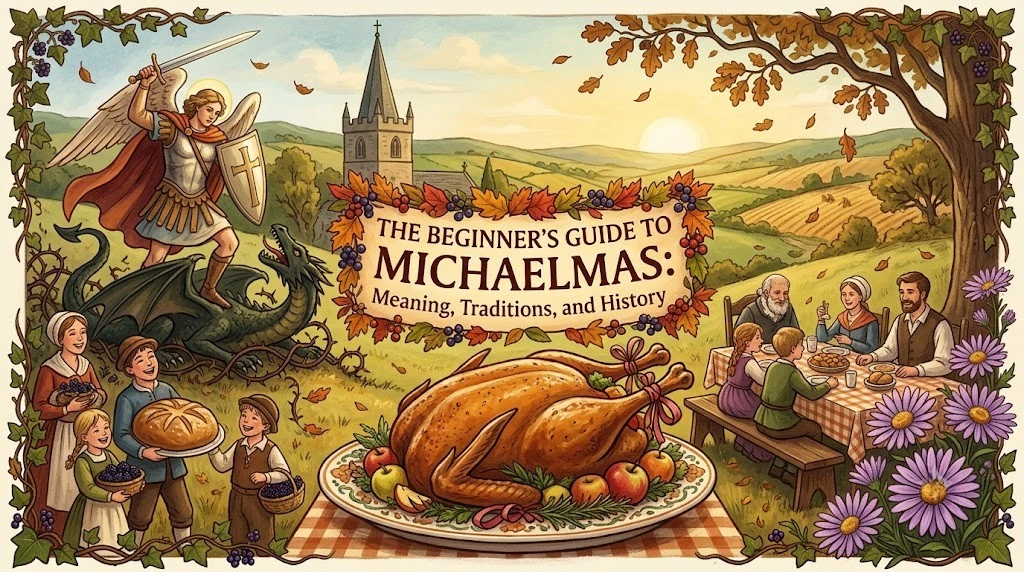

Michaelmas (pronounced MIK-ul-muss), celebrated annually on September 29, is one of the oldest feast days associated with Western Christianity. Formally known as the Feast of St. Michael and All Angels, it honors Michael the Archangel and, in many traditions, the other archangels as well.
Over the centuries, Michaelmas became much more than a religious observance. In Britain especially, September 29 became an important date for harvest customs, rents, employment agreements, university terms and legal business. It also gathered a rich collection of seasonal folklore, including the famous story of Michaelmas blackberries.
Although Michaelmas is not as widely celebrated today as Christmas or Halloween, its history offers a fascinating glimpse into the way religion, farming, local customs and everyday life were once closely connected.
Origins and Religious Meaning
Michaelmas marks the feast day of Saint Michael the Archangel, one of the most prominent angelic figures in Christian tradition. Michael is associated particularly with protection, spiritual warfare and the defence of God’s people.
In Western Christianity, the September 29 feast eventually became associated not only with Michael but also with the archangels Gabriel and Raphael. Uriel is also recognized as an archangel in some Christian traditions, although he is not included among the archangels named in the standard Western biblical canon.
Biblical Context
The Bible presents Michael as a powerful heavenly figure who stands in opposition to evil. In the Book of Revelation 12:7–9, Michael and his angels fight against the dragon, identified with the devil or Satan, and cast him out of heaven.
Michael also appears in the Book of Daniel as a heavenly protector of God’s people, while the Letter of Jude refers to him specifically as “Michael the archangel.”
Because of these biblical associations, Christian tradition came to portray Michael as a defender against evil and a leader of the heavenly hosts. He has consequently been associated with soldiers and other groups connected with protection and service.
The imagery surrounding Michael is often striking: he is commonly shown wearing armor and holding a sword, sometimes standing over a defeated dragon. For Christians, this image represents the triumph of good over evil rather than simply a military victory.
Why September 29?
The September 29 date has an ancient Christian history. A major early dedication associated with St. Michael took place on the Via Salaria in Rome, and September 29 subsequently became an established feast day for Michael in the Western Church.
The date also falls close to the autumnal equinox, although it is important not to assume that the Church simply created Michaelmas as a replacement for a particular pagan autumn festival. The historical development of Christian feast days was more complicated than that.
Still, the timing gave Michaelmas a natural connection with the changing season. By late September, the main harvest was drawing toward its conclusion in much of medieval Europe, daylight was shortening, and communities were preparing for winter. Over time, these seasonal realities became closely woven into Michaelmas customs and symbolism.
A Medieval “Quarter Day”
In medieval and early modern England, Michaelmas became one of the most important dates in the agricultural and administrative calendar. It was one of the traditional Quarter Days, alongside Lady Day (March 25), Midsummer (June 24), and Christmas Day (December 25).
Quarter Days were useful fixed points for organizing leases, rents, employment agreements, legal business, and other obligations. For agricultural communities, Michaelmas was particularly appropriate because it arrived at the end of the main harvest season.
- Financial Year & Rent: Land leases and other agreements were often linked to Quarter Days. At Michaelmas, tenants could be required to pay rent, settle accounts, or renew arrangements with landowners. The date therefore had practical financial importance as well as religious significance.
- Labor Contracts & “Mop Fairs”: In parts of England, agricultural workers and domestic servants traditionally found new employment at hiring fairs held around Michaelmas. These became known in some areas as Mop Fairs, where workers and prospective employers met to arrange annual contracts. Customs varied considerably from one place to another.
- Academic Term: The historical importance of Michaelmas survives particularly clearly in education. Oxford and Cambridge, among other institutions, still use the name Michaelmas Term for their autumn academic term.
- Legal & Civic Life: Michaelmas also became associated with the legal calendar in England. The courts traditionally had a Michaelmas Term, a name that continues in the modern legal system. In some communities, civic offices and local administrative arrangements were also connected with the Michaelmas period.
For ordinary people, therefore, Michaelmas was not merely a day marked on a church calendar. It could determine when money was paid, employment changed, contracts ended or began and important community business was conducted.
Traditional Michaelmas Customs & Folklore
1. Eating the Michaelmas Goose
One of the best-known Michaelmas traditions was eating goose.
By late September, geese were traditionally well fed after spending the summer grazing and could be particularly plump around the end of the harvest. Geese that fed in harvested fields were sometimes described as “stubble geese,” referring to the leftover grain and plant material on fields after harvesting.
The bird consequently became strongly associated with Michaelmas meals in parts of Britain.
There was also an economic side to the custom. In some areas, geese were given to landlords as part of rent or as a customary gift, although practices differed between estates and communities.
An old English saying captured the belief in the prosperity associated with the meal:
“If you eat goose on Michaelmas Day, you will never want money all the year round.”
Whether people took the saying literally or simply enjoyed the feast, the Michaelmas goose became one of the most memorable symbols of the festival.
2. The Legend of Michaelmas Blackberries
Few Michaelmas traditions are as charming as the story of the Michaelmas blackberry.
British folklore traditionally warned that blackberries should not be picked after Michaelmas. One popular version of the legend says that when St. Michael cast the devil out of heaven, Satan fell onto a blackberry bush. Angry at the thorns, he cursed the plant, sometimes said to have spat upon it or stamped on it.
According to the story, this was why blackberries became unpleasant or unsafe to eat after September 29.
The folklore also had a practical explanation. As autumn progressed, wild blackberries could become overripe, damaged by rain, or affected by frost and mold. The old warning therefore coincided with a genuine seasonal change in the quality of the fruit.
The exact wording and details of the legend vary from place to place, but the idea of Michaelmas marking the end of the blackberry season remains one of the festival’s most recognizable pieces of folklore.
3. St. Michael’s Bannock (Struan Micheil)
In parts of the Scottish Highlands and Western Isles, Michaelmas was associated with a traditional ceremonial bread or cake known as Struan Micheil, or St. Michael’s bannock.
The preparation of the bannock could involve locally available grains such as oats, barley, and rye. Different communities followed different recipes and customs, so there was never just one universal version of the dish.
The food was more than something to eat. In traditional communities, preparing and sharing special bread around a feast day could express gratitude for the harvest, family unity, hospitality, and hopes for prosperity during the coming year.
The tradition also reflects one of the most important features of Michaelmas: its connection between the Christian calendar and the agricultural year.
4. Michaelmas Daisies
Michaelmas daisies are autumn-flowering plants traditionally associated with the feast because they bloom around the time of Michaelmas.
The name is commonly applied to several species and cultivated varieties of asters and related plants, many of which produce purple, pink, blue, or white flowers late in the growing season.
At a time when many summer flowers were beginning to disappear, these late blooms stood out in gardens and fields. This helped give Michaelmas daisies a symbolic association with endurance and the final brightness of the season before winter.
A traditional rhyme celebrates their late appearance:
“The Michaelmas Daisy, among dead weeds, blooms for St. Michael’s valorous deeds.”
The rhyme is a good example of how ordinary seasonal observations became attached to religious festivals in traditional folklore.
How Michaelmas Relates to Other Autumn Holidays
| Holiday | Primary Theme | Historical Root | Associated Foods |
|---|---|---|---|
| Michaelmas (Sept 29) | St. Michael, angels, protection, harvest and seasonal transition | Christian feast / Medieval Quarter Day | Roast goose, blackberries, bannock |
| Halloween / Samhain (Oct 31) | All Hallows’ Eve, remembrance of the dead, seasonal transition | Christian All Hallows’ Eve with connections to Gaelic seasonal traditions | Apples, soul cakes, pumpkins |
| Martinmas (Nov 11) | Feast of St. Martin, beginning of winter and seasonal change | Christian feast with strong European agricultural traditions | Roast goose, new wine |
Although these celebrations occur relatively close together on the calendar, they have different histories. Michaelmas is primarily a Christian feast associated with St. Michael and the angels, while Halloween developed from the Christian observance of All Hallows’ Eve and became intertwined with various regional traditions. Martinmas, meanwhile, honors St. Martin of Tours and acquired its own agricultural and seasonal customs across Europe.
How Michaelmas is Observed Today
Michaelmas is no longer a general public holiday in Britain but the name and traditions have survived in churches, schools, universities, legal terminology, gardens and seasonal celebrations.
- Liturgical Services: Anglican, Roman Catholic, Lutheran and other Christian communities may hold services around September 29 to commemorate St. Michael and the angels. Biblical readings can include passages concerning Michael and spiritual conflict, while hymns and prayers emphasize themes such as protection, courage and faith.
- Waldorf & Steiner Schools: Michaelmas has a particularly visible place in Waldorf and Steiner education. Schools may mark the season with plays, storytelling, songs, crafts, outdoor activities and symbolic stories about courage and overcoming fear. Some communities also make dragon-themed breads or decorations inspired by the traditional image of St. Michael confronting the dragon.
- Seasonal Harvest Meals: Michaelmas can also inspire modern harvest gatherings and historical-food recreations. Goose or another seasonal roast, apples, blackberries, autumn vegetables and traditional breads can all be used to create a meal inspired by older Michaelmas customs. Gardens and homes may also be decorated with late-blooming flowers such as Michaelmas daisies.
For many people today, Michaelmas is less about observing an old economic deadline and more about recognizing the changing season and remembering a festival with centuries of religious and cultural history. Its traditions—from the Michaelmas goose and blackberry folklore to the Michaelmas daisy—show how closely faith, farming, food and everyday life were once connected.
