
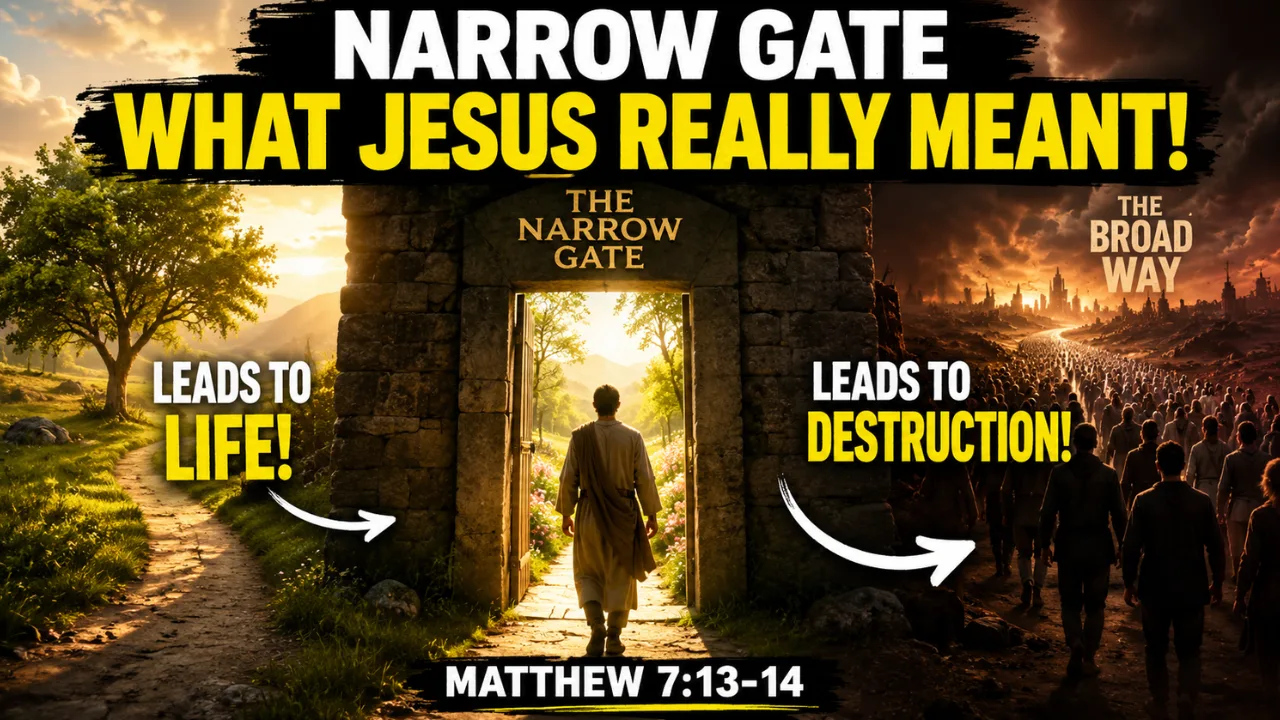

In Matthew 7:13–14, the narrow gate refers to entry into the kingdom of God through genuine response to Jesus’ teaching, obedience to the Father’s will and participation in the righteousness required by the kingdom. The passage appears near the conclusion of the Sermon on the Mount, where Jesus has already described kingdom life through inward righteousness, sincere worship, truthful conduct, mercy, purity, trust in God and faithful obedience.
The contrast between the narrow gate and the wide gate is not simply about choosing a difficult life instead of an easy one. It is a kingdom warning. Jesus presents two gates, two ways and two final outcomes in order to distinguish true discipleship from false security. The narrow way leads to life because it aligns with God’s reign, while the broad way leads to destruction because it rejects that reign, even when outward religion may still be present, closely connected to [why Jesus repeatedly warned against outward religion without genuine obedience and transformation — What Jesus Taught About True and False Discipleship].
Narrow Gate Within the Sermon on the Mount
Matthew 7:13–14 must be read within the Sermon on the Mount as a whole. Jesus has already addressed anger, reconciliation, lust, truthfulness, prayer, hypocrisy, mercy, judgment, divided loyalty, trust in God and righteousness that exceeds external religious performance. The narrow gate gathers these teachings into a direct call for response.
This context is essential because the narrow gate is not primarily about asceticism, elitism or religious difficulty for its own sake. It is about entering the kingdom on God’s terms rather than through superficial confidence, public piety or outward association with religious life. Jesus is not praising human achievement; He is calling hearers to submit to the authority of God’s kingdom.
The Sermon’s Closing Warnings
The narrow gate begins a series of closing warnings in Matthew 7. Jesus moves from two ways, to false prophets, to false disciples and finally to two builders. These images are not separate moral sayings loosely placed together. They form a unified conclusion that presses the same issue: hearing Jesus’ words must result in faithful obedience.
This makes the narrow gate a controlling image for the end of the Sermon. It prepares the reader for the warnings that follow, especially the danger of appearing religious while failing to do the will of the Father.
Two Gates, Two Ways, Two Destinations
Jesus structures the saying around a deliberate contrast: the narrow gate and difficult way lead to life, while the wide gate and broad way lead to destruction. The gate introduces the path and the path leads to a final destination. The image therefore concerns direction, allegiance and ultimate accountability before God.
The broad way is spacious because it accommodates self-rule, divided loyalty and religion without true obedience. The narrow way is restrictive because kingdom life cannot be reshaped around hypocrisy, pride or disobedience. Its narrowness comes from the exclusive authority of God’s will, not from the idea that salvation is earned by human effort.
Gate and Way Belong Together
Jesus does not speak only of a gate and He does not speak only of a road. The gate and the way belong together. Entry into the kingdom and continued life under God’s reign cannot be separated in Matthew’s theology.
This matters because the passage is not about a momentary religious decision detached from discipleship. The narrow gate opens into a narrow way. Kingdom entrance is joined to a life ordered under the teaching and authority of Christ.
Narrow Gate and Kingdom Righteousness
Throughout Matthew’s Gospel, Jesus distinguishes true righteousness from external religious performance. Earlier in the Sermon on the Mount, He declares that righteousness must exceed that of the scribes and Pharisees. This does not mean accumulating stricter rules. It means righteousness that reaches the heart and expresses genuine covenant obedience before God.
The narrow gate must be read within this framework. Jesus is not calling for outward severity as though strictness itself were life-giving. He is calling for a kind of righteousness that corresponds to the reign of God, a righteousness that includes the heart, motives, speech, mercy, integrity and obedience.
Righteousness Beyond External Religion
Jesus repeatedly exposes religious practices performed for human recognition rather than devotion to God. Almsgiving, prayer, fasting and public moral appearance can all become outward displays detached from faithful submission to the Father.
The narrow gate therefore represents more than religious seriousness. It represents entry into the kingdom through sincere response to God’s authority rather than dependence on visible religiosity.
Obedience From the Heart
In the Sermon on the Mount, obedience reaches beyond external behaviour into motives, desires, speech and intention. Anger relates to murder, lust relates to adultery and truthfulness reflects integrity of character.
This explains why the way is narrow. The kingdom addresses the whole person before God. It does not accept outward conformity while leaving the heart untouched.
Wide Gate and False Security
The wide gate represents the path that accommodates life without true submission to God’s reign. In Matthew 7, this includes not only open rebellion but also false religious confidence. The surrounding context warns about false prophets, trees known by fruit, verbal profession without obedience and people who hear Jesus’ words without doing them.
The broad way can therefore include forms of religion that appear convincing externally while remaining disconnected from true obedience. This makes the warning especially serious. Jesus is not only addressing those who openly reject God. He is also confronting those who assume that religious speech, visible works or public identity can replace doing the will of the Father.
False Security Inside Religious Language
Matthew 7 shows that false security can exist inside religious vocabulary. A person may speak in ways that sound correct, claim association with Christ or appear active in spiritual work, while still lacking obedience to God’s will.
This is why the narrow gate should not be reduced to a contrast between religious people and irreligious people. The passage also distinguishes between true and false discipleship. The wide way may include people who appear religious but remain outside the obedience Jesus requires, echoing [Jesus’ warning that hearing His words without practicing them leads to spiritual ruin — The Wise and Foolish Builders Explained].
“Lord, Lord” and the Meaning of the Narrow Gate
Later in Matthew 7, Jesus says that not everyone who calls Him “Lord” will enter the kingdom of heaven but the one who does the will of His Father. This statement belongs to the same concluding section of the Sermon on the Mount and helps interpret the narrow gate.
The issue is not verbal confession alone. The issue is whether confession is joined to obedience. The narrow gate stands against false assurance rooted only in religious language, visible activity or public reputation. In Matthew’s theology, genuine discipleship is shown by hearing and doing the words of Christ.
Profession and Obedience
Matthew does not separate profession from obedience as though they were unrelated categories. Verbal confession has significance but Jesus warns that confession without obedience can become self-deception.
The narrow gate therefore confronts shallow assurance. It teaches that kingdom entrance is not measured by words alone but by faithful submission to the will of the Father revealed through the Son.
Narrow Gate and the Two Ways Tradition
Matthew 7:13–14 belongs to a broader biblical pattern often called the “two ways” tradition. Scripture repeatedly contrasts life and death, wisdom and folly, righteousness and wickedness, obedience and rebellion. This pattern appears in covenant instruction and wisdom literature.
Jesus uses that familiar structure but places it under the authority of His kingdom message. The decision is not vague moral preference. It is response to the teaching of Jesus and the will of the Father.
Life and Destruction in Biblical Context
The contrast between life and destruction recalls the Bible’s larger covenant and wisdom framework. God’s way leads to life because it aligns with His will, while rebellion leads to ruin because it rejects the source of righteousness and life.
In Matthew 7, Jesus brings that inherited biblical pattern to its decisive point. The way of life is now defined by response to His teaching at the conclusion of the Sermon on the Mount.
Narrow Gate and Final Judgment
The words “life” and “destruction” give the passage eschatological weight. Jesus is not merely describing two lifestyles with different earthly consequences. He is speaking about final outcomes before God.
This fits the broader ending of the Sermon on the Mount. Matthew 7 moves from two ways, to false prophets, to false disciples, to two builders. Each image presses the same issue: hearing Jesus’ words must result in faithful obedience. Final judgment will reveal the difference between outward appearance and genuine kingdom allegiance.
Few and Many
Jesus says many enter the wide gate while few find the narrow way. The emphasis should not be turned into numerical speculation. The point is that popularity does not determine truth and common acceptance does not prove faithfulness.
This warning fits Matthew’s concern with false security. The broad way is attractive because it is widely travelled and less demanding but Jesus evaluates paths by their destination, not by how many people walk them.
Narrow Gate and Hearing Jesus’ Words
The final image of the Sermon on the Mount concerns two builders. One hears Jesus’ words and does them, while the other hears and does not do them. This final contrast closely parallels the narrow and broad ways.
The narrow gate therefore cannot be separated from hearing and doing the words of Christ. Entry into the kingdom is connected to faithful response to His authority. Matthew’s Gospel consistently joins confession with obedience rather than treating them as unrelated realities.
Wise Builder Connection
The wise builder is the practical counterpart to the narrow gate. Both images describe the person who responds rightly to Jesus’ teaching. The foolish builder corresponds to the broad way because hearing without obedience leaves a person exposed to judgment.
This connection confirms that Matthew 7:13–14 is not an isolated saying about difficulty. It is part of a sustained conclusion about the necessity of obedient response to Jesus’ kingdom message.
What the Narrow Gate Means in Matthew 7:13–14
The narrow gate in Matthew 7:13–14 symbolizes entry into the kingdom of God through genuine response to Jesus’ teaching, true righteousness and obedience to the Father’s will. The difficult way represents continued life under the authority of God’s kingdom, while the broad way represents rebellion, false security and outward religion without obedience.
The passage does not teach that people earn life through moral effort. It teaches that kingdom entrance cannot be separated from repentance, submission to God and faithful response to Christ. In Matthew’s context, the narrow gate is inseparable from hearing and doing the words of Jesus.
Frequently Asked Questions
Why did Jesus say the gate is narrow?
The gate is narrow because kingdom life cannot be separated from submission to God’s will and true righteousness.
What is the broad way in Matthew 7?
The broad way represents the path of rebellion, false security, superficial religion and rejection of God’s authority.
Does the narrow gate mean salvation is earned by works?
No. The passage does not teach salvation by human effort. It teaches that genuine faith results in obedience to God’s will.
Why does Jesus say few find the narrow gate?
The warning emphasizes that popularity and common acceptance do not determine truth or faithfulness before God.
Is the narrow gate connected to the Sermon on the Mount?
Yes. Matthew 7:13–14 functions as part of the Sermon on the Mount’s concluding call to respond to Jesus’ teaching.
