
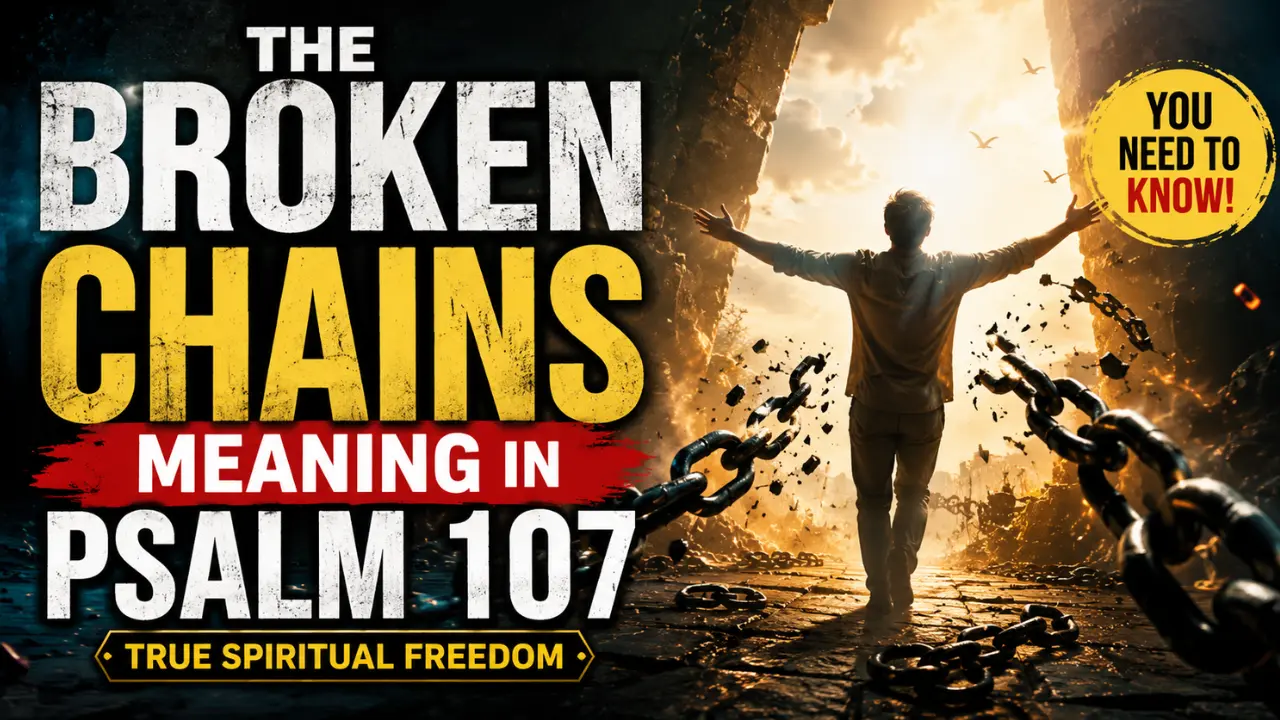

Psalm 107 does not introduce broken chains as a decorative image. It places the reader inside a prison where darkness has weight, iron has authority and the human soul has reached the end of its own strength. The psalm speaks of people who “sat in darkness and in the shadow of death, being bound in affliction and iron.” This is not casual hardship. It is captivity with spiritual depth. The prisoners are not merely delayed, inconvenienced or emotionally tired. They are confined by forces stronger than themselves, surrounded by gloom, pressed down by consequence and unable to manufacture their own escape.
The meaning of broken chains in Psalm 107 begins here, inside the heaviness of that prison. Chains represent bondage but in this passage they also represent helplessness, judgment, consequence and the terrifying discovery that rebellion against God never produces the freedom it promises. The captives had rejected divine counsel and the result was not independence but confinement. Psalm 107 is honest about this. Sin may begin as self-rule but it often ends as a locked room, much like [the biblical reality that sin eventually leads to spiritual bondage — The Spiritual Consequences of Rejecting God] reveals throughout Scripture. The heart that refuses God’s word eventually discovers that life outside His wisdom is not open space but spiritual imprisonment.
Why the Chains Are Iron
The psalm’s mention of iron matters. Iron suggests strength, permanence and human inability. Rope can be cut by ordinary hands. Iron requires greater power. By describing the captives as bound in iron, Psalm 107 shows that their bondage is beyond natural escape. This is the language of a condition that cannot be solved by mood, denial, personal resolve or shallow religious appearance. The chains are too strong for the prisoner because the point of the passage is not human recovery but divine rescue, revealing [why true spiritual freedom requires God’s intervention rather than human strength — Freedom From Spiritual Bondage in the Bible].
This is why the broken chains imagery carries such authority. God does not merely loosen what binds them. He breaks it. He does not offer spiritual encouragement while leaving the prison intact. He destroys the structure of captivity itself. The Lord brings them out of darkness and the shadow of death, then breaks their bands apart. The order is important because deliverance in Psalm 107 is both relocation and liberation. God removes the captive from darkness and He removes the bondage from the captive.
Darkness, Shadow and the Inner Life of Bondage
The phrase “darkness and the shadow of death” gives Psalm 107 its emotional force. Darkness in Scripture often points to confusion, fear, spiritual blindness and separation from the light of God’s truth. The shadow of death adds a deeper seriousness. It suggests that captivity has become more than discomfort. It has become an atmosphere where hope thins, strength fades and the soul begins to feel surrounded by endings. The prisoners are alive, yet death casts its shadow over their condition.
This imagery speaks powerfully to spiritual bondage because many chains are not visible. A person can move through daily life, speak normally, work faithfully and appear strong while inwardly sitting in a place of darkness. Shame can darken memory. Fear can darken imagination. Sin can darken judgment. Bitterness can darken relationships. Despair can darken prayer until even the language of faith feels distant. Psalm 107 understands that captivity is not only about where the body is located. It is also about what has gained power over the inner life.
The Rebellion Behind the Prison
The rebellion behind the prison is central to Psalm 107 because the captives are not suffering through random misfortune alone. The psalm says they rebelled against the words of God and rejected the counsel of the Most High. This detail prevents the passage from becoming sentimental or superficial. It shows that some forms of bondage grow from repeated resistance to divine wisdom, much like [the biblical warning that sin gradually leads the soul into captivity — How Sin Leads to Spiritual Bondage] reveals throughout Scripture. The chains are not accidental. They are connected to a deeper spiritual disorder within the heart.
This is one reason the passage remains so relevant. People often imagine sin as freedom because it appears to remove restraint. Yet Scripture sees more clearly. Sin does not simply break rules; it bends the soul toward slavery. What begins as private compromise can harden into habit and what becomes habit can grow into captivity. Psalm 107 exposes this process without cruelty. It tells the truth about rebellion so that mercy can be seen clearly. The captives are responsible but they are not beyond rescue.
The Cry That Changes the Story
The great turning point in Psalm 107 is not a strategy but a cry. The prisoners cry unto the Lord in their trouble and He saves them out of their distresses. This repeated movement across the psalm reveals a spiritual pattern: human helplessness becomes the place where divine mercy is sought and divine mercy becomes the power that human helplessness could never produce. The cry is not polished religion. It is the sound of surrender after self-sufficiency has collapsed.
This matters because spiritual freedom often begins when a person stops defending the prison. Many people explain their chains, hide their chains, blame others for their chains or decorate their chains with religious language. Psalm 107 shows something simpler and deeper. The captives cry out. They turn from the darkness toward the God whose counsel they once rejected. Their cry does not erase their past but it opens their condition to mercy. The Lord does not demand that they climb out before He helps them. He enters their distress as Deliverer.
Why God Breaks Instead of Unlocks
Psalm 107 says God breaks the chains, and that wording is spiritually rich. To unlock a chain might suggest a quiet release, as though captivity only needed permission to end. To break a chain suggests conquest. It means the bondage itself is overpowered. The prison does not remain impressive after God acts. The thing that once defined the captive is shattered by a stronger authority, revealing [the biblical picture of God’s power overcoming spiritual bondage — The Meaning of Freedom in Christ].
This is central to the meaning of spiritual freedom. God’s deliverance is not a minor adjustment to a damaged life. It is the overthrow of a ruling power. Fear loses its throne. Shame loses its final word. Sin loses its claim of ownership. Despair loses its authority to name the future. The person may still need healing, growth, discipline, repentance and restoration but the deepest truth has changed: the chain is no longer master.
Gates of Brass and Bars of Iron
Psalm 107 later says that God breaks the gates of brass and cuts the bars of iron apart. This expands the image beyond personal chains to the entire architecture of captivity. The captive is not only bound; the prison itself is fortified. Gates and bars suggest systems of confinement, barriers that prevent escape and powers that make freedom seem impossible. The psalm piles up hard materials because it wants the reader to feel the impossibility of the situation before seeing the greatness of the Deliverer.
Spiritually, this matters because bondage often has layers. A person may not be held by one chain alone but by a whole structure of fear, memory, secrecy, temptation, false belief, wounded identity and spiritual numbness. God’s mercy does not only touch the surface. Psalm 107 presents the Lord as the One who dismantles the strongholds around the soul. He breaks the gate, cuts the bar, shatters the chain and leads the prisoner into light.
Spiritual Freedom Is Not Self-Rule
The freedom in Psalm 107 is not the modern idea of doing whatever the heart desires. The captives had already tried life apart from God’s counsel and it led them into darkness. Biblical freedom is not self-rule without consequence. It is restored life under the mercy, truth and authority of God. The prisoner is not freed so he can return to the same rebellion with fewer consequences. He is freed so he can become whole again before the Lord.
This distinction is essential. Many people mistake impulse for freedom but Scripture teaches that the human heart can desire what destroys it. A person can be outwardly independent while inwardly enslaved. True spiritual freedom means being released from the powers that corrupt love, cloud judgment, distort identity and separate the soul from God. It is not the absence of all restraint. It is deliverance from destructive masters so the heart can live in the life-giving rule of God, reflecting [how surrender to God leads to genuine spiritual freedom — Freedom Through Surrender to God].
The Mercy That Reaches People After Failure
One of the most beautiful truths in Psalm 107 is that God answers people who are suffering from consequences they helped create. The prisoners rebelled, yet when they cried out, the Lord delivered them. This is not cheap grace. The psalm does not excuse rebellion or pretend sin is harmless. Instead, it reveals that God’s mercy is strong enough to meet people inside the wreckage of their own decisions.
This gives the passage tremendous pastoral power. Many people believe freedom is possible for others but not for them because they know how much of their pain is tied to choices they regret. Psalm 107 speaks directly into that shame. It shows that failure may explain the prison but it does not have to become the final chapter. God’s mercy can enter a self-made prison. His goodness can reach the person who has wasted years, ignored warnings, hardened the heart and only later realized the cost. The cry from the prison still reaches Him.
Broken Chains and the Work of Christ
For Christian readers, Psalm 107 naturally points forward to the fuller freedom revealed in Jesus Christ. The Lord Jesus came proclaiming liberty to captives, forgiveness for sinners, light for those in darkness and release for those oppressed by powers they could not defeat alone. In His ministry, captivity was never treated as merely physical. He confronted sin, demonic oppression, religious hypocrisy, shame, sickness, fear and death itself.
The cross and resurrection give the broken chains image its deepest gospel weight. At the cross, Christ deals with sin not as a surface problem but as a power that enslaves and condemns. In the resurrection, He reveals that even death does not have the final prison key. Psalm 107 shows God breaking chains in mercy; the gospel shows that this mercy reaches its fullest revelation in Christ, who brings people out of darkness into reconciliation with God.
What Broken Chains Look Like in the Soul
Broken chains do not always mean that every struggle disappears instantly. Sometimes God delivers a person in a moment. Sometimes He breaks the ruling power of bondage and then leads the person through a longer process of healing, renewal, obedience and restored desire. Spiritual freedom is real even when growth continues. A prisoner who has been released still must learn how to walk in open air.
In the soul, broken chains may look like shame losing its ability to define identity. They may look like secret sin being brought into repentance and no longer ruling in silence. They may look like fear still speaking but no longer commanding. They may look like a wounded person learning to forgive without pretending the wound never mattered. They may look like prayer returning after a long spiritual numbness. Psalm 107 does not reduce freedom to a feeling. It presents freedom as the Lord’s decisive action against whatever held the person captive.
Why Praise Follows Deliverance
Psalm 107 repeatedly calls the redeemed to give thanks to the Lord for His goodness and His wonderful works. Praise is not an optional emotional ending added to the story. It is part of the freedom itself. When the prisoner praises God, he is confessing that the chain did not break by accident, luck or personal greatness. Praise protects the soul from rewriting deliverance as self-achievement.
This is why remembrance matters. A person who forgets the prison may become careless with freedom. A person who forgets mercy may become proud. A person who forgets the sound of broken chains may begin listening again to the voices that once led him into bondage. Psalm 107 trains the redeemed to remember rightly. Gratitude becomes a guardrail around freedom because it keeps the heart near the Deliverer.
Living Under the Meaning of Broken Chains
To live under the meaning of broken chains is to live as someone whose story has been interrupted by mercy. The former captive is not asked to deny the darkness but to stop belonging to it. The prison may be part of the testimony but it is no longer the person’s home. The chain may explain where God found the soul but it does not define where God is leading it.
Psalm 107 gives believers a strong and serious vision of spiritual freedom. It is not shallow positivity, self-made healing or religious language placed over unbroken bondage. It is the work of God who hears cries from darkness, confronts iron with divine power, breaks the architecture of captivity and restores the soul to life under His goodness. The broken chains mean that what once held the person does not have the final word, because the mercy of the Lord is stronger than the prison, stronger than the iron and stronger than the darkness that once seemed permanent.
