
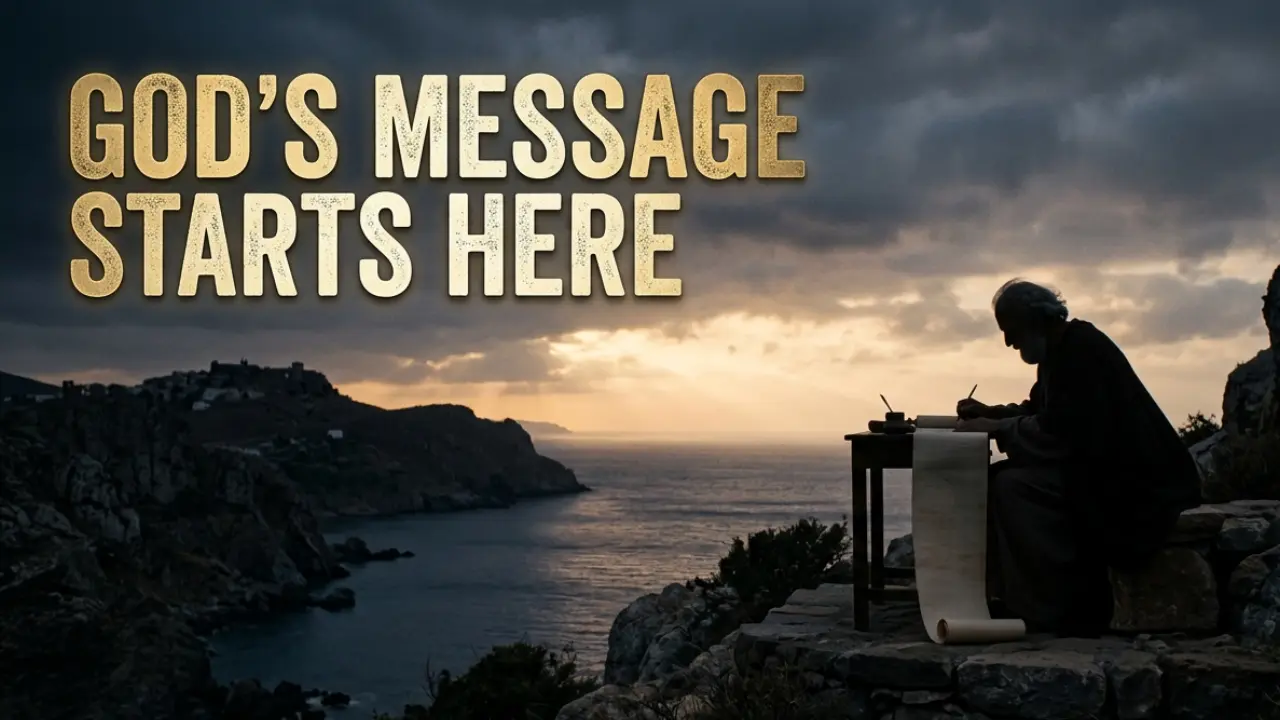

Revelation 1:2 does not look dramatic at first glance. It does not contain thunder, beasts, trumpets or judgment scenes. Yet this small verse quietly lays the groundwork for the whole book. Before Revelation shows the reader anything overwhelming, it explains something basic and necessary: John is giving an honest account of what God made known about Jesus Christ.
That is why this verse deserves careful attention. Many readers open Revelation expecting mystery from the first line. They brace themselves for difficult symbols and hard-to-follow images. But the opening chapter begins with something more solid than mystery. It begins with reliability. It tells the church that the message ahead is not a product of religious imagination. It comes from God, it centres on Jesus Christ and it has been faithfully passed on by John.
That opening claim changes how the rest of the book should be read. Revelation is not meant to be handled like a strange code detached from the rest of Scripture. It is not a place for endless guessing. It is a revealed message and Revelation 1:2 says so in plain words. Once that is seen, the verse becomes much more than an introduction.
What Revelation 1:2 Is Saying
The verse speaks of John as the one “who bore witness to the word of God, and to the testimony of Jesus Christ, even to all that he saw.” In simple language John is saying what God gave him to say about Jesus Christ and he is writing what was shown to him.
The wording is compact, but it is carefully shaped. The verse identifies John’s role, names the source of the message, points to Jesus Christ as central and adds that John is writing from what he saw. Those four parts belong together. Remove one and the force of the verse weakens.
The plain sense of the verse
The direct meaning is not hard to follow. John is serving as a truthful messenger. He is not putting together a theory about the future. He is not collecting spiritual thoughts and arranging them in poetic form. He has received revelation and he is handing it on.
That helps the reader start in the right place. Revelation will certainly require patience and humility, but the opening words are not meant to leave the church lost. They are meant to make the church attentive. God has spoken. John has seen. Now John writes.
John’s Role in the Opening
The first phrase that deserves close attention is “bore witness.” That phrase tells the reader what kind of task John has been given.
John stands under what he writes
John is not speaking as someone who owns the message. He stands under it. He has been entrusted with something holy and that gives his role a seriousness that should not be missed. He cannot reshape the message to fit public taste. He cannot soften it to avoid discomfort. He cannot improve it with personal insight.
This is one of the strongest features of the verse. John is presented as a servant, not an inventor. He is there to speak truly about what he has received. The book may contain towering imagery and scenes of wonder, but Revelation 1:2 does not frame John as a religious artist. It frames him as a faithful witness.
Why witness language carries weight
In Scripture, witness language is never casual. A witness is tied to truth. True witness serves justice and righteousness. False witness is condemned because it corrupts what is right. So when John is described this way, the verse is doing more than giving him a title. It is placing him in a moral position before God and before the church.
That gives the opening chapter a solemn tone. John is not telling stories to stir emotion. He is not trying to sound mystical. He is carrying a responsibility. He must say what was given and he must say it honestly. The whole verse rests on that sense of sacred obligation.
Word of God as the Source
After naming John’s role, the verse turns to the source of the message. John bore witness “to the word of God.” Those few words settle the question of origin.
This message begins with God
The message in Revelation does not begin in John’s mind. It begins with God. John did not arrive at it through reflection on politics, suffering or church life. He received it because God chose to reveal it. That gives the whole book its authority.
This matters because readers often drift into treating Revelation as if it were mainly a record of strange spiritual experiences. Revelation 1:2 pushes against that. John is not merely describing what happened to him inwardly. He is bearing witness to the word of God. The emphasis falls on divine speech, not on private spirituality.
What that means for the reader
Once the source is clear, the book has to be approached differently. A word from God is not the same as a thoughtful religious opinion. It is not optional in the way a human reflection is optional. It comes with authority. It deserves reverence. It calls for submission.
This also explains why Revelation speaks with such force later in the book. The warnings carry weight because God gives them. The promises carry weight because God gives them. The calls to endure, repent, worship and remain faithful do not float loosely in the air. They stand on the authority of the One who speaks.
The Place of Jesus Christ in the Verse
The next phrase says John bore witness “to the testimony of Jesus Christ.” That phrase can be discussed at length, but the central point is beautifully clear. Jesus Christ is not sitting at the edge of the book. He stands at its centre.
The book is bound up with Christ
Revelation is often treated as though it were mainly about events, judgments or timelines. Those things appear in the book, but they are not the deepest centre of it. The deepest centre is Jesus Christ. The book reveals His glory, His rule, His presence among His people, His judgment against evil and His final victory.
That is why Revelation should never be read as a collection of frightening images detached from the Lord Himself. The imagery serves a Christ-centred message. The visions unfold under His authority. The hope of the book rests in Him.
More than information about the future
Many people want Revelation to answer questions about what will happen next. Yet Revelation 1:2 points the reader in a better direction at the start. The book is not merely about future events. It is about Jesus Christ in relation to those events. It shows who He is, how He rules, how He judges and how He keeps His people.
That changes the emotional atmosphere of the book. Revelation is serious and at times severe but it is not built around chaos. It is built around the lordship of Christ. Even scenes of judgment are not random eruptions of power. They are bound to the righteous reign of the risen Lord.
Why this protects the reader
When Christ is pushed to the side, Revelation becomes distorted. Some readers become absorbed in symbols while barely looking at the Savior the symbols point toward. Others become anxious because they treat the book as a map of disaster without seeing the King who governs history. Revelation 1:2 guards against both mistakes. It places Jesus Christ near the beginning, where He belongs.
“All That He Saw”
The final phrase says John bore witness “to all that he saw.” This line brings the visionary character of Revelation into view without weakening the firmness of the verse.
Revelation comes through what John saw
John is not only receiving a verbal message. He is also being shown things. Revelation unfolds through visions. He sees scenes of heaven, worship, conflict, judgment and victory. Yet even here, the emphasis remains steady. John is not praised for having vivid experiences. He is presented as someone who faithfully passes on what was shown to him.
That balance is important. Revelation contains unforgettable images, but the authority of the book does not rest in how striking those images are. It rests in the God who gave them and in the faithfulness with which John recorded them.
Symbolic does not mean imaginary
This is where many readers take a wrong turn. Because Revelation uses symbols, they assume the book is mainly artistic or impressionistic. Revelation 1:2 does not allow that reading. John saw what was shown to him. Symbolism may shape the form of the vision, but it does not cancel the reality being revealed.
Scripture often uses signs, pictures and images to communicate truth. Revelation does the same on a grand scale. The presence of symbolic language does not make the message less real. It makes the message vivid in the form God chose to use. John’s duty was not to turn revelation into art. His duty was to write what he saw with faithfulness.
Why This Verse Comes So Early
The placement of Revelation 1:2 matters. It appears near the start because the reader needs a foundation before moving deeper into the book.
It prepares the church to listen rightly
Revelation will soon address churches, uncover compromise, promise reward, warn of judgment and reveal the final triumph of God’s purposes. A message like that cannot rest on mood or force of personality. It requires authority from the first page. Revelation 1:2 begins establishing that authority immediately.
This helps the church listen rightly. The reader is not being invited into speculation. The reader is being asked to receive divine revelation. That is a very different posture. It calls for humility, patience and seriousness.
It steadies anxious readers
Many believers feel unsettled when they open Revelation. They have heard that it is hard to understand. They know sincere Christians disagree about parts of it. That uncertainty can make the whole book feel distant. Revelation 1:2 offers something steady before any of the harder interpretive questions arise.
The opening tells the reader where to stand. Start here: the message is from God, Jesus Christ is central and John has handled what he received with faithfulness. That truth does not solve every interpretive question but it gives the heart a firm place to begin.
A Misunderstanding Worth Correcting
One common mistake is to treat Revelation as though it were mainly John’s personal attempt to make sense of pain, empire and history. There is no question that suffering forms part of the background of the book. But Revelation 1:2 presents something stronger than private reflection.
This is more than spiritual reflection
John may have been deeply moved by what he saw, but the verse does not present the book as the overflow of his emotions. It presents the book as revealed truth. That distinction matters because reflection and revelation are not the same thing. Reflection may be wise and moving. Revelation comes with authority from God.
So the church should not read Revelation as though John were working through his inner life in symbolic language. The church should read it as a servant’s faithful account of what God disclosed.
This is more than dramatic imagery
Another mistake is to admire the imagery while ignoring the truth it carries. Revelation is full of memorable scenes, but the scenes are not ends in themselves. They are vehicles of revelation. John is not trying to impress the reader with literary power. He is giving form to what God made known.
That keeps the book from being reduced either to bare symbolism or to flat literalism. The symbols are real vehicles of truth. They reveal what God intends to show. John’s role is to set them down faithfully so the church may hear.
What the Verse Quietly Gives the Church
Revelation 1:2 is full of authority, but it also carries comfort. Not shallow comfort. Not easy comfort. Real comfort.
God has not left His people without a word
The church is not abandoned to silence. God speaks. He reveals. He makes known what His people need. The opening of Revelation says that history is not unfolding outside His notice and outside His rule. He is not distant from the struggles of His people. He addresses them.
That has weight for suffering believers. Before Revelation gives commands it gives revelation. Before it calls for endurance, it reminds the church that heaven is not silent.
Christ is present at the center
The verse also keeps the church from reading the future apart from Christ. Whatever Revelation unfolds, Jesus Christ remains central to it. The future does not belong to chaos. It does not belong to evil. It does not belong to chance. It belongs to the Lord who is revealed in this book.
That truth brings a certain calm into the reading of Revelation. The book is not light, but it is not hopeless. It is not dark at the core. At the core stands Jesus Christ.
Reading the Rest of Revelation from Here
Revelation 1:2 gives the reader a wise starting point for the rest of the book. Read on with this in mind: John is a faithful servant, the message comes from God, Jesus Christ stands at the centre and the visions are given by revelation rather than imagination.
That simple frame keeps the church from many avoidable mistakes. It keeps Revelation from becoming a playground for speculation. It keeps the symbols from becoming detached from Christ. It keeps the reader from forgetting that what follows is Scripture not religious fiction.
In that sense, Revelation 1:2 is small only in size. Its function is much larger. It opens the door to the book by showing why the message deserves reverence. It teaches the reader how to listen before the scenes become more intense. And it reminds the church, from the opening chapter onward, that God has spoken through John concerning Jesus Christ.
Related Posts You May Want to Read Next
- Revelation 1 Changes the Way the Whole Book Should Be Read
- Revelation 1:1 Meaning Explained for Clear Bible Study
Frequently Asked Questions
Why is Revelation 1:2 important?
It is important because it establishes the trustworthiness of the whole book of Revelation from the very beginning.
Who is speaking in Revelation 1:2?
The verse refers to John, the servant of God, as the one giving a faithful account of the revelation he received.
Is Revelation 1:2 about John’s personal opinion?
No. The verse presents John as a faithful servant passing on divine revelation, not private opinion.
How does Revelation 1:2 help in understanding the whole book?
It shows that Revelation should be read as God’s message about Jesus Christ, delivered through John with faithfulness.
Is Revelation 1:2 symbolic or literal?
The verse describes real revelation given through visions. The book uses symbolism, but the message itself is true and authoritative.

1 thought on “Key meaning behind Revelation 1:2 explained simply”