

Revelation 1 is often approached with a nervous imagination. The book carries such a powerful reputation that many readers arrive at the first chapter expecting immediate chaos. The mind is ready for dark symbols, collapsing kingdoms, terrible judgments and the strange images that have made Revelation feel mysterious for generations. Many assume the chapter will open with the kind of material people most often talk about when they mention the end times.
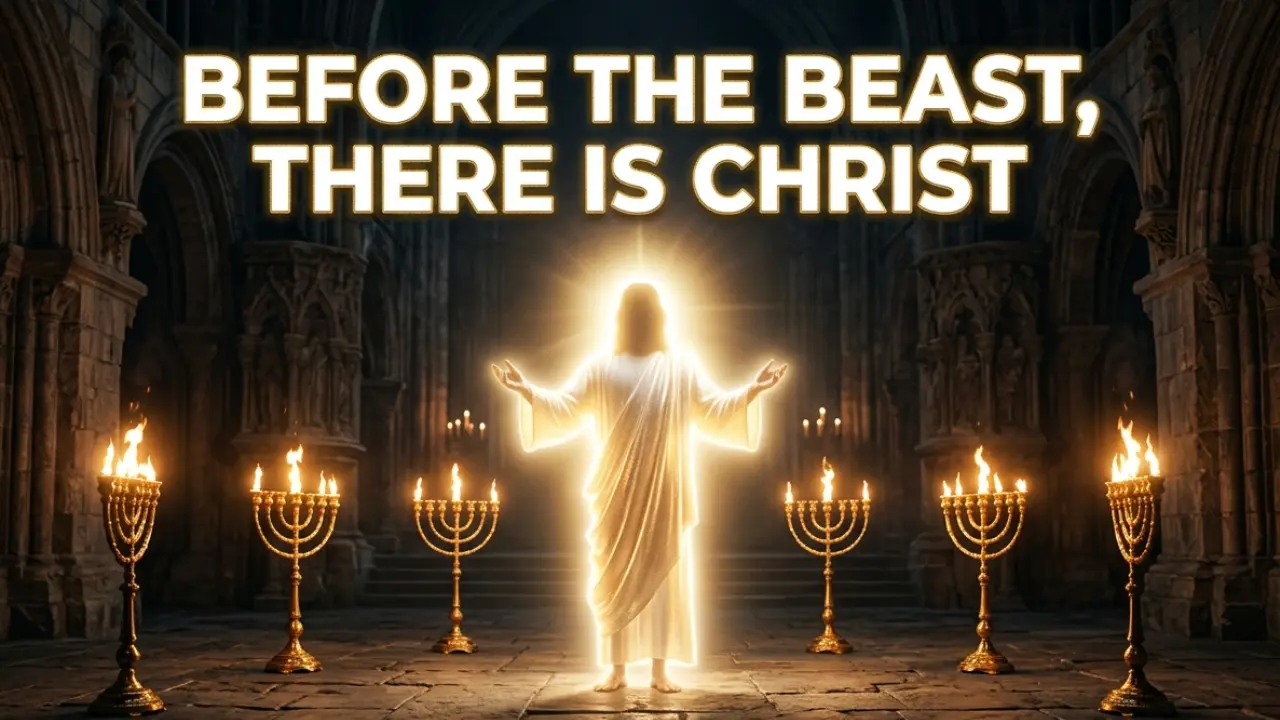
Revelation 1 opens in a way that feels almost startling when the chapter is actually read with care. It begins with Jesus Christ. It begins with a blessing. It begins with a message to real churches. Then it rises into a vision of the glorified Lord so overwhelming that everything else in the chapter must be read in its light. Before Revelation shows a beast, it shows Christ. Before it moves into judgments on the earth, it shows the One who rules heaven and earth. Before it stretches the imagination with symbols it confronts the church with the majesty of Jesus.
It Begins With Jesus
Opening Words Set The Focus
“The revelation of Jesus Christ” is a phrase so familiar that its force can be missed. Many readers hear it and immediately think of information about the future. Revelation certainly contains that. But the first chapter quickly shows that this book is not merely a set of disclosures about coming events. It is an unveiling of Jesus Christ Himself.
That is the first surprise of the chapter. The opening does not throw the reader into global upheaval. It directs attention to a Person. Christ is not standing at the edge of the book, occasionally appearing while the main focus rests elsewhere. He is at the centre from the beginning. The whole chapter insists that Revelation must be read from Him, through Him and under His authority.
This matters because readers often come asking, What will happen? Revelation 1 first answers a more important question: Who reigns? The chapter does not treat that as a secondary matter. It makes it primary. The opening words already warn against reading the book as though it were mainly a coded sequence of events detached from the glory of Christ.
Blessing Calls for Obedience
The chapter also blesses the one who reads, those who hear and those who keep what is written in it. That blessing reveals the kind of book Revelation is. It is not given merely to stimulate analysis. It is given to produce obedience. The point is not only to understand. The point is to hear and keep.
This is another reason the chapter does not read like many expect. A blessing for hearing and keeping does not sound like the front door of a book meant to stir endless speculation. It sounds like Scripture speaking to the covenant people of God. It sounds like a divine word meant to shape life, worship, endurance and faithfulness.
Revelation 1 begins by placing responsibility on the hearer. It treats the book as a living word that demands response. That alone makes the chapter more pastoral than sensational. The reader is not invited to stand outside the message as a detached observer. The reader is called under it.
John in Suffering
Patmos Gives the Chapter its Setting
John identifies himself plainly and soon the setting sharpens: he is on the island called Patmos because of the word of God and the testimony of Jesus. That detail matters deeply. Revelation does not begin in comfort. It begins in exile. It begins in the cost of discipleship. It begins in the world of pressure and perseverance.
This makes the chapter feel much nearer to ordinary Christian struggle than many assume. Revelation is often imagined as a distant book full of dramatic future scenes, but chapter 1 begins in the experience of faithful suffering. John is not a detached commentator observing history from a safe distance. He is a servant who has paid a price for his testimony.
That fact gives the whole chapter a pastoral seriousness. The vision is not entertainment. It is not a dramatic religious spectacle offered to satisfy interest in the unusual. It comes to a suffering witness because suffering churches need to see Christ rightly.
Message is for Real Churches
The message is addressed to seven churches in Asia. That simple fact corrects many assumptions about the book. Revelation begins in the life of the church. It begins with congregations, not crowds; lampstands, not battlefields; pastoral address, not abstract theory. The opening chapter places local churches in the foreground because Christ Himself is among them.
This means the chapter is immediately practical, even before its great vision unfolds. These churches are not scenery. They are the intended hearers. Their fears, weaknesses, pressures and need for endurance stand behind the chapter from the beginning. Revelation 1 is already serving the church before it expands into later visions of conflict and judgment.
Many readers expect Revelation to begin far away from daily Christian life. In truth, it begins at its centre. It begins with believers gathered under the word of Christ, needing grace, peace, warning and hope.
Grace Comes First
Revelation Does not Begin with Panic
One of the most surprising features of Revelation 1 is the greeting: grace to you and peace. Those words can seem so familiar that they lose their force, but in this chapter they are striking. Many expect Revelation to begin with dread. It begins with grace. Many expect an atmosphere of immediate terror. It begins with peace.
This does not mean the book lacks solemnity. It has great solemnity. But the opening chapter refuses to let fear control the reader before Christ does. Grace and peace come first because the churches need to know that heaven’s throne is occupied, heaven’s rule is active and heaven’s Lord has not abandoned His people.
There is deep wisdom here. Believers facing hostility do not merely need information about future events. They need assurance that God remains sovereign and that Christ remains faithful. The greeting sets that tone. Revelation begins by grounding the church before it unsettles the church.
Greeting Rises into Praise
The greeting does not remain brief and ordinary. It quickly expands into praise. Jesus Christ is named as the faithful witness, the firstborn of the dead and the ruler of kings on earth. These titles do more than decorate the greeting. They establish the authority of the One revealed in the chapter.
He is the faithful witness because He perfectly revealed the Father and remained true even unto death. He is the firstborn of the dead because His resurrection is the decisive victory over the grave and the beginning of resurrection life. He is the ruler of kings on earth because every throne, every empire and every earthly power stands beneath His dominion.
Then John speaks of Christ’s love, His blood and His work of making His people a kingdom and priests to His God and Father. The chapter sounds almost like a doxology before it sounds like what many imagine Revelation should sound like. That is part of the surprise. The opening is not dominated by alarm. It is dominated by praise to the Redeemer.
The churches are being taught where to look first. Not at hostile powers. Not at coming upheaval. At Christ, who loves His people, has cleansed them, and reigns above all rulers.
John Sees the Lord
Voice Makes John Turn
The narrative movement is powerful. John is in the Spirit on the Lord’s Day when he hears behind him a loud voice like a trumpet. He turns to see the voice that was speaking to him. That turning matters. The chapter is about reoriented vision. John hears a summons and turns into a sight that redefines everything.
When he turns, he first sees seven golden lampstands and in the midst of the lampstands one like a son of man. Already the focus is not on distant catastrophe. It is on Christ among His churches. The Lord is not absent. He is in the midst. He is not observing from afar. He is present among the lampstands.
This is one of the greatest surprises of Revelation 1. Many expect the first powerful image in the book to be some outward sign of world crisis. Instead, the first dominating image is Jesus standing among His people.
Son of Man Appears in Glory
The description that follows is one of the most overwhelming portraits of Christ in all Scripture. He is clothed with a long robe and a golden sash. His head and hair are white like wool, white as snow. His eyes are like a flame of fire. His feet are like burnished bronze refined in a furnace. His voice is like the roar of many waters. In His right hand He holds seven stars. From His mouth comes a sharp two-edged sword. His face shines like the sun in full strength.
This is not a reduced or merely sentimental picture of Jesus. It is not the kind of image many modern readers instinctively carry. Revelation 1 refuses a small Christ. It refuses a manageable Christ. It reveals the Lord in priestly dignity, kingly authority, blazing holiness and divine splendor.
Each detail intensifies that reality. The eyes of fire speak of searching purity. The bronze feet suggest strength and judgment. The many-water voice conveys irresistible authority. The sword from His mouth shows the power of His word. The sunlike face reveals a glory too strong for ordinary ease. The chapter is telling the church, with unforgettable force, that Jesus Christ is greater than familiar religious assumptions allow.
John Falls Before Him
The Shock is Not Where Many Expect it
This may be the deepest surprise in the chapter. Many readers expect Revelation to become frightening when it starts describing world events. But chapter 1 becomes overwhelming before any of that. The first terrifying reality is not chaos in history. It is Christ in glory.
That is a crucial distinction. The chapter is teaching the reader what the greatest reality in the book actually is. Evil powers matter, judgments matter, persecution matters, but none of those things are ultimate. Christ is ultimate. His majesty is the controlling reality over every later vision. Revelation begins by making that plain.
The chapter does not first direct fear toward a beast, a ruler or a crisis. It directs awe toward the exalted Lord. That is why it feels so different than expected. It begins not with panic over events but with reverence before Christ.
John Falls as Though Dead
When John sees Him, he falls at His feet as though dead. That response reveals how far true revelation stands above casual religion. John does not greet the vision with polite composure. He does not stand comfortably in the presence of the glorified Christ. He collapses.
This is not because John is a stranger to Jesus. It is because the unveiled majesty of Jesus is too great for ordinary human strength. The beloved disciple, the faithful witness, the apostle receiving the vision, falls as though dead. That is how Revelation 1 teaches the church to think about the Lord it worships.
There is something corrective here for every generation. The church can grow overly familiar in tone while losing a serious sense of Christ’s holiness. It can speak of Him warmly while thinking of Him too lightly. Revelation 1 interrupts that tendency with force. It restores holy fear by showing Christ as He is, not merely as people prefer to imagine Him.
The Lord Brings Comfort
Holy Fear is not Denied
John’s collapse is not presented as a mistake. The chapter does not suggest that fear was inappropriate. It shows that holy fear is the fitting response when divine glory is unveiled. This is not the fear of rejection. It is the fear that arises when human frailty encounters sovereign holiness.
That matters because modern Christian language can sometimes emphasize comfort in a way that leaves little room for reverence. Revelation 1 refuses that imbalance. It reminds the church that the risen Christ is not less approachable in love, but He is certainly not less majestic in holiness. Nearness to Christ never removes the need for reverence before Christ.
The fear in this chapter cleanses shallow habits of thought. It strips away the idea that Jesus can be handled casually. It teaches that true vision humbles. It lowers the proud heart and silences easy familiarity.
Hand of Christ Brings Strength
Yet Revelation 1 does not leave John in terror. The same Lord whose glory overwhelms him lays His right hand on him and says, “Fear not.” Those words are precious precisely because they come from the One who has just revealed such majesty. The comfort is not weak because the speaker is not weak.
This is one of the most beautiful features of the chapter. Christ does not become less glorious in order to comfort John. He comforts John as the glorious One. The majesty remains. The tenderness arrives through it, not apart from it. The church is meant to find strength in that union of sovereignty and mercy.
The right hand laid on John is the hand that holds the stars. The voice that says, “Fear not,” is the voice like many waters. The face that shines like the sun belongs to the Savior who deals gently with His servant. Revelation 1 reveals not a contradiction, but a fullness: the Lord is overwhelming in glory and faithful in comfort.
Risen Christ Holds All Authority
He is Alive Forevermore
Jesus identifies Himself as the first and the last and the living one. He died, and behold, He is alive forevermore. He has the keys of Death and Hades. These words bring the chapter to one of its richest moments. The One John sees in blazing majesty is the crucified and risen Christ.
That means the glory of the chapter is not disconnected from redemption. This is not raw power for its own sake. It is the victorious authority of the Savior who went into death and came out alive forevermore. The One who comforts the church is the One who has already passed through the grave and broken its claim.
For suffering believers, that changes everything. Death is not ultimate. The grave is not sovereign. Christ holds the keys. Revelation 1 gives the church a Lord who does not merely predict victory but embodies it. He has already entered the darkest place and emerged as its conqueror.
He Holds the Keys of Death and Hades
The chapter closes its vision with explanation. The stars and lampstands have meaning. The lampstands are the churches and Christ stands among them. That truth is not a decorative image. It is pastoral power. The churches are not abandoned to history. Christ is present among them, attentive to them and authoritative over them.
This is where Revelation 1 becomes intensely practical. The chapter is not only revealing the grandeur of Christ in heaven. It is revealing His present relationship to His people on earth. He knows His churches. He walks among them. He addresses them. He upholds their messengers in His hand. The book that follows will contain warning, rebuke, encouragement and promise because the Lord of the churches is alive and active among them.
That is one more reason the chapter does not read like many expect. It does not begin by sending the imagination far away from the church. It begins by placing Christ in the midst of the church.
Christ Stands Among His Churches
Lampstands Show His Presence
By the end of chapter 1, the reader has been taught something essential: Revelation cannot be read rightly if Christ is pushed to the side while attention races ahead to later symbols. The opening chapter is the lens for the rest. Every later image, warning, conflict and promise must be read beneath the authority of the One revealed here.
This means Revelation is not chaos-first. It is Christ-first. It is not alarm-first. It is worship-first. It is not speculation-first. It is obedience-first. The chapter establishes these priorities with deliberate care. It corrects the reader before the book moves forward.
That correction is one of the great mercies of the chapter. It prevents the church from approaching Revelation with the wrong instincts. It teaches believers to begin not with fear of events, but with sight of the reigning Lord.
Chapter Teaches the Church how to stand
Everything in Revelation 1 presses toward a faithful response. Hear the word. Keep it. See Christ rightly. Fear Him rightly. Receive His comfort. Remember His victory over death. Know that He walks among His churches. These truths are not abstract theology. They are fuel for endurance.
The opening chapter speaks to believers who must remain steady in a hostile world. Its answer to fear is not denial of hardship. Its answer is a greater vision of Christ. Its answer is the Lord who loves His people, searches His church, reigns above kings, conquers death and remains present among the lampstands.
That is the real shock of Revelation 1. It does not begin where many expect. It begins higher, deeper and nearer. It begins with Jesus Christ in glory and by doing so it teaches the church how to stand.
Related Posts You May Want to Read Next
- The Alpha and the Omega: What Revelation 1:8 Really Means
- Revelation 1:1 Meaning Explained for Clear Bible Study
Frequently Asked Questions
What is Revelation 1 mainly about?
Revelation 1 is mainly about the revelation of Jesus Christ in His glory, authority and presence among His churches. The chapter opens the whole book by showing who rules before showing what will happen.
Who wrote Revelation 1?
Revelation 1 was written by John while he was on the island of Patmos because of the word of God and the testimony of Jesus Christ.
Why was John on Patmos in Revelation 1?
John was on Patmos because of his faithful witness to the gospel. The chapter presents him as suffering for Christ, not simply receiving private visions in comfort.
Why are the seven churches important in Revelation 1?
The seven churches show that Revelation begins as a real message to real believers. The book starts in the life of the church, not in detached speculation.
Why did John fall as though dead in Revelation 1?
John fell as though dead because the glory of Christ was overwhelming. The vision shows the holiness, majesty and authority of the risen Lord.

4 thoughts on “Revelation 1 Changes the Way the Whole Book Should Be Read”