
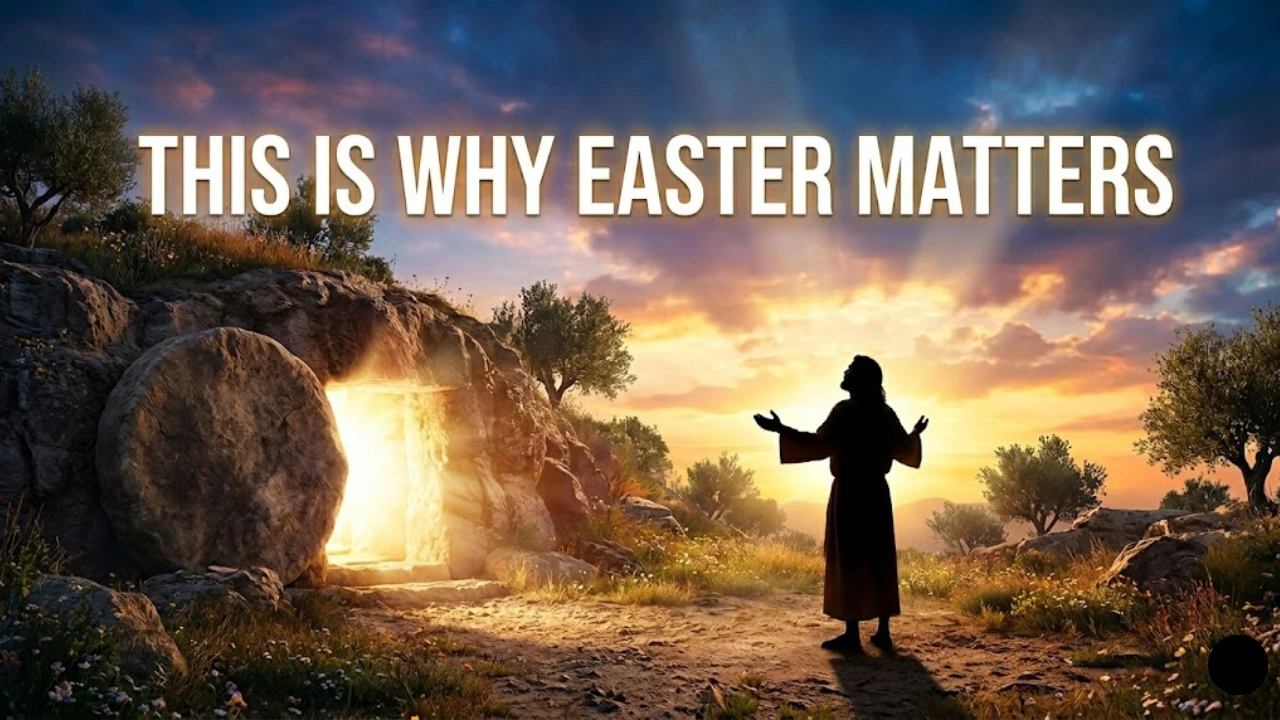

There are many meaningful moments in the Christian calendar, but Easter stands apart in a way that no other day does. It is not simply a celebration, a tradition or a remembrance of something that happened long ago—it is the very centre of the Christian faith. Everything that Christians believe, hope for and hold onto is deeply connected to what happened on Easter morning.
Without Easter, the story of Jesus would end in sorrow and uncertainty. His teachings would still be inspiring, His compassion still admirable and His sacrifice still moving—but there would be no final victory. There would be no assurance that sin had truly been dealt with, no confirmation that death had been overcome and no guarantee that hope would endure beyond suffering.
But Easter changes everything.
The resurrection of Jesus is not just a powerful ending to a difficult story—it is the beginning of a new reality. It transforms how believers understand life, suffering, forgiveness, purpose and even death itself. It brings meaning into moments that feel confusing and hope into places that feel empty.
To understand why Easter is so important, you have to look beyond the surface and step into its depth. These are not abstract theological ideas—they are truths that speak into real struggles, real fears and real questions that people carry every day.
1. The Resurrection Confirms That Jesus Is Who He Said He Is
Key Scripture: Romans 1:4
When Faith Needs Something Solid
At the heart of Christianity is a person—Jesus Christ. Everything rests on who He is. Throughout His life, Jesus made claims that were both bold and unsettling. He spoke of having authority to forgive sins of being one with God, of bringing eternal life and even of rising again after death.
If those claims were not true, then Christianity would lose its foundation. Faith would become uncertain, built on ideas rather than reality.
But the resurrection is what changes that uncertainty into confidence.
The Resurrection as God’s Declaration
When Jesus rose from the dead, it was not simply a miracle—it was a declaration. It was God affirming that everything Jesus said was true. It confirmed that He was not just a teacher, not just a prophet but the Son of God.
This matters deeply because it means your faith is not built on wishful thinking. It is grounded in something real, something that happened, something that carries authority.
Why This Changes How You Relate to Jesus
Because of the resurrection:
- You are not following a memory, but a living Savior
- You are not trusting distant words, but present truth
- You are not hoping blindly, but believing in something confirmed
This shifts faith from uncertainty to assurance.
A Deeper Reflection
There are moments when your faith may feel fragile—when questions arise, when doubts surface, or when circumstances make belief feel difficult. In those moments, Easter becomes your anchor. It reminds you that your faith is not based on how you feel, but on what God has already done.
2. Easter Reveals That Sin and Death
Key Scripture: 1 Corinthians 15:54–57
The Weight People Carry, Often Quietly
Every person, whether they express it openly or not, carries a sense of brokenness. It may show up as regret, guilt, disappointment or the feeling that something is not quite right within. Beyond that, there is also the reality of death—the awareness that life is temporary and that, eventually everything comes to an end.
These are not light concerns. They shape how people think, how they live and how they view the future.
The Cross and the Resurrection
The cross addresses sin, but the resurrection completes the victory.
On the cross, Jesus carried the weight of sin. He took on what humanity could not fix on its own. But if the story ended there, it would remain incomplete.
The resurrection is what shows that sin was not only addressed—it was overcome. Death was not only faced—it was defeated.
What This Means for You Personally
This truth is not distant or abstract. It speaks directly into your life:
- The mistakes you carry do not define you
- The guilt you feel does not have to stay
- The fear of death does not have to control you
Easter declares that there is something greater than all of these things.
Living in That Freedom
To live in the meaning of Easter is to begin releasing what you have been holding onto—old guilt, past failures and fears about the future. It is not about ignoring reality, but about seeing it through the lens of what God has already accomplished.
3. Easter Brings a Living Hope
Key Scripture: 1 Peter 1:3
Difference Between Temporary Hope and Living Hope
Hope is something people cling to, especially in difficult moments. But not all hope is the same. Some hope depends on circumstances—on things improving, situations changing or outcomes turning out as expected. This kind of hope can be fragile, easily shaken when life does not go as planned.
Easter introduces something different: a living hope.
This hope is not based on what might happen—it is based on what has already happened.
Why This Hope Endures
Because Jesus rose from the dead:
- Hope is not limited by your situation
- It is not weakened by delays or uncertainty
- It does not disappear when life feels hard
It remains steady because its foundation is unchanging.
When You Need This Hope Most
There will be moments when:
- You feel overwhelmed by life
- You face situations you cannot control
- You struggle to see a way forward
In those moments, Easter reminds you that your current situation is not the final chapter.
A Deeper Perspective
Living hope does not mean everything becomes easy. It means that even when things are difficult, there is still meaning, still purpose and still a future that is not defined by your present struggle.
4. Easter Offers Transformation
Key Scripture: 2 Corinthians 5:17
Beyond Being Forgiven
Many people understand Easter as a message of forgiveness—and it is. But it goes further than that. It is also a message of transformation.
It is not just about being released from the past—it is about stepping into something new.
What Transformation Really Looks Like
Transformation is not instant perfection. It is a gradual change in:
- how you see yourself
- how you respond to life
- how you relate to God
It is the process of becoming someone new from the inside out.
Why This Matters
There are times when people feel stuck—caught in patterns, habits or ways of thinking that seem difficult to change. Easter offers the assurance that change is possible, not because of your own effort alone, but because of God’s power working within you.
Living a Renewed Life
To live in the reality of Easter is to begin embracing this transformation:
- letting go of old identities
- stepping into new purpose
- growing in faith day by day
It is not about becoming perfect, but about becoming renewed.
Living Easter Beyond a Single Day
Easter is not meant to be confined to one Sunday each year. Its meaning is meant to shape everyday life.
- When you feel uncertain → remember your faith is grounded in truth
- When you feel burdened → remember sin has been overcome
- When you feel discouraged → remember hope is still alive
- When you feel stuck → remember transformation is possible
Easter becomes real when it moves from something you celebrate to something you live.
When Everything Changes Because He Lives
At its core, Easter is about reversal. What seemed final was not final. What appeared to be defeat became victory. What looked like the end became a new beginning.
This is why Easter matters so deeply. It speaks into every situation where things feel hopeless and reminds you that God’s power is greater than what you see in front of you.
Because Jesus lives:
- hope is not lost
- your story is not finished
- and no situation is beyond redemption
A Prayer for Reflection
“Lord, thank You for the truth of Easter and the power of the resurrection. Help me understand it more deeply and live in its meaning every day. When I feel weak, remind me of Your victory. When I feel uncertain, remind me of Your truth. And when I feel discouraged, fill me with Your living hope. Amen.”
More Articles to Reflect On
- 3 Kinds of Hope in the Bible That Sustain Faith
- Daily Easter Week Devotional Plan (7 Days)
- What Does the Bible Say About Holy Week & Easter?
Frequently Asked Questions
Why is Easter the most important Christian holiday?
Easter is the most important because it celebrates the resurrection of Jesus, confirming victory over sin and death.
What does Easter mean in the Bible?
Easter represents Jesus rising from the dead, offering salvation, new life and hope to believers.
Why is the resurrection so important to Christians?
The resurrection proves Jesus is the Son of God and shows that death is not the end, giving believers eternal hope.
How does Easter affect Christians today?
Easter gives Christians hope, strengthens faith and reminds them that transformation and new life are possible.
Why is Easter called a message of hope?
Because it shows that even after suffering and death, new life and victory are possible through God.

1 thought on “4 Main Reasons Easter Is Important to Christians”