
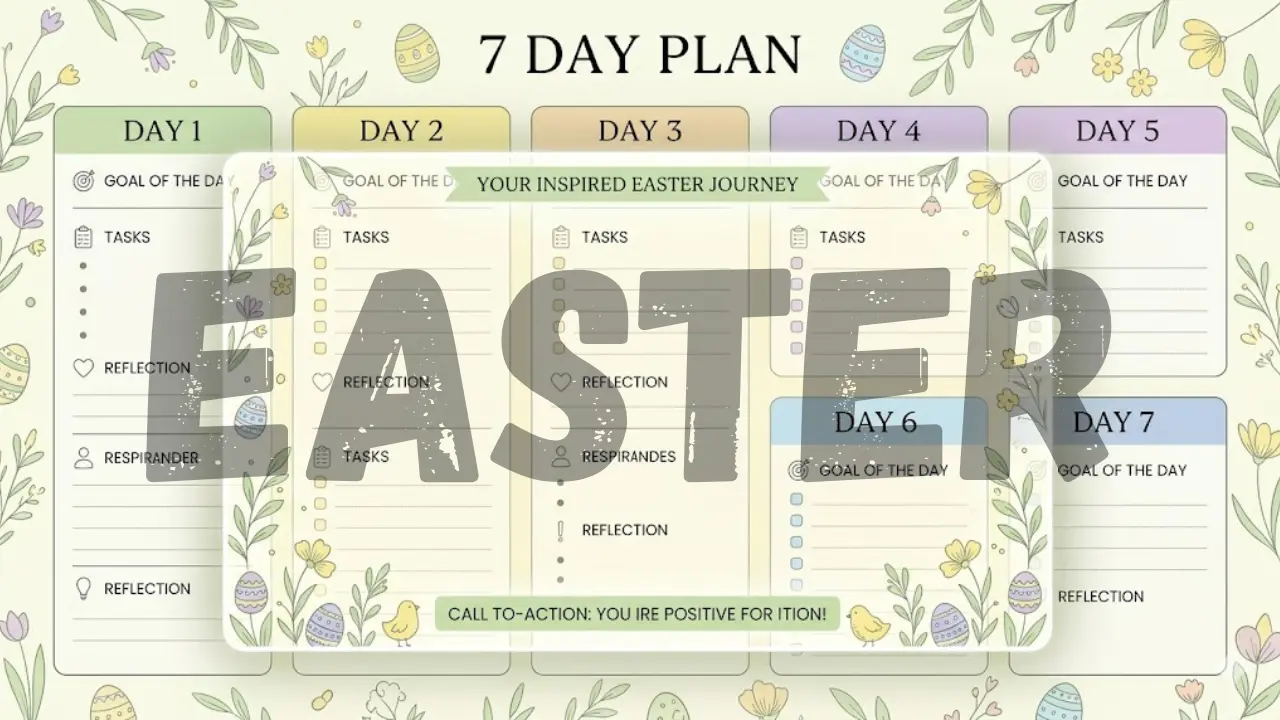

Easter Week is not just a sequence of days on a calendar.
It has a way of pulling you out of routine and into reflection—shifting your focus from distraction to awareness and from awareness to intentional change.
Yet many people enter this week with a desire to grow spiritually, only to find it slipping by without any real impact.
That is why a simple, focused devotional plan can make all the difference—helping you stay present, while creating space for real change within you.
How to Approach This Devotional Week
Before starting, it is important to understand that this is not about completing tasks.
It is about engaging with each day thoughtfully.
Keep This in Mind
- move slowly through each day
- focus on reflection, not perfection
- allow your thoughts to develop naturally
Why This Matters
Because rushing through reflection removes its depth and depth is what leads to real change.
Day 1: Awareness
The first step of growth is not change.
It is awareness.
Focus
Becoming aware of your current patterns and direction.
Reflection
Take time to think honestly about your daily life.
- where is most of your attention going
- what habits define your routine
- what feels out of alignment
Action
Spend at least ten minutes in silence without distractions, allowing your thoughts to surface naturally instead of controlling them.
What This Begins
It creates a starting point, because you cannot change what you do not first recognize.
Day 2: Honesty
Once awareness begins, honesty follows.
This is where growth becomes real.
Focus
Looking at your life without avoiding uncomfortable truths.
Reflection
Ask yourself questions that require real answers.
- what habits are holding me back
- what patterns keep repeating
- what am I ignoring because it feels easier
Action
Write down one clear area that needs change, not in general terms, but specifically.
Why This Step Matters
Because clarity comes from honesty and honesty creates direction.
Day 3: Release
Growth requires space and space is created through release.
Focus
Letting go of internal weight.
Reflection
Think about what you are still holding onto.
- past mistakes that influence your thinking
- emotional burdens that feel heavy
- expectations that no longer align
Action
Make a conscious decision to release one thing, even if it feels difficult and remind yourself that holding onto it is not helping you move forward.
What This Creates
It reduces internal weight and creates room for clarity and new direction.
Day 4: Stillness
Without stillness, everything becomes noise.
This day is about slowing down intentionally.
Focus
Silence and presence.
Reflection
Notice how often you stay busy to avoid deeper thinking.
- when do you reach for distraction
- what do you avoid sitting with
- how often do you allow quiet moments
Action
Remove one major distraction for the day and replace it with quiet time, even if it feels uncomfortable at first.
Why This Matters
Because clarity develops in stillness, not in constant movement.
Day 5: Realignment
After creating space, your priorities become clearer.
Now it is time to adjust them.
Focus
Aligning your life with what truly matters.
Reflection
Ask yourself:
- what matters long term
- what have I been prioritizing instead
- where does my time actually go
Action
Make one adjustment in your day that reflects a better priority, even if it is small.
What This Changes
It begins aligning your actions with your awareness instead of keeping them separate.
Day 6: Action – Taking a Step Forward
Awareness without action leads to no change.
This is the day where movement begins.
Focus
Intentional action.
Reflection
Think about what you have realized throughout the week.
- what needs to be applied
- what decision you have been delaying
- what step feels necessary
Action
Take one clear step forward, even if it feels small, because movement creates momentum.
Why This Is Important
Because change happens when thought turns into action.
Day 7: Commitment
This is not the end of the process.
It is the beginning of consistency.
Focus
Carrying growth forward.
Reflection
Look back on the week and observe what has changed.
- how your thinking has shifted
- what you have become aware of
- what you want to continue
Action
Choose one change to carry forward into your daily life and commit to it beyond this week.
What This Establishes
It turns a temporary experience into a lasting direction.
Full 7-Day Devotional Overview
To keep everything clear and structured:
Weekly Flow
| Day | Focus | Key Action |
|---|---|---|
| Day 1 | Awareness | Pause and reflect |
| Day 2 | Honesty | Identify one change |
| Day 3 | Release | Let go of one burden |
| Day 4 | Stillness | Reduce distractions |
| Day 5 | Realignment | Shift priorities |
| Day 6 | Action | Take one step forward |
| Day 7 | Commitment | Continue the change |
Why This Devotional Plan Works
This plan is simple, but it is effective because it follows a natural progression.
What Makes It Powerful
- it starts with awareness before action
- it builds gradually without overwhelming you
- it focuses on consistency instead of intensity
Why This Matters
Because lasting growth is not built through one emotional moment.
It is built through repeated intentional steps.
Do Not Rush
Each day is designed to guide you deeper, not faster.
The Core Truth
Spiritual growth happens when you give attention to what matters consistently.
Why This Matters
Because what you practice during this week can shape your direction long after Easter ends.
You may also want to explore:
- 7 Things Christians Should Do During Easter Week
- What to Do During Holy Week to Grow Spiritually
- 6 Bible Verses About Being a Good Husband
- 7 Signs God Is Calling You Back to Him This Holy Week
Frequently Asked Questions
How do I follow a daily Easter Week devotional plan?
You follow it by focusing on one theme each day, reflecting intentionally and taking small actions that align with what you realize.
What is the goal of a 7-day Easter devotional?
The goal is to move from awareness to action, helping you grow spiritually in a structured and intentional way.
Can beginners follow this devotional plan?
Yes, it is designed to be simple and practical, making it easy for anyone to follow regardless of experience.
Why is daily consistency important during Easter Week?
Because growth happens through repeated small actions, not one-time effort.
Is writing or journaling necessary during this plan?
It is not required, but writing can help you clarify your thoughts and deepen your reflection.

2 thoughts on “Daily Easter Week Devotional Plan (7 Days)”