
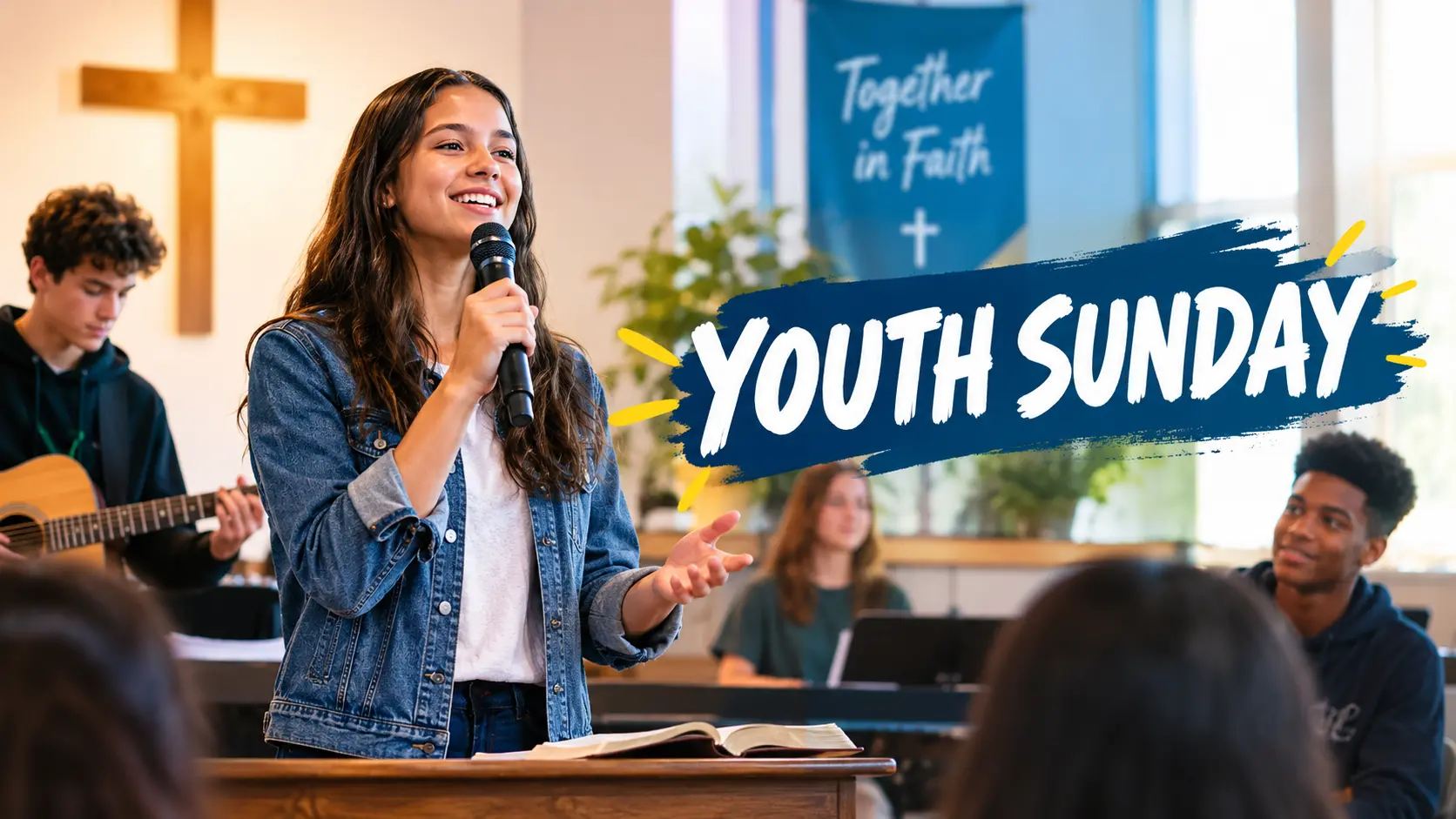

Youth Sunday is a wonderful opportunity for young Christians to lead worship, share their faith and become more involved in church life. But planning a service that feels meaningful rather than simply entertaining can be challenging, especially when you want everyone to participate.
The best Youth Sunday service ideas bring together Scripture, creative worship, prayer and activities that connect faith with everyday life. Whether your church has a small youth group or a large congregation, a thoughtful program can make the occasion encouraging for young people and adults alike.
Here are practical Youth Sunday themes, worship activities, prayer ideas and a sample service program you can adapt for your church.
Why Youth Sunday Matters
Youth Sunday gives young people an opportunity to take meaningful responsibility during church worship. They may welcome the congregation, lead songs, read Scripture, share testimonies or help organize activities that communicate biblical lessons.
First Timothy 4:12 offers a fitting foundation for the occasion. Paul encourages Timothy to set an example through his speech, conduct, love, faith and purity, showing that faithful Christian character is not determined by age alone.
A successful Youth Sunday is not about giving teenagers a stage and expecting a perfect performance. It is about helping them grow in faith, discover their abilities and understand that they have a place in the life of the church.
1. Choose a Biblical Youth Sunday Theme
A strong theme gives the entire service a sense of direction. Instead of selecting unrelated songs, speeches and activities, choose one Bible passage and build the program around its central message.
These three Youth Sunday themes are especially suitable because they connect Scripture with experiences familiar to young Christians.
Ignite the Flame — 2 Timothy 1:6–7
Main message: Develop your God-given gifts and serve with courage.
Paul encourages Timothy to rekindle God’s gift and reminds him of the importance of power, love and self-discipline. Within its original context, this passage concerns Timothy’s ministry responsibilities but it also provides a useful starting point for discussing faithful service.
For a Youth Sunday activity, invite participants to write one ability they would like to develop and one way they could use it to help others. A short drama about a teenager overcoming nervousness to participate in church ministry could reinforce the message.
Battery-operated candles can provide a simple visual illustration of encouragement and responsibility. A youth leader can explain that the theme is about developing gifts faithfully, not merely experiencing temporary excitement.
Rooted and Rising — Colossians 2:6–7
Main message: A growing faith needs strong spiritual foundations.
Paul encourages believers to remain rooted and established in Christ. This theme is particularly relevant to teenagers learning to navigate friendships, academic expectations, social pressures and questions about their future.
Use a small plant to illustrate the importance of steady growth. Ask young people how prayer, reading Scripture, Christian friendship and wise guidance can help strengthen their relationship with Christ.
For an interactive activity, provide paper leaves and invite participants to write one spiritual habit they want to develop. Arrange the leaves around a tree illustration to create a display the congregation can reflect on.
Unashamed — Romans 1:16
Main message: Live confidently in the gospel while treating others with kindness and respect.
Paul expresses his confidence in the gospel as God’s power for salvation. This theme gives young Christians an opportunity to consider how they can remain faithful when their beliefs are questioned or misunderstood.
A short role-play could show a teenager responding respectfully when a friend asks about Christianity. Afterward, invite the congregation to reflect on how conviction, humility and kindness can work together.
You could also prepare a photo display featuring Bible verses selected by youth participants. Rather than pressuring anyone to share personal beliefs online, allow them to explain privately or publicly why a particular passage encourages them.
Choosing the right theme: If your youth group is participating in church leadership for the first time, “Ignite the Flame” is a practical choice. “Rooted and Rising” works well for a service focused on spiritual growth, while “Unashamed” suits a message about Christian faith in everyday situations.
2. Creative Youth Sunday Worship Ideas
Creative worship gives young people opportunities to contribute through their different abilities. The most effective activities are those that support the chosen Scripture passage rather than simply filling time in the program.
You do not need to include every activity. Two or three well-prepared contributions can be more meaningful than a service crowded with performances.
Youth-Led Worship Music
Invite young musicians and singers to lead songs that connect with the day’s theme. Depending on your church’s traditions, this might include familiar hymns, contemporary worship songs or a combination of both.
For example, a service about being rooted in Christ could include songs about trusting God and building life on His promises. Encourage the youth worship team to rehearse with the congregation in mind, choosing music that people can participate in rather than simply listen to.
Churches that want to develop Scripture-based singing can also explore how to teach a youth group to sing the Psalms. Even a short Psalm learned together can become a meaningful part of youth-led worship.
Spoken Word Poetry
Spoken word poetry gives young people a creative way to communicate their understanding of faith. A participant might write about the pressure to fit in, finding hope during difficult circumstances or learning to trust God’s guidance.
Keep the presentation to approximately two or three minutes and connect it to the main Bible passage. For an “Unashamed” service, a poem could explore the tension between wanting acceptance and remaining faithful to Christian convictions.
Short Drama or Mime
A short drama can help the congregation recognize how biblical teaching applies to ordinary situations. Choose a realistic subject such as forgiveness, peer pressure, honesty, friendship or showing kindness to someone who feels excluded.
For a service about courage, present a scene where a teenager must decide whether to participate in dishonest behaviour to please friends. A youth leader can then connect the story to the biblical theme through a brief explanation.
Mime or expressive movement can also be used in congregations that welcome these forms of worship. The presentation should have a clear purpose and remain appropriate to the church’s traditions.
Live Scripture-Inspired Artwork
Invite young artists to create drawings or paintings inspired by the service’s theme. For “Rooted and Rising,” a tree with deep roots can illustrate the importance of remaining established in Christ.
The artwork might be completed before the service and displayed near the entrance, or an artist could demonstrate part of the creative process during an appropriate moment. Ask the participant to explain the biblical connection so the activity becomes an opportunity for reflection.
Youth Scripture Reading
A group Scripture reading is a simple way to involve young people who may not feel ready to deliver a speech. Divide a suitable passage among several readers and allow them to practice together.
Psalm 100 can introduce a joyful worship service, while 1 Corinthians 12:12–27 works well for a theme about different gifts and responsibilities within the church.
3. Youth Sunday Messages & Testimonies
Young people often connect with messages that address situations they understand. A Youth Sunday reflection can explore school pressure, friendship difficulties, uncertainty about the future or the challenge of living according to Christian beliefs.
The strongest messages begin with Scripture and use everyday examples to explain its meaning. Encourage youth speakers to prepare a focused reflection rather than attempting to cover too many subjects.
Faith Over Fear
Use Mark 4:35–41, where Jesus calms the storm, to discuss fear and trust. The account reveals Jesus’ authority and challenges the disciples’ understanding of Him, making it a valuable passage for reflecting on confidence in Christ.
A youth speaker could discuss feeling nervous before examinations, facing an unfamiliar responsibility or worrying about the future. The message should emphasize that trusting God does not guarantee an easy outcome, but Christians can bring their concerns to Him.
Who Am I in Christ?
Ephesians 2:10 provides a starting point for discussing identity and purposeful Christian living. Paul describes believers as God’s workmanship, created in Christ Jesus for good works.
A reflection could explore the pressure young people experience to measure their worth through popularity, appearance, achievements or online attention. The speaker can then explain how Christian identity offers a different foundation for understanding purpose and responsibility.
God Meets Us in Our Weakness
Second Corinthians 12:9–10 introduces Paul’s teaching about God’s grace and strength in weakness. The passage can encourage young people who sometimes feel inadequate or discouraged.
A youth speaker might discuss learning to ask for help, accepting limitations or continuing to serve despite nervousness. The message should remain grounded in Paul’s teaching rather than promising that faith immediately removes every personal difficulty.
Practical tip: Give each youth speaker about three to five minutes for a prepared reflection. If testimonies are included, participation should be voluntary and young people should never feel pressured to reveal private experiences.
4. Interactive Youth Sunday Prayer Activities
Prayer provides an opportunity for the whole congregation to participate rather than simply observe the youth-led activities. Choose a prayer format that fits your church’s worship practices and allows people to respond comfortably.
Prayer Wall
Prepare a board where participants can write brief prayers of gratitude or general requests. During the service, invite people to contribute voluntarily before a youth leader offers a prayer for the congregation.
Avoid displaying sensitive information about individuals or families. Private requests can be directed to the church’s prayer team instead of being shared publicly.
Quiet Reflection Cards
Give participants cards containing a question connected to the service theme. For “Ignite the Flame,” the question might be, “How can I use one of my abilities to serve God and others?”
Allow a minute of quiet reflection while soft instrumental music plays, if appropriate. Participants can keep their cards as personal reminders rather than submitting them.
Youth-Led Group Prayer
Invite three young people to prepare short prayers for different needs. One could pray for students and teachers, another for families and the third for the church and wider community.
This format gives youth members responsibility while making the prayer time understandable and meaningful for the congregation. Include a brief moment of silence for anyone who wishes to pray privately.
5. Youth Sunday Service Projects and Fellowship Activities
Youth Sunday can continue beyond the worship gathering through practical service and fellowship. These activities work particularly well when they reflect the biblical message introduced during the service.
Blessing Bags for People in Need
Work with a trusted local charity to identify useful supplies before collecting donations. Young people can help prepare bags containing appropriate essential items while learning about compassion and responsible community service.
This activity connects naturally with James 2:14–17, where James challenges believers to respond practically to people in need.
Community Clean-Up
Organize a supervised clean-up at an appropriate community location, obtaining permission where necessary. Afterward, invite participants to reflect on how caring for shared spaces can express responsibility toward their neighbors.
Encouragement Cards
Ask youth participants to prepare thoughtful cards for elderly church members, care-home residents or others who would appreciate a kind message. Coordinate with the recipients or relevant organization so the activity respects their circumstances and preferences.
Faith Café and Bible Trivia
After worship, arrange refreshments and a relaxed fellowship gathering where teenagers can interact with other church members. A short Bible trivia activity using passages from the service can encourage friendly participation across generations.
A Christian movie evening can also be organized separately, provided the selected film is age-appropriate and the church has the necessary screening permissions. Keeping larger recreational activities outside the worship schedule helps maintain the service’s central focus.
6. Sample Youth Sunday Service Program
A clear order of service helps youth leaders feel prepared and keeps the program moving naturally. This sample uses the theme “Ignite the Flame” from 2 Timothy 1:6–7 but you can adapt it to another biblical passage.
| Service Activity | Duration | Who Leads |
|---|---|---|
| Welcome and opening prayer | 4 minutes | Youth hosts |
| Congregational worship songs | 10 minutes | Youth worship team |
| Scripture reading: 2 Timothy 1:3–8 | 5 minutes | Youth readers |
| Two short youth testimonies | 6 minutes | Youth volunteers |
| Message: Developing Our Gifts to Serve God | 13 minutes | Approved speaker |
| Short drama or spoken word presentation | 7 minutes | Youth creative team |
| Guided prayer and reflection | 8 minutes | Youth prayer leaders |
| Closing song, blessing and dismissal | 7 minutes | Worship team and church leader |
| Total | 60 minutes |
This schedule includes enough variety to give several young people meaningful responsibilities without making the service unnecessarily complicated.
If your church includes an offering, Communion or other established worship elements, adjust the schedule with your pastor. Fellowship activities can take place afterward so the main service does not become overcrowded.
Sample Youth Sunday Opening Prayer
Heavenly Father, thank You for bringing us together as one church family. We are grateful for the opportunity to worship You and for the gifts You have given each of us.
As we celebrate Youth Sunday, guide every young person participating in this service. Help us use our abilities with humility, grow in our understanding of Your Word and serve others with love and courage.
Bless our congregation and strengthen the relationships between younger and older members. May everything we do today bring honour to You and encourage us to follow Jesus more faithfully. In His name we pray, Amen.
7. Practical Tips for Planning a Meaningful Youth Sunday
Good preparation makes the service more enjoyable for participants and helps young people focus on worship rather than worrying about what might go wrong. Begin planning a few weeks ahead, especially when teenagers are taking on unfamiliar responsibilities.
Give young people suitable responsibilities. Let participants choose roles according to their interests and abilities. Someone uncomfortable speaking publicly may prefer helping with music, artwork, hospitality or technical arrangements.
Practice the important transitions. Rehearse Scripture readings, microphone changes, musical introductions and the order of activities. A complete walkthrough can reveal timing problems before the service begins.
Keep the biblical message central. Review songs, dramas, testimonies and other contributions to ensure they support the chosen Scripture passage. An activity does not need to be elaborate to communicate something meaningful.
Provide guidance without taking over. Experienced church leaders should help participants prepare while allowing them to make genuine contributions. Follow appropriate safeguarding practices, especially when minors are involved in public speaking, photography, recording or ministry activities.
Encourage participation beyond Youth Sunday. After the service, invite young people to share what they enjoyed and whether they would like to continue serving. Youth Sunday becomes more valuable when it creates opportunities for ongoing involvement in church life.
Frequently Asked Questions
What should be included in a Youth Sunday service program?
A Youth Sunday service can include a welcome, opening prayer, congregational singing, Scripture reading, short youth testimonies, a biblical message and a creative activity. The program should reflect your church’s worship traditions while giving young people meaningful responsibilities.
How can a small church celebrate Youth Sunday?
A small church can organize a meaningful Youth Sunday with only a few young participants. Invite them to lead Scripture readings, offer prepared prayers, share short reflections or help with congregational music while experienced church members provide guidance and support.
What are some creative ideas for Youth Sunday services?
Creative Youth Sunday service ideas include youth-led worship music, short biblical dramas, spoken word poetry, Scripture-inspired artwork and interactive prayer activities. Choose activities that connect with the service’s Bible theme and allow young people to participate according to their abilities.
