
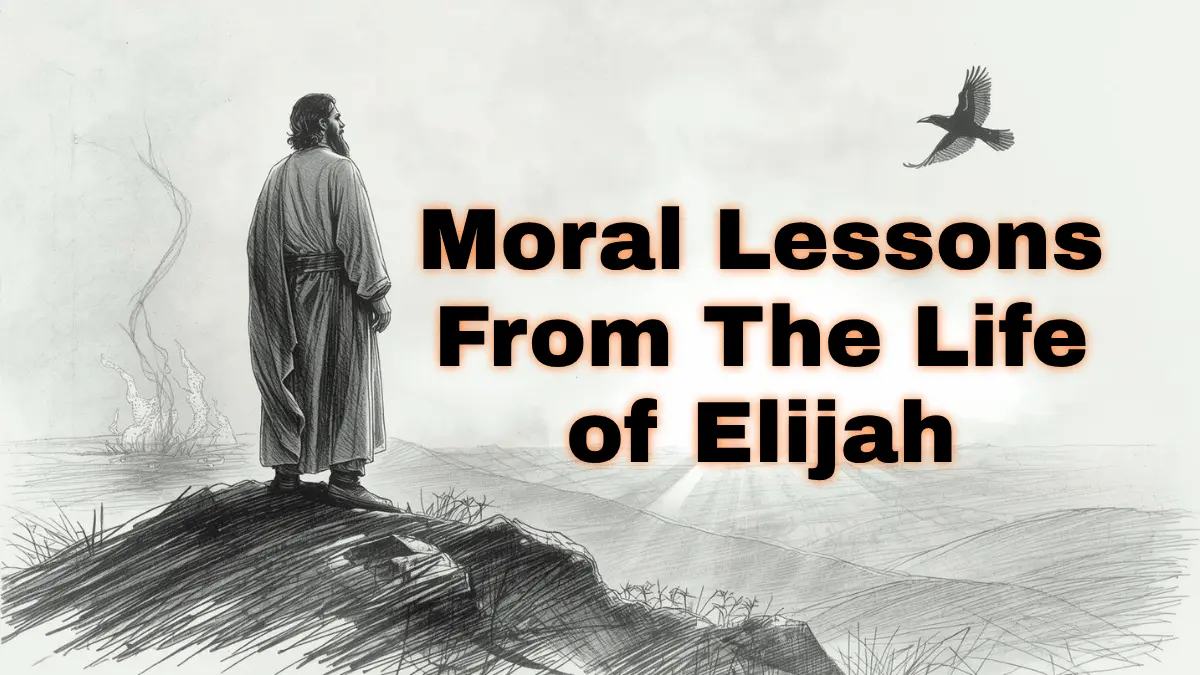

The life of Elijah gives some of the most profound moral lessons in the Bible because his story shows faith under pressure, courage before corrupt power, dependence on God’s provision and weakness after spiritual victory.
Elijah did not live a comfortable prophetic life. He stood before kings, confronted idolatry, prayed during drought, depended on God for food, helped a poor widow, faced loneliness, and later needed God’s gentle restoration.
The moral lessons from Elijah’s life teach believers to obey God in hidden seasons, stand for truth with courage, trust God’s provision, pray with persistence and depend on God even when fear and exhaustion feel overwhelming.
Elijah’s story does not present him as a perfect man without weakness. It presents him as a faithful servant who needed God at every stage. That makes his life deeply useful for believers today.
Who Was Elijah in the Bible?
Elijah was a prophet of God during the time of King Ahab and Queen Jezebel. Israel had turned deeply toward Baal worship, and the spiritual condition of the nation had become serious. Elijah appeared as God’s messenger in a time when truth needed courage.
His name means “My God is Yahweh,” and his life carried that message clearly. Elijah’s ministry challenged false worship and reminded Israel that the Lord alone is God.
When a child needs surgery, a parent may pray with faith and still feel afraid. Moments like this can make people ask why bad things happen if God is good, especially when pain touches someone innocent. The Bible does not answer that question lightly but it does show how believers can bring fear, grief and confusion before God.
The Elijah Bible story includes several major moments:
| Event in Elijah’s Life | Main Moral Lesson |
|---|---|
| Elijah announces drought | God’s word has authority over corrupt leadership |
| Ravens feed Elijah | God can provide in unexpected ways |
| Widow of Zarephath | Faith obeys even when resources look small |
| Mount Carmel | Courage stands for God when truth faces opposition |
| Elijah prays for rain | Persistent prayer matters |
| Elijah under the broom tree | God cares for exhausted servants |
| Still small voice | God restores through quiet presence, not only dramatic power |
| Elijah and Elisha | Faithful servants prepare others to continue God’s work |
These events show that Elijah’s life was more than a collection of miracles. It was a moral witness to obedience, courage, prayer, humility and endurance.
Elijah Teaches Obedience When the Path Feels Unclear
One of the first moral lessons from Elijah is obedience. God told Elijah to announce a drought, then sent him to hide near the brook Cherith. Elijah obeyed even when the instruction did not look comfortable.
This matters because obedience to God does not always begin with public success. Sometimes it begins in hidden places. Elijah had to trust God away from the crowd, away from recognition, and away from visible security.
The brook Cherith teaches that God can train a person in private before using them in public. Elijah had to depend on daily provision. Ravens brought him food. The brook gave him water. He did not control the source. He received what God provided.
This teaches a serious moral truth: faith grows when a person obeys God without demanding full control over the next step.
Many believers want the Mount Carmel moment, but they resist the Cherith season. Elijah’s life shows that hidden obedience prepares public courage.
Elijah Teaches Trust in God’s Provision
The life of Elijah also teaches trust in God’s provision. During the drought, God provided for Elijah first through ravens and then through a widow in Zarephath.
This was not an ordinary arrangement. Ravens were not a normal food source, and the widow was not wealthy. She had only a small amount of flour and oil. Yet God used unlikely means to sustain His prophet.
The story of Elijah and the widow of Zarephath teaches that God’s provision does not always come through abundance. Sometimes God provides through daily sufficiency.
The widow’s obedience also carries a powerful lesson. She gave from what looked like almost nothing. Her faith did not begin after the jar became full. It began while the jar still looked small.
This does not teach careless living or forced giving. It teaches that God can sustain faith in a season of scarcity. Elijah, the widow, and her son all learned that God’s care can meet people in places where human resources look insufficient.
Elijah Teaches Courage to Stand for Truth
Elijah’s confrontation on Mount Carmel remains one of the clearest examples of spiritual courage in Scripture. Israel had been wavering between the Lord and Baal. Elijah called the people to stop living with divided loyalty.
This moral lesson still matters. A divided heart cannot serve God faithfully. Elijah did not treat idolatry as a small preference. He exposed it as a serious spiritual problem.
On Mount Carmel, Elijah stood against the prophets of Baal and called Israel back to the Lord. His courage came from confidence in God, not confidence in human support. The crowd did not begin on Elijah’s side. The king did not support him. The religious atmosphere opposed him.
Yet Elijah stood because truth does not become false when the majority rejects it.
For believers today, the lesson is not to become harsh or proud. The lesson is to remain faithful when truth becomes unpopular. Elijah’s life teaches moral courage, but it also warns against compromise with false worship.
Elijah Teaches That Prayer Requires Dependence
Elijah’s prayer life forms a major part of his story. He prayed during drought, prayed on Mount Carmel, and prayed for rain after the people saw God’s power.
The prophet Elijah shows that prayer is not a religious performance. Prayer expresses dependence on God’s will and power.
On Mount Carmel, Elijah did not rely on noise, display, or manipulation. He prayed to the Lord, and God answered in a way that revealed His authority. Later, Elijah prayed persistently for rain. He sent his servant to look toward the sea again and again until a small cloud appeared.
This teaches an important moral lesson about prayer and persistence. Faith does not always stop after one request. Faith continues to seek God while waiting for the answer.
Elijah’s prayer also teaches humility. Even after a great victory, he still had to pray for rain. He did not assume the next step would happen without dependence on God.
A believer who learns from Elijah should not treat prayer as a last resort. Prayer belongs at the center of obedience, courage, waiting, and restoration.
Elijah Teaches Compassion Through the Widow’s Son
The story of the widow of Zarephath does not only show provision. It also shows compassion. When the widow’s son died, Elijah did not treat her grief as a small matter. He carried the child, cried out to God, and pleaded for life.
This moment shows a tender side of Elijah’s ministry. He was not only a prophet who confronted kings. He also entered the pain of a poor widow.
This moral lesson matters because spiritual strength should not make a person indifferent to suffering. Elijah’s courage before Ahab did not cancel his compassion in a small home.
The life of Elijah teaches that faithfulness includes both public truth and private mercy. A person can defend truth and still care deeply for the wounded. Biblical courage should never become coldness.
Elijah Teaches the Danger of Spiritual Compromise
Elijah’s ministry happened during a time when Israel mixed covenant identity with Baal worship. The people did not simply reject God in one clear sentence. They wavered.
That wavering reveals the danger of spiritual compromise. A person can remain near religious language while giving the heart to something else.
Elijah’s question on Mount Carmel exposed this divided condition. The people needed to choose whom they would serve. The issue was not only ritual. It was loyalty.
This lesson still speaks to believers today. Idolatry does not always appear as a statue or ancient altar. Anything that receives the trust, obedience, fear, and devotion that belong to God can become an idol.
Elijah’s life teaches that true faith requires moral clarity. God does not ask for divided loyalty. He calls His people to worship Him with the whole heart.
“Some seasons make believers feel surrounded by pressure, fear or opposition. In those moments, the Psalms give words for strength, trust and courage. A Psalm 68 prayer for God’s power and victory can help readers bring those battles before God with confidence instead of panic.”
Elijah Teaches That God Sees Injustice
Elijah also confronted Ahab after the injustice against Naboth. Ahab wanted Naboth’s vineyard, and Jezebel arranged a wicked plan that led to Naboth’s death. Ahab then took the vineyard.
God sent Elijah to speak judgment over that injustice.
This part of Elijah’s story teaches that God sees abuse of power. Ahab was a king, but his position did not place him above God’s moral judgment. Naboth may have looked powerless before the palace, but God saw what happened.
This gives an important moral lesson: power must never become permission to do wrong.
Elijah’s confrontation with Ahab shows that biblical faith includes concern for justice. God cares about worship, but He also cares about how people treat the innocent, the weak, and the vulnerable.
A faithful life cannot separate devotion to God from moral responsibility toward people.
Elijah Teaches That Strong Believers Can Become Exhausted
After Mount Carmel, Elijah ran from Jezebel and sat under a broom tree in deep distress. This moment surprises many readers because it happens after one of the greatest victories in his ministry.
Elijah had seen God answer by fire. He had seen false worship exposed. Yet he became afraid, exhausted, and discouraged.
This teaches one of the most human lessons from the life of Elijah: strong believers can become tired.
Spiritual victory does not remove human limits. Courage in one season does not mean a person will never feel fear in another. Elijah’s exhaustion did not make him useless to God. It showed that he needed care, rest, and renewed perspective.
God did not begin by giving Elijah a long rebuke. He gave him food, water, and rest. This matters because God understands human weakness. He knows that tired servants sometimes need restoration before instruction.
Believers should learn from this carefully. Exhaustion can distort perspective. Elijah felt alone, but God knew the larger story. When the body and spirit feel worn down, a person may need rest, prayer, truth, and patient renewal.
Elijah Teaches That God Does Not Always Speak Through Noise
At Horeb, Elijah experienced wind, earthquake, and fire. But the Lord was not in those dramatic signs in the way Elijah may have expected. Then came the still small voice.
This part of Elijah’s story teaches that God’s presence does not always come through visible drama. God can work through quiet correction, gentle direction, and steady truth.
Elijah had seen fire fall on Mount Carmel, but God did not only meet him through fire. God also met him in quietness.
This is a profound moral lesson for believers who always look for dramatic signs. God can speak through Scripture, prayer, wise counsel, conviction, patience, and quiet obedience. A lack of drama does not mean a lack of God’s presence.
The still small voice reminds believers to listen with humility. Noise can impress the mind, but God’s quiet word can restore the soul.
Elijah Teaches That No Servant Is the Whole Story
When Elijah felt alone, God reminded him that he was not the only faithful person left. God had preserved others who had not bowed to Baal.
This lesson matters because discouragement often narrows a person’s vision. Elijah felt isolated, but God’s work was larger than Elijah’s perception.
Faithful people can sometimes believe everything depends on them. Elijah’s story corrects that burden. God used Elijah powerfully, but God’s kingdom did not depend on Elijah alone.
This moral lesson brings humility and comfort.
It brings humility because no servant should think they carry God’s entire work alone.
It brings comfort because God continues His work even when one servant feels tired, afraid, or limited.
A believer can serve faithfully without pretending to be the center of God’s plan.
Elijah Teaches the Value of Mentoring the Next Generation
Near the later part of Elijah’s story, Elisha became connected to his prophetic ministry. Elijah’s life did not end with personal achievement only. God prepared another servant to continue the work.
The relationship between Elijah and Elisha teaches that faithful people should care about what continues after them. Spiritual maturity does not only ask, “What can God do through me now?” It also asks, “Who should be strengthened to serve after me?”
Elijah’s mantle became a symbol of prophetic continuation. Elisha watched, followed, learned, and later carried the work forward.
This lesson applies strongly to parents, pastors, teachers, leaders, and believers who influence others. Godly influence should not end with one person’s success. It should help form faithful people who can continue obeying God.
A life of faith becomes deeper when it prepares others to walk with God.
Elijah Teaches That God Honors Faithful Endurance
Elijah’s life included confrontation, scarcity, danger, grief, prayer, fear, restoration, and transition. He did not serve God in one easy season. He endured through many kinds of pressure.
His story teaches that faithfulness often requires endurance. A person may obey God and still face difficulty. A person may stand for truth and still face opposition. A person may pray and still have to wait.
Elijah’s life does not promise a trouble-free path. It shows that God sustains His servants through the path He gives them.
This moral lesson helps believers avoid shallow expectations. God’s call can include hidden provision, public courage, painful waiting, emotional weakness, and renewed assignment. Elijah walked through all of these.
Endurance means staying before God through each season, not only the season that feels successful.
Moral Lessons from Elijah’s Life at a Glance
| Moral Lesson | What Elijah’s Life Teaches |
|---|---|
| Obedience | Follow God even when the path feels hidden |
| Trust | Depend on God’s provision in scarcity |
| Courage | Stand for truth when false worship surrounds you |
| Prayer | Seek God with humility and persistence |
| Compassion | Care for suffering people, not only public causes |
| Justice | God sees abuse, greed and misuse of power |
| Rest | Even strong believers need God’s restoration |
| Listening | God can speak through quiet direction |
| Humility | No servant carries God’s whole work alone |
| Mentorship | Faithful service prepares others to continue |
This summary shows why Elijah’s life remains so morally rich. His story speaks to public faith, private weakness, spiritual courage, and daily dependence.
How Believers Can Apply Elijah’s Lessons Today
The moral lessons from Elijah’s life should not remain only in history. They should shape how believers live now.
- A believer can apply Elijah’s lessons by choosing obedience when the next step feels unclear. God may not reveal the whole road, but He still calls His people to obey the light they have.
- A believer can trust God’s provision during a dry season. The brook may not look permanent, and the jar may not look full, but God can sustain His people through daily mercy.
- A believer can stand for truth without becoming proud. Elijah’s courage came from loyalty to God, not from personal arrogance.
- A believer can pray with persistence. The small cloud after repeated prayer reminds readers that waiting does not make prayer meaningless.
- A believer can accept rest when exhausted. Elijah’s weakness under the broom tree teaches that God cares for the servant, not only the service.
- A believer can listen for God’s quiet voice. Not every work of God comes with visible drama. Some of God’s deepest correction and comfort come quietly.
- A believer can mentor others. Elijah’s relationship with Elisha shows that faithful service should strengthen the next generation.
Frequently Asked Questions
What are the main moral lessons from the life of Elijah?
The main moral lessons from Elijah’s life include obedience, courage, trust in God’s provision, persistent prayer, compassion, justice, humility, rest, and faithful endurance.
What is Elijah best known for in the Bible?
Elijah is best known for confronting King Ahab, challenging the prophets of Baal on Mount Carmel, praying during drought, helping the widow of Zarephath, hearing God’s still small voice, and mentoring Elisha.
What does Elijah teach about faith?
Elijah teaches that faith obeys God under pressure, trusts His provision in scarcity, prays persistently, and stands for truth even when the culture around it becomes spiritually confused.
What does Elijah teach about prayer?
Elijah teaches that prayer depends on God rather than human performance. His prayers during drought, on Mount Carmel, and before the rain show humility, persistence, and confidence in God’s power.
What does the still small voice teach in Elijah’s story?
The still small voice teaches that God does not always speak through dramatic signs. He can guide, correct, and restore His people through quiet presence and clear direction.

2 thoughts on “12 Powerful Lessons from Elijah’s Life in the Bible”